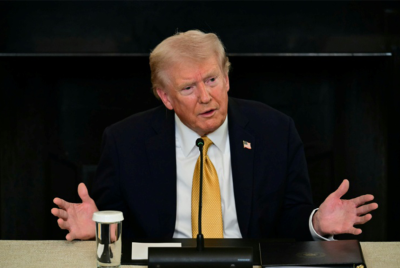
Iran Suspends US Talks After Israeli Strikes In Lebanon, But Trump Claims Negotiations Are Ongoing
Tehran cites Israel's Lebanon escalation as reason for suspension, while Trump says negotiations continue despite conflicting signals.
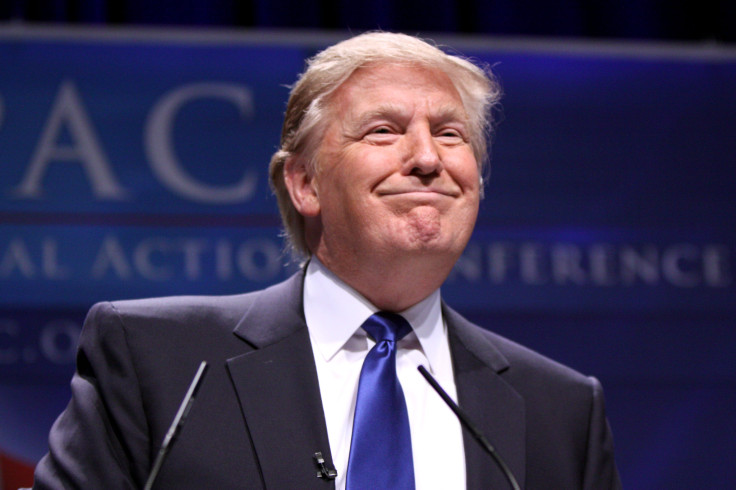
A sharp diplomatic rift has emerged over the status of US–Iran negotiations, after Tehran announced it has suspended talks with Washington in protest over Israel's military escalation in Lebanon, even as President Donald Trump insists discussions are still active.
The competing claims have injected fresh uncertainty into an already volatile Middle East crisis, where military action, political messaging, and ceasefire efforts are unfolding simultaneously.
At the heart of the confusion is a direct contradiction: Iran says the talks are paused, while Trump says they are continuing 'at a rapid pace'.
US President Donald Trump said on Monday that talks with Iran were ongoing and a deal is reachable "over the next week" despite a report that Tehran had suspended indirect negotiations with the United States to end hostilities.https://t.co/p9m8nhbVE9
— Saudi Gazette (@Saudi_Gazette) June 2, 2026
Iran Says Negotiations Suspended Amid Lebanon Escalation
NBC News reported that Iranian state-aligned media and officials say Tehran has halted its indirect diplomatic engagement with the United States, citing Israel's widening military operations in Lebanon as the trigger.
The semiofficial Tasnim news agency reported that the Iranian negotiating team will suspend 'talks and the exchange of texts through mediators'.
The suspension marks a significant pause in an already fragile diplomatic process aimed at reducing tensions across multiple regional fronts.
Iranian officials tied the decision directly to the situation in Lebanon, where Israel's military campaign against Hezbollah positions has intensified.
Mohammad Bagher Ghalibaf, Speaker of the Iranian Parliament, issued a stark warning while communicating with Lebanese counterparts.
'Over the past two days, we have seriously pursued efforts to stop Israel's attacks. If these crimes continue, we will not only suspend the negotiation process, but we will also stand against the Zionist regime,' Ghalibaf said, according to IRNA.
He also suggested that any future agreement between Iran and the United States would need to include a broader halt to attacks across the region, especially in Lebanon.
The Iranian Foreign Affairs Ministry added to the pressure, accusing the United States of bearing responsibility for violations linked to ceasefire conditions involving Iran and Israeli military actions in Lebanon.
Trump Insists Talks are still Active Despite Iran's Suspension
While Iranian officials describe a pause, President Donald Trump has strongly pushed back against the idea that negotiations have stopped.
Writing on Truth Social, Trump said he had spoken with Israeli Prime Minister Benjamin Netanyahu, and representatives linked to Hezbollah and claimed efforts were underway to stabilise the situation.
'I had a very productive call with Prime Minister Bibi Netanyahu, of Israel, and there will be no Troops going to Beirut,' Trump wrote, adding that any forces en route had been turned back.
In a more controversial claim, Trump also said he had spoken with Hezbollah representatives.
'Through highly placed Representatives, I had a very good call with Hezbollah, and they agreed that all shooting will stop,' he stated.
He added that Israel and Hezbollah had both agreed to halt hostilities, although these claims have not been independently confirmed.
Trump reinforced his position later, saying, 'I had a conversation with Bibi Netanyahu today... He turned his Troops around. Thank you, Bibi!'
He also emphasised that diplomatic channels with Iran were still functioning.
'Talks are continuing, at a rapid pace, with the Islamic Republic of Iran,' Trump told NBC News, adding that he had not been informed of any suspension.
US President Donald Trump reportedly told Israeli PM Benjamin Netanyahu that he is "fucking crazy" and that "everybody hates Israel", after Iran suspended peace talks over Tel Aviv's plans to renew an assault on Beiruthttps://t.co/q4eGt81jCA
— Middle East Eye (@MiddleEastEye) June 2, 2026
Iran Warns of Retaliation and Wider Consequences
Inside Tehran, officials are linking the conflict in Lebanon to broader risks of regional escalation, including possible retaliation against US interests.
Ebrahim Azizi, head of the Iranian Parliament's national security commission, warned that continued strikes could trigger consequences extending beyond Israel.
'If the attacks against Lebanon do not stop completely, the consequences will be severe for the Zionist regime and US forces in the region,' he said.
Esmail Ghaani, head of the IRGC Quds Force, also warned that Iran-aligned regional groups could respond by disrupting key maritime routes if the conflict escalates further.
Reports cited by Tasnim suggested Tehran could consider measures affecting the Strait of Hormuz, a critical global oil transit corridor, alongside pressure on other strategic waterways.
Oil markets reacted sharply, with prices reportedly jumping by more than $6 per barrel following the latest developments, highlighting the economic sensitivity of the crisis.
Iran reportedly backs out of peace talks over Israeli attack — but Trump says that's fine with him: 'We talk too much' https://t.co/80y3dpx9Uc pic.twitter.com/DYB6d38Btp
— TheBlaze (@theblaze) June 1, 2026
A Growing Gap Between Diplomacy and Reality
The current crisis is defined less by a single event and more by competing narratives about what is actually happening behind the scenes.
Iran says negotiations have been suspended. Trump insists talks are still ongoing. Israel is warning of further military action. And regional actors are simultaneously discussing ceasefire possibilities and escalation scenarios. With no unified confirmation of the diplomatic status, the gap between public statements continues to widen, adding to uncertainty across the region.
© Copyright IBTimes 2026. All rights reserved.
- Recommended For You