White House Reveals Secret Underground Hospital for Trump, 79, Inside Contested $1 Billion 'Military Ballroom'
A president who once promised a privately funded ballroom now wants the public to underwrite a fortified playground with a hospital built beneath his feet.
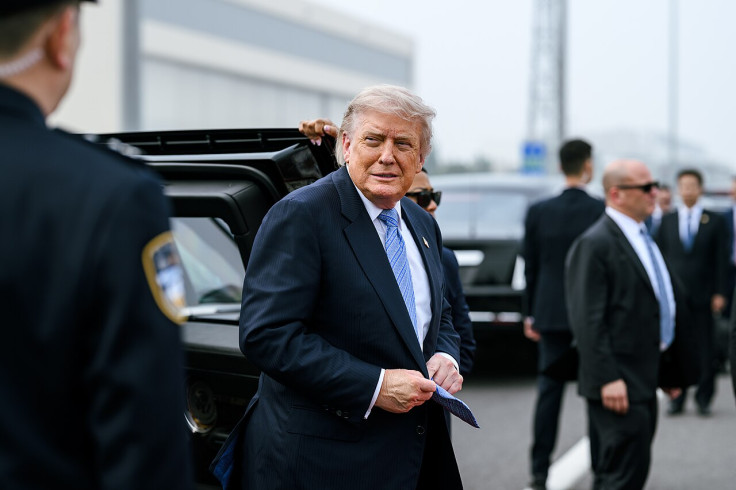
The White House has disclosed that the controversial new $1 billion 'Military Top Secret Ballroom' planned for the presidential complex will include a secret underground hospital for Donald Trump, 79, according to a late-night court filing submitted in Washington on Thursday.
For context, the vast ballroom scheme has been bogged down in legal and political wrangling for months. The National Trust for Historic Preservation sued in December after the East Wing was demolished to clear space for a 90,000-square-foot structure without first securing the necessary approvals. A federal judge ordered a halt to above-ground construction, but that ruling has been temporarily stayed while an appeals court panel weighs the case, with oral arguments now pencilled in for 5 June.
#BREAKING: White House ballroom project reportedly expands to include underground bunker, medical facility, and upgraded security systems, according to Daily Beast report. pic.twitter.com/vvpBhEQbo9
— Anonymous (@YourAnonOne) May 16, 2026
The latest twist emerged in a filing by Acting Attorney General Todd Blanche, Trump's former personal lawyer, who is now fronting the White House's increasingly combative defence of the project. Blanche described the proposed $400 million ballroom as a 'gift to the People of the United States,' and blamed the delay on preservationists, he said, were gripped by 'Trump Derangement Syndrome.'
President Trump’s planned White House ballroom is pressing forward, with the first portions of the structure now rising aboveground amid a continuing legal battle and a congressional fight about how to pay for it.
— The Washington Post (@washingtonpost) May 14, 2026
Read more about the construction here: https://t.co/V5CAgbULP0 pic.twitter.com/uEwHXTzcND
The National Trust has rejected that characterisation. It took the administration to court after the partial demolition of the East Wing, arguing that the White House had sidestepped long-standing protections for the historic site.
SHOCKING: President Trump on the White House Ballroom: “Now the military is building a BIG complex under the ballroom, which has come out recently because of a stupid lawsuit that was filed… That’s under construction and we’re doing very well.”
— Q The Storm Rider (@Q_TheStormRider) May 4, 2026
⁰“The ballroom essentially… pic.twitter.com/5cK3pfsBVo
The White House's description of the project as including a hospital and medical facilities comes from court filings and administration statements, and the full scope of the underground complex has not been independently disclosed in detail.
Security Fears, An Attempted Assassination, And Donald Trump
The news came after a shocking attack at the White House Correspondents' Dinner in April, when suspected gunman Cole Tomas Allen allegedly opened fire on Secret Service agents at the annual media gala, which is traditionally held away from the White House. In the political aftermath, Blanche publicly urged the National Trust to drop its lawsuit, arguing the country could ill afford delays to major security works. The Trust refused.
Blanche's filing makes clear that Donald Trump has not let go of that rebuff. He accused the D.C.-based nonprofit of failing to show 'appropriate' concern over what he called a planned massacre, quoting its reference to the shooting as the 'recent incident at the White House Correspondents' Dinner' as evidence of a dismissive attitude. 'Enough is enough,' Blanche wrote, in language that reads more like a Truth Social broadside than a standard government brief.
Lindsey Graham says he will force Americans to pay for the new White House ballroom by introducing a bill that would authorize $400 million in U.S. taxpayer money.
— Shadow of Ezra (@ShadowofEzra) April 27, 2026
He says that underneath the ballroom there will be a lot of “military stuff.”
“The sooner we get the ballroom… pic.twitter.com/sXSSu7H8pk
The administration is now leaning hard on the argument that the ballroom is not primarily a party space at all, but a security imperative. Blanche says the complex will include an underground bunker and other fortified structures, and that, once built, major events would be moved there so presidents and guests are less exposed. In his telling, presidents 'not just President Trump, but all future Presidents' should not be forced to 'risk the safety of themselves, their families, and their Cabinet' because of opposition from preservationists.
Then comes the detail that has electrified Washington: buried in the filing is the assertion that the so-called 'Military Top Secret Ballroom' will double as a medical hub for the ageing commander-in-chief.
'The Project, which includes a state-of-the-art hospital and medical facilities, Top Secret military installations, bomb shelters, structures, and equipment, protective partitioning, and other features — is fully designed to protect the President,' Blanche wrote.
🚨 JUST IN: President Trump announces the White House BALLROOM is opening in September 2028
— Eric Daugherty (@EricLDaugh) May 15, 2026
LFG!
“China has a Ballroom, and so should the U.S.A.! It’s under construction, ahead of schedule, and will be the finest facility of its kind anywhere in the U.S.A.”
“Thank you for all… pic.twitter.com/vfo2DdhaBm
No supporting schematics or independent medical assessments were filed alongside that claim. The White House has not provided a public briefing on what 'state-of-the-art' care looks like in this context, or why it could not be delivered through existing facilities. Without those details, the hospital element sits somewhere between bold security planning and a remarkably expensive private clinic inside one of the most politically sensitive buildings on earth.
From Entertainment Venue To Taxpayer-Funded Fortress For Donald Trump
When Donald Trump first unveiled the ballroom plan last July, it sounded almost modest by his standards. He pitched it as a privately funded entertainment venue, a grand space to host visiting dignitaries, donors, and glittering state occasions that would, according to him, cost taxpayers nothing.
President Trump is demanding that his new ballroom now be built after the shooting tonight at the White House Correspondents’ Dinner, which he says is an unsecured building.
— Shadow of Ezra (@ShadowofEzra) April 26, 2026
Trump says the military is demanding it for security reasons.
“They wanted the ballroom for 150 years.” pic.twitter.com/OcjpupmMFw
That story has not survived contact with Congress. After a federal judge signalled that any non-security-related construction would need explicit congressional approval, the White House swiftly reframed the ballroom as an urgent security project. The national security label unlocked a very different conversation on Capitol Hill, where Trump allies in the Senate are now chasing an eye-watering $1 billion in federal funding tied to the build, a move the administration has warmly welcomed.
According to the White House, hundreds of millions of dollars within that sum would go on 'bulletproof glass, drone detection technologies, chemical and other threat filtration and detection systems.' A further $175 million is earmarked for 'improving security for Secret Service protectees.' The administration has not offered a precise line-item cost for the underground hospital or the other medical facilities referenced in Blanche's filing.
President Donald Trump said Friday that the White House ballroom is scheduled to open in just over two years, in September 2028, near the end of his second term.https://t.co/F4XPUjImUU pic.twitter.com/hX39ZMIyGt
— ABC4 News (@abc4utah) May 16, 2026
Critics who challenged Trump's initial promise that the project would be entirely covered by private donors are unlikely to feel reassured. That pledge has essentially disintegrated, replaced by a complex security package knitted into the federal budget. Asked earlier this week about the ballooning price tag, Trump reportedly dismissed a female reporter who pressed him on the numbers as a 'dumb person.'
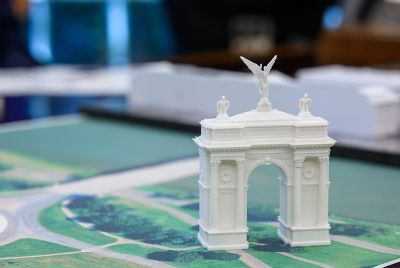
The president has nonetheless pressed ahead with his sales pitch. Showing off glossy renderings of the 'Military Top Secret Ballroom' aboard Air Force One, Trump has predicted the project will be finished in September 2028 and insists it 'will be the finest facility of its kind anywhere in the U.S.A.'
🔊'At first, he said it wouldn't cost consumers anything, and now there's even a bill for a billion dollars.' Reporter Richard Cowan on the political liabilities of Trump's White House ballroom obsession. Hear more on Reuters World News https://t.co/0223irLXa4 pic.twitter.com/o9YHmpI5FN
— Reuters (@Reuters) May 16, 2026
Whether he secures his personalised underground hospital along the way now rests with the courts, congressional appropriators, and a preservation group that has so far proved stubbornly unmoved by both his salesmanship and his anger.
IBTimes UK has reached out to President Donald Trump's reps for comments.
© Copyright IBTimes 2026. All rights reserved.
- Recommended For You