Elon Musk 'Legal Ambush': Why Tesla CEO Demands Court Fire Sam Altman, Greg Brockman From OpenAI
Behind the courtroom jargon lies a bare-knuckle struggle over who gets to decide the future of AI.

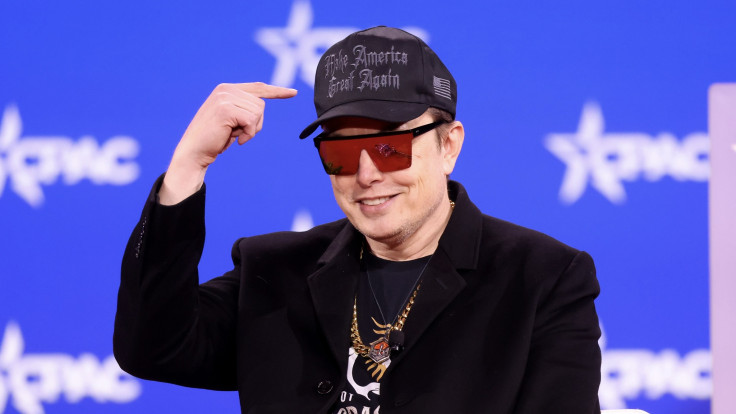
Elon Musk has asked a California court to remove Sam Altman and Greg Brockman from their leadership roles at OpenAI and strip them of their equity, in a late-stage twist to his high-profile lawsuit against the ChatGPT-maker and its backer Microsoft, according to legal filings made public on Friday in Oakland.
The news came after months of legal sparring in which Musk, who co-founded OpenAI in 2015, accused the company of abandoning its original non-profit mission in favour of a tightly controlled, commercially driven partnership with Microsoft. He first sued OpenAI and Microsoft earlier this year, claiming they had turned a research lab meant to benefit humanity into what his complaint portrays as a de facto 'closed-source' AI powerhouse, and demanding tens of billions of dollars in alleged 'wrongful gains.'
OpenAI Hits Back at Elon Musk 'Legal Ambush'
In the latest round of filings, OpenAI did not bother to hide its irritation. Lawyers for the company told the court that Musk's new demands, including his insistence that he is 'not seeking a single dollar for himself,' amount to a 'legal ambush' designed to upend the case just weeks before trial.
Bloomberg reported that in a sharply worded brief, OpenAI's legal team said the amendment appeared calculated to 'sandbag the defendants and inject chaos into the proceedings, while trying to recast his public narrative about his lawsuit.' They argued that letting Musk rewrite the relief he is seeking at this stage would be 'legally improper and factually unsupported.'
'Musk's proposed amendment would require the presentation of different evidence and different witnesses than the case he sponsored until three days ago,' OpenAI's lawyers wrote, effectively accusing him of moving the goalposts on the eve of trial.
OpenAI has also gone beyond legal technicalities to challenge Musk's motives. In a separate statement, the company said his lawsuit 'remains nothing more than a harassment campaign that's driven by ego, jealousy and a desire to slow down a competitor.' That characterisation is, of course, OpenAI's view, not a judicial finding.
Why Musk Wants Altman and Brockman Fired From OpenAI
Musk's new filing marks a dramatic change of emphasis. In January, his court papers set out a claim for between $79 billion and $134 billion in alleged gains that he said OpenAI and Microsoft had wrongfully accrued. Now his team is telling the judge that any money awarded at trial should go back into OpenAI itself, rather than to Musk.
As his lawyer Marc Toberoff put it in a statement cited by Bloomberg, Musk 'is not seeking a single dollar for himself.' Toberoff said his client is asking the court 'to return everything that was taken from a public charity — and to make sure the people responsible are never in a position to do this again.' In his telling, the new filing simply 'sets the record straight' after what he described as 'OpenAI's spin doctors' allegedly distorted the original complaint.
On paper, the remedies Musk is seeking are sweeping. He is asking the judge to:
• Order the removal of Sam Altman as OpenAI's chief executive and as a member of its board.
• Remove Greg Brockman from his role as OpenAI's president.
• Require both men to relinquish any equity or financial benefits they hold, with those interests to be transferred to OpenAI's charitable arm.
• Unwind OpenAI's conversion into a for-profit structure, effectively pushing the organisation back towards the non-profit framework Musk says it was founded on.
That last point is the core of his argument. Musk maintains that OpenAI was conceived as a public-spirited research lab focused on 'safe' artificial general intelligence, and that later deals — particularly with Microsoft — shifted control and incentives in ways that betray that mission. OpenAI, for its part, has consistently denied that it has breached its obligations or misled its founders.
None of Musk's requested remedies has been granted, and nothing in the filings confirms the court will allow him to amend his claims at this stage. Until the judge rules, the new requests should be treated with caution rather than as a done deal.
Trial Date Nears as Battle Over OpenAI's Future Deepens
For context, the lawsuit itself is still in its early life. Musk filed the case in 2024, accusing OpenAI and Microsoft of breach of contract and related claims linked to the 2015 founding arrangements. A trial is currently scheduled to begin on 27 April in Oakland, California, where a judge will first have to decide what claims are actually in play before any jury hears evidence.
Both OpenAI and Microsoft have rejected Musk's allegations. They insist there was no binding agreement that would freeze OpenAI's structure in its original non-profit format or prevent it from entering into commercial partnerships. Musk's side argues the opposite — that what he saw as a public charity has been repurposed into a vehicle for private profit and corporate control.

At this point, the court has not ruled on the truth of either narrative. What is clear from the filings is that the fight is now about more than money. By demanding that Altman and Brockman be removed and that their equity be diverted to OpenAI's charity, Musk is effectively asking a judge to redraw the organisation's power map.
Whether the court is willing to go that far or even to let Musk change his aims so close to trial will determine not just the shape of this lawsuit, but potentially the future governance of one of the world's most closely watched AI labs.
© Copyright IBTimes 2026. All rights reserved.
- Recommended For You