

Forget College: America Is Now Hunting Gamers to Take Over the Skies as Air Traffic Crisis Deepens
Your parents told you to stop gaming. Now Washington wants those same skills in the control tower, with six-figure pay on the line and thousands of controllers urgently needed.
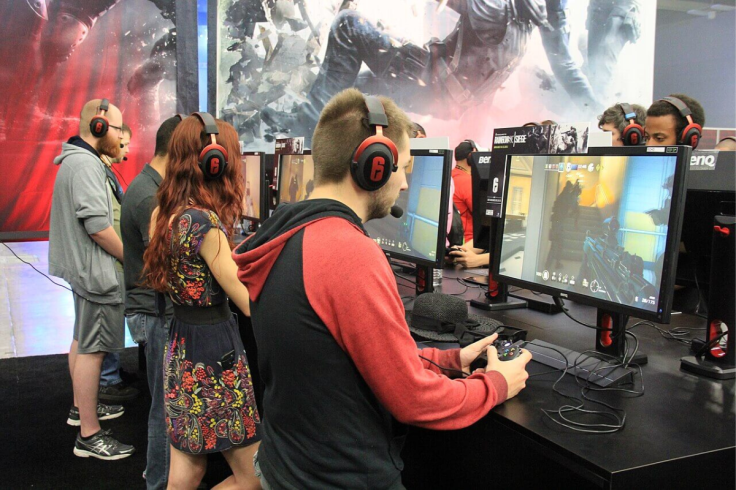
For years, gamers have been told to put down the controller and get a real job. Now the US government is sending them a very different message: those hours spent behind a screen could be useful after all.
The Federal Aviation Administration is targeting gamers in a recruitment campaign for air traffic controllers, arguing that skills developed through gaming can translate into one of aviation's most demanding careers.
Its message is blunt: 'You've been training for this.'
US Hires 2,000 Video Gamers to Help Solve Air Traffic Controller Shortage pic.twitter.com/XwmLYLpmeS
— New York Post (@nypost) August 10, 2026
The FAA Wants Gamers
The recruitment advert opens with an Xbox logo before cutting between gamers and air traffic controllers working at their screens.
US Transportation Secretary Sean P. Duffy said the FAA needed to adapt its approach to reach younger adults with skills that could transfer to air traffic control.
The agency points to multitasking, spatial awareness, strategy, problem-solving and rapid decision-making. Feedback from controller exit interviews, it says, has also highlighted gaming as an influence on some controllers' ability to think quickly, stay focused and manage complexity.
The idea may sound bizarre, but it is already attracting attention.
🚨 GAME CHANGER
— Secretary Sean Duffy (@SecDuffy) August 9, 2026
In April, we launched a NEW CAMPAIGN to recruit video gamers as air traffic controllers — and supercharged the entire hiring process to get the BEST & BRIGHTEST in faster. The results are HISTORIC ✈️
✅ 94% of hiring goal met — fastest time ever to reach target… pic.twitter.com/gN3OGmEIBB
12,350 Applications in a Day
When the FAA's hiring window opened on 17 April, the response was enormous.
The US Department of Transportation said the agency received 12,350 applications in 24 hours, including 10,779 people identified as qualified. That was more than double the previous first-day record.
The numbers do not mean 12,000 gamers were hired. They were applicants entering a demanding selection and training process.
Still, the response suggests the FAA's unusual pitch reached exactly the audience it wanted.
The FAA has hired over 2,000 gamers as air traffic controllers following its recruitment campaign
— Dexerto (@Dexerto) August 10, 2026
Officials say they are a natural fit due to their quick decision-making and ability to handle pressure pic.twitter.com/cSyV6NyAln
The $155,000 Catch
Then there is the money.
The FAA advertises average certified earnings of more than $155,000 (£114,000) a year within three years of Academy graduation. Trainees start at $22.61 (£16.75) an hour during Academy training, with health and housing benefits.
A four-year college degree is not required either. The FAA says only about 25% of controllers have a traditional college degree. Applicants instead face aptitude testing, medical and security checks, Academy training and years of on-the-job experience before becoming fully certified.
So the real pitch is not 'play games and make $155,000'.
It is: you may not need college, your gaming skills could be useful, and this career can eventually pay extremely well.
A Shortage the FAA Cannot Ignore
Behind the flashy campaign is a serious workforce problem.
The FAA says it had about 11,000 certified professional controllers in April, against a staffing target of 12,563. Another 4,000 controllers were in the training pipeline.
The agency plans to hire thousands more controllers over the next several years. But there is no quick fix. Recruits must pass an intensive aptitude assessment, medical and security screening, train at the FAA Academy and then spend one to three years gaining experience before certification.
That means today's gamer applicant could be years away from actually controlling aircraft.
Gaming Is Only the Beginning
This is where the campaign becomes genuinely fascinating.
Being able to track multiple objects in a game may demonstrate useful cognitive skills. But a real control tower has no reset button.
Controllers must manage aircraft movements, communications, weather, and constantly changing traffic while making decisions where the consequences are real.
The FAA is not replacing professional training with gaming. It is trying to identify a larger pool of people who may possess the raw skills needed to succeed.
And the strategy has history.
The Biden administration used a similar 'Level Up' campaign in 2021 to encourage gamers to consider air traffic control, meaning the idea has crossed administrations rather than belonging solely to Duffy's tenure.
The Real Test Starts After the Game
The FAA's campaign flips an old stereotype on its head.
Gaming may once have been dismissed as wasted time. Now, the agency believes some gamers could bring the concentration, spatial awareness and rapid decision-making needed in a safety-critical profession.
But the real question is not whether gamers can impress the FAA.
It is whether those skills can survive years of training and pressure when the aircraft on the screen are no longer pixels, and there is no restart button.
That is the gamble behind the FAA's message: 'You've been training for this.'
© Copyright IBTimes 2026. All rights reserved.
- Recommended For You


