

College vs. Trade School: Gen Z Turns to Jobs AI Can't Replace—Welders, Plumbers, and Electricians
As AI transforms the job market, Gen Z opts for trade skills over traditional degrees for long-term job security

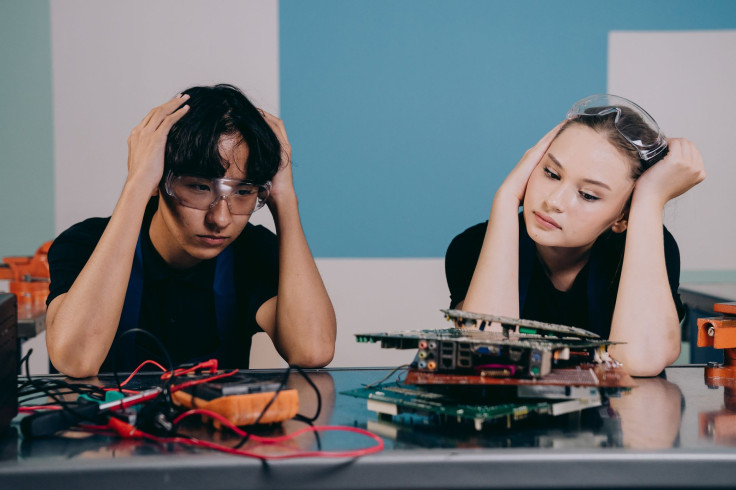
A four-year college degree is viewed as the safest path to landing an office job and advancing careers. However, that assumption is now being challenged by Gen Z as more young Americans opt for trade schools over universities, with the conviction that hands-on skills will protect them from AI taking over jobs globally.
National Student Clearinghouse data revealed that enrollment at public two-year institutions focused on vocational and trade programs soared around 20% between 2020 and 2025, despite overall college enrollment remaining under pressure. Apprenticeships and private trade schools have also reported stable growth as students look for careers that offer returns on investment and greater job security.
The shift comes as tuition costs continue to soar. A private four-year college education can now carry a price approaching $200,000, while many trade programs cost a fraction of that and can be completed in under two years. New federal policies have also expanded Pell Grant eligibility for short-term vocational programs, making trade education more accessible. Also note that many apprentices also earn a paycheck while training.
Meanwhile, the rise of AI is compelling students to rethink which careers are truly 'future-proof.' AI can draft reports, generate software code, summarise legal documents, and automate many office workflows, but cannot wire a commercial building, repair an electrical grid, weld a pipeline, carry out plumbing work in a new home, or troubleshoot an HVAC system.
Nvidia CEO Caught This Trend Early On
Nvidia CEO Jensen Huang had reiterated multiple times that AI will create demand for skilled trades rather than eliminate them. He believes the rapid AI infrastructure expansion would require electricians, plumbers, carpenters, and technicians 'by the hundreds of thousands.'
TV host and skilled-trades advocate Mike Rowe believes that America's education system had spent years telling students to 'learn to code,' while neglecting careers that now face severe worker shortages.
According to Rowe, AI is coming for many white-collar occupations, 'not the welders, the plumbers, the pipefitters or the electricians.' He has also criticised schools for treating vocational education as a 'consolation prize' despite some young electricians reportedly earning well into six figures working on AI-related data centre projects.
The AI boom itself is fueling demand for skilled labour. It means that massive investments in hyperscale data centres require countless electricians, HVAC technicians, welders, fibre-optic installers and construction workers before a single AI model can process data.
However, the shortage of skilled trade specialists is becoming an issue. Bring Back the Trades, a nonprofit focused on vocational careers, forecast that 1.4 million skilled trade jobs could remain unfilled by 2030, citing retirements and rising infrastructure demand.
Meta Platforms quickly recognised the shortage, and recently launched a $115 million workforce initiative with Mike Rowe to train electricians, welders, plumbers and fibre technicians, while offering free education and guaranteed job placement for graduates.
A Bachelor's Degree Continues to Offer Higher Earnings Opportunities
Despite the shift driven by Gen Z, workers with bachelor's degrees still earn considerably more over a lifetime on average compared with those with a high school diploma. At the same time, many professions, from engineering to medicine, continue to require university education.
A college degree still retains its value, but Gen Z appears to be abandoning the idea that college is the only path to success. Instead, many are choosing careers that involve lower debt, earlier paychecks, robust demand and resilience against widespread automation.
As AI takes over the white-collar economy, America's youth are starting to believe that the safest career investment could be simply learning a technical skill that requires human hands and is extremely difficult for AI robots to replicate.
© Copyright IBTimes 2026. All rights reserved.