Cabin Crew Now Wear 'No Touching' Patches After Passengers Poke, Pinch and Grab Them on Almost Every Flight
Cabin crew report routine unwanted touching by passengers, prompting calls for respect and clearer boundaries.
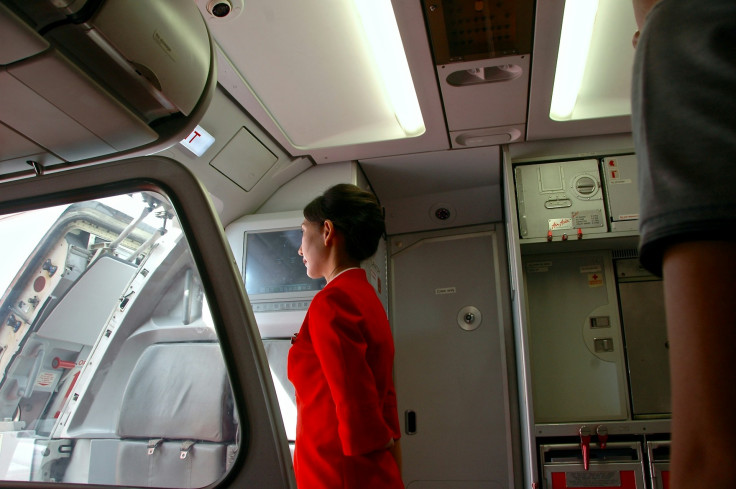
Flight attendants say unwanted touching by passengers has become so routine that some crew members now wear patches, badges and aprons explicitly telling travellers to keep their hands off them.
In a report by The Washington Post, cabin crew start describing the reality of being poked, pinched and grabbed on almost every flight.
For Michelle Montez, a flight attendant with two decades in the industry, the behaviour is no longer occasional enough to stand out.
'It's almost a rare occurrence when it doesn't happen,' she said.
Montez discussed the issue on the 'Jumpseat Chronicles Podcast' alongside fellow flight attendants Joshua Boyd and Darion Foy, who said the problem cuts across airlines, routes and passenger demographics. Crew members described travellers poking arms, tapping shoulders, grabbing waists and even touching rear ends to get attention during service.
Foy said he has been pinched repeatedly while working onboard flights.
'You can talk to any flight attendant for any airline, and they will all agree that that's something that we cannot stand and that we deal with so often, it's insane,' he said.
Flight attendants say the behaviour is now so commonplace that many crew members barely expect a flight to pass without being poked, grabbed or touched while working the cabin.
'Part Of The Furniture' Inside The Cabin
Sara Nelson, international president of the Association of Flight Attendants-CWA, believes the problem partly stems from the unusual social environment onboard aircraft.
Passengers and crew operate in cramped spaces for hours at a time, often under stress, fatigue or anxiety. In that atmosphere, she said, travellers can begin treating flight attendants less like professionals and more like extensions of the aircraft itself.
'People may feel like flight attendants are a part of the furniture,' Nelson said.
Cabin crew are visible everywhere during a flight and constantly interrupted, summoned or physically approached. The boundaries many people instinctively respect in ordinary public settings often seem to disappear once the aircraft doors close.
Sam Wilkins, a flight attendant for 28 years and first vice-president of TWU Local 556, said passengers would never behave similarly toward workers in most other environments.
'You probably wouldn't go into a restaurant and poke your waitress,' Wilkins told The Post. 'You wouldn't go into a coffee shop and grab the shirt of your barista.'
Flight attendants say passengers trying to get their attention should speak, wave or, if necessary, use the call button. Airlines have long discouraged passengers from repeatedly pressing the call light for minor requests, which may explain why some travellers resort to tapping crew members directly when they walk past.
Still, cabin staff say physical contact should not be the fallback option.
Boyd, who has worked as a flight attendant for 11 years, put it bluntly.
'We would rather you hit the call light.'
A Viral Debate Over Boundaries
The issue recently gained wider attention after lifestyle creator Lucie Fink described being publicly reprimanded by a flight attendant during a work trip last year.
Fink said she believed a crew member had skipped her during drink service. Unsure whether using the call button would seem rude while the attendant stood nearby, she lightly touched the woman's elbow to ask for ice.
The flight attendant turned and said 'very loudly and very sharply' that passengers should not touch cabin crew, Fink recalled.
She later shared the story online, where it sparked a sprawling argument about social boundaries, personal space and whether touching someone briefly to gain attention is acceptable behaviour.
Fink said she now understands why many flight attendants react strongly.
'Some people don't like to be touched and some people have trauma from being touched,' she said. 'Flight attendants I think are just poked and prodded all day.'
A Bigger Problem Behind The Complaints
In a 2018 survey conducted by the Association of Flight Attendants, 18 per cent of respondents said they had experienced physical sexual harassment from passengers during the previous year, including groping, grabbing and fondling.
Nelson said many flight attendants had come to accept such behaviour as an unavoidable part of the job, something she found deeply upsetting when discussing the issue with members.
Since then, unions and airlines have pushed for tougher protections. Sexual assault was added to laws prohibiting interference with flight crews, while financial penalties for offenders have increased.
The industry also remains shaped by the spike in unruly passenger incidents during the coronavirus pandemic, when violent confrontations onboard aircraft surged dramatically. Although numbers have since fallen, they remain above pre-pandemic levels.
The 'no touching' patches worn by some crew members stop looking quirky or exaggerated.
Flight attendants are still trained to de-escalate uncomfortable situations calmly. Boyd said he tries to avoid humiliating passengers or creating viral confrontations when someone crosses a boundary.
'You do not have to touch me to get it,' he said he sometimes tells passengers. 'I just want to hear your sweet voice.'
© Copyright IBTimes 2026. All rights reserved.
- Recommended For You