'A Sorry Mess': Google Is Quietly Killing off Gmail's Best Third-Party Email Hub Features
The era of the all-in-one web inbox is drawing to a quiet, frustrating close

Google is retiring several Gmail features that have allowed users to manage third-party email accounts from one place, giving existing users until January 2027 before the long-standing tools disappear.
Rather than announcing the changes through a major corporate blog post, the search engine giant has detailed the phase-out through its Gmail support documentation, confirming that Gmailify and its "Check mail from other accounts" feature using POP will no longer be supported. The changes could significantly affect people who have spent years using Gmail as a central hub for addresses hosted by other providers.
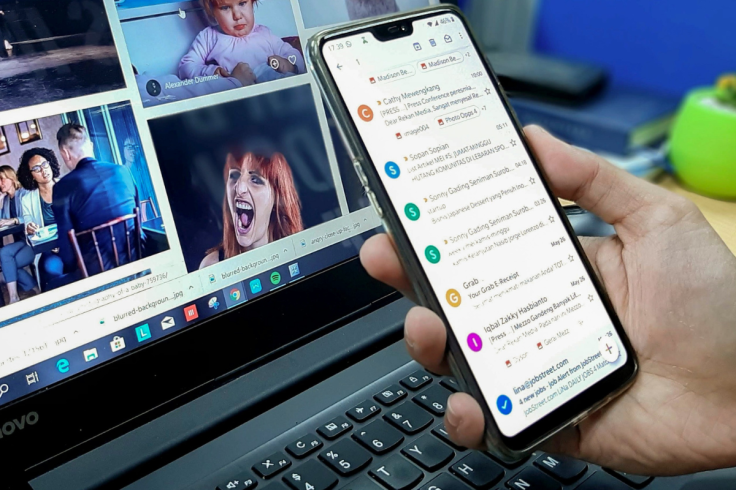
For context, Gmail launched in 2004 with 1GB of free storage, powerful search capabilities and increasingly sophisticated spam filtering. Over the following two decades, the service evolved into much more than a conventional inbox, with some users connecting addresses from providers including Yahoo, Outlook and other email services. That particular way of using Gmail is now becoming considerably more limited.
What Google Is Removing From Gmail
Google has confirmed that Gmailify will be discontinued for existing users from January 2027. The feature allowed eligible third-party accounts to gain several Gmail capabilities without users abandoning their existing email addresses.
Those features included Gmail's spam protection, inbox categories, enhanced mobile notifications and faster searching through advanced search operators. Google is also removing 'Check mail from other accounts', which allows Gmail on the web to continuously retrieve messages from third-party accounts using the POP protocol.
The company says the feature stopped supporting new users after the first quarter of 2026, while existing users can continue using it until January 2027. Crucially, emails that have already been imported will not disappear when support ends. Google says messages synchronised before the deprecation will remain inside Gmail.
Users will also still be able to perform a one-time import of emails and contacts from another account through Gmail on the web. What disappears is the continuous synchronisation of new messages through POP. The changes nevertheless represent a substantial reduction in Gmail's usefulness as a browser-based hub for people juggling several email providers.
Gmail Users Still Have Several Alternatives
Google is recommending automatic forwarding as one of the main alternatives for people who currently use POP to pull external messages into Gmail. Users can configure their external provider to automatically forward incoming messages to their Gmail address, allowing new emails to continue appearing inside their primary inbox.
That solution, however, depends on the capabilities and policies of the external email provider and does not reproduce every feature offered by Gmailify or POP-based account integration. Another option is to use a dedicated email client capable of connecting to several accounts through IMAP or other supported protocols.
Google itself confirms that Gmail accounts can continue to connect with third-party clients such as Microsoft Outlook, Apple Mail and Mozilla Thunderbird. Gmail's IMAP access remains available, allowing messages and labels to synchronise with compatible applications.
That could provide a workable alternative for users who want several accounts accessible through one interface, although it means moving away from Gmail's browser interface as the central management point.
Gmail Mobile App Keeps Third-Party Accounts
There is also an important exception for smartphones and tablets. Google says users will continue to be able to read and send emails from third-party accounts through the Gmail app on Android, iPhone and iPad. Those connections use standard IMAP rather than Gmail's retiring POP-based web integration.
Accounts from providers such as Yahoo and Outlook can therefore continue appearing within the Gmail mobile application. The distinction means the experience will become increasingly different depending on the device being used.
A person could still manage several providers through Gmail on their phone while finding that the same unified account arrangement is no longer available through Gmail's desktop web interface.
For people accustomed to switching seamlessly between devices, that is likely to be one of the more frustrating consequences of the change.
Why Is Google Removing Gmailify and POP?
Google's support documentation does not provide a detailed explanation for why the features are being retired. That makes it tempting to connect the decision to operating costs, security requirements or Google's wider product strategy. However, there is currently no official evidence establishing any of those explanations as the reason for the change.
The safer conclusion is considerably simpler. Google is reducing Gmail's support for integrating third-party accounts through its desktop web service while preserving some alternative methods of accessing external email.
It is also worth distinguishing the changes from the complete removal of third-party email compatibility. Google is not shutting down POP or IMAP access to Gmail itself. Users can still connect their Gmail accounts to compatible third-party email applications. What is disappearing is Gmail's ability to continuously fetch messages from other providers through POP.
Existing imported emails will remain accessible, mobile integration will continue and one-time imports will still be possible. For users who have spent years turning Gmail into a single command centre for several addresses, however, January 2027 still represents a meaningful deadline. The inbox is not disappearing. The ability to make Gmail on the web behave like a universal email hub is.
© Copyright IBTimes 2026. All rights reserved.
- Recommended For You