

'GTA 6' Update: Boxed Copies Will Include Download Codes Only as Sony Phases Out PlayStation Discs by 2028
Rockstar's decision to ship 'GTA 6' boxed copies with download codes only, as Sony targets a disc-free PlayStation future by 2028, sparks fears over ownership, pricing and the death of the second-hand game.
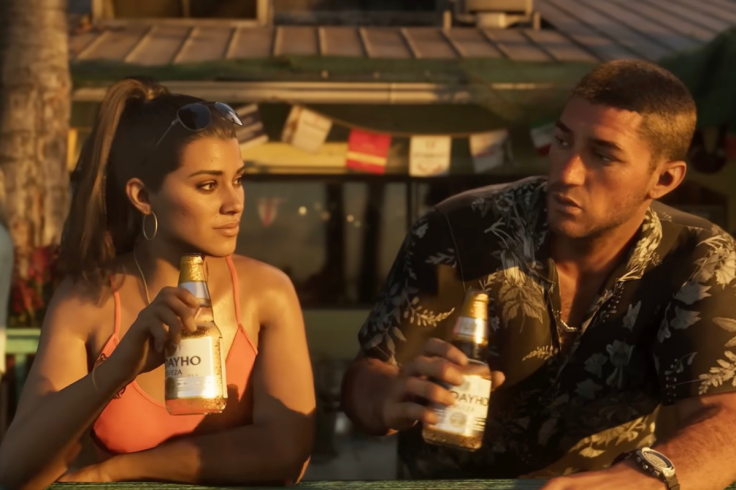
When 'Grand Theft Auto 6' pre-orders quietly went live worldwide last week, fans rushing to reserve the game for PlayStation and Xbox discovered something jarring: every boxed copy of 'GTA 6' will ship with a download code only, and no physical disc, ahead of the game's 19 November release.
'GTA 6' is arguably the most anticipated game of the decade, with pre-orders opening just days ago and the game due to be delivered to early buyers from 12 November. Traditionally, a boxed copy has meant exactly that, a disc in a case that can be played, lent, or traded in. This time, though, retailers are listing physical editions that contain nothing more than a code, a postcard and some packaging.
'GTA 6' Boxed Copies Signal the End of PlayStation Discs
The 'GTA 6' update has landed at the same time as a much bigger structural shift. Sony has now revealed that from January 2028 future PlayStation hardware will no longer use physical discs at all, moving its consoles to a digital-only format. That timetable, combined with Rockstar's decision to go code-only for 'GTA 6' from launch, is being read in gaming circles as the unofficial beginning of the end for discs on PlayStation.
To recall, physical media has underpinned console gaming for decades. From PS1 CDs to PS5 Blu-rays, discs allowed players to share, resell and build libraries that did not depend on servers or storefront policies. The 'GTA 6' move breaks that tradition for what is likely to be one of the best-selling games of all time, and it does so in a way that subtly normalises the idea of paying full price for something you can never touch.
Sony has not issued a detailed public statement setting out how its 2028 shift will work, but the direction of travel is clear. Consoles will rely on digital storefronts, user accounts and cloud licences, not plastic discs. The industry logic is simple enough, digital games are cheaper to distribute, easier to update and harder to pirate. The player perspective is far less straightforward.
'GTA 6' and the Death of the Second-Hand Game
The news came after 'GTA 6' pre-order listings confirmed that even 'standard' boxed editions would only provide a download code, prompting an immediate backlash from parts of the gaming community and from high street retailers who still rely on physical sales.
UK retailer Game has already pushed back, saying it will 'not sit idly by' while Sony removes a format that underpins much of its business. Game stores are built around selling new releases, then reselling those same titles weeks later as pre-owned stock. It is not a side hustle, it is the model.
And that is what sits at the heart of the anger. No disc means no trade-in. No trade-in means no second-hand market. For many players, especially younger ones or those on tighter budgets, that second-hand ecosystem is what makes modern gaming even vaguely affordable.
Right now, if you pick up 'GTA 6' for around £70, or roughly $80, and discover the pacing is off, the story does not resonate or the online mode simply is not for you, you can sell it on and recoup some of the cost. You might even use that money to take a punt on something smaller or stranger. Digital only removes that safety net entirely.
As one widely shared Reddit thread put it, moving 'GTA 6' and, soon enough, whole consoles to all-digital is not really ownership in the old sense at all. 'You are renting permission to play it,' the post argued, pointing out that access ultimately sits with whoever controls the servers and licensing system. If a platform pulls a title or shutters a store, your library can become a museum exhibit overnight.
Fewer Risks, Fewer Games, Less Variety
For starters, this is not just about nostalgia for shiny discs on shelves. A second-hand market also spreads risk. Players who know they can resell at least some titles are more likely to explore. They might buy three or four games over a few months, accept that a couple will be duds, then trade and roll the value into something else.
Take that away and a lot of people will become more cautious. If your gaming budget is fixed, and every purchase is locked to your account at full digital store prices, you will probably buy fewer games and stick to the mega-franchises you know. Some players already behave this way. A fully digital ecosystem risks hardwiring it into the market.
The knock-on effect up the chain is obvious. Fewer games purchased means fewer experiments from studios, particularly mid-sized teams that are not making live-service juggernauts. It is the same logic that has pushed cinemas towards Marvel-scale blockbusters and left arthouse films scrabbling for screens. Gaming is not there yet, but the direction of travel is worryingly familiar.
There is also the question of pricing. Historically, digital editions often cost the same as boxed copies, sometimes more, despite the lack of manufacturing and shipping costs.
If physical editions of 'GTA 6' are effectively just cardboard for a code, it becomes harder to justify a like-for-like price with a product you actually own in a tangible way. For now, though, all major pre-order routes point to a code-only 'physical' product at launch.
For an industry that likes to talk about choice, this feels like a narrowing. Yes, downloads are convenient. Yes, they are fast, especially when you can pre-load days before release, which is exactly what those 12 November 'GTA 6' codes are designed to enable. But convenience is not the same thing as control.
© Copyright IBTimes 2026. All rights reserved.