

Harvard's Avi Loeb Says 'Dark Comet' 1998 KY26 Could Be Lost Soviet Phobos 1 Probe, but Proof Is Still Lacking
A mysterious space object has revived questions about a lost Soviet spacecraft, but the evidence remains far from conclusive
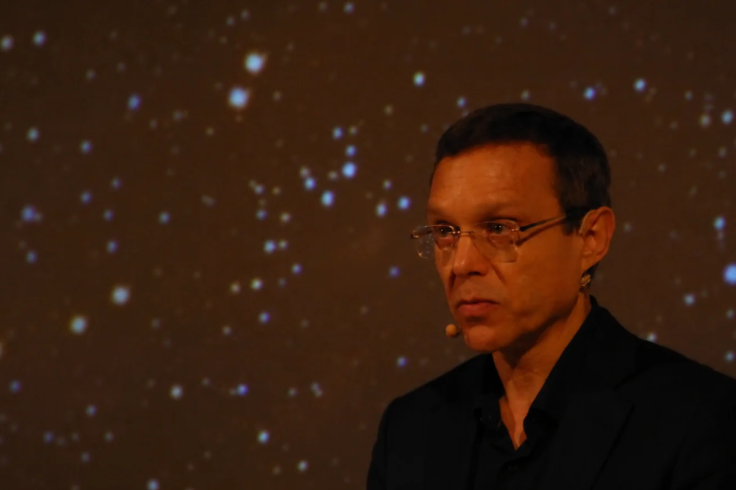
Avi Loeb, Harvard's Frank B. Baird Jr. Professor of Science, has suggested that near-Earth object 1998 KY26 could be the lost Soviet spacecraft Phobos 1.
His hypothesis, outlined in a June 2026 arXiv preprint, cited similarities in the objects' calculated orbits, size and brightness. However, the evidence does not establish that they are connected.
Loeb discussed 1998 KY26 during an interview with FOX Weather meteorologists Melanie Black and Michael Estime.
He described it as a 'dark comet', a term for small Solar System bodies showing non-gravitational acceleration without a visible coma or tail.
Why Avi Loeb Thinks 1998 KY26 Could Be Phobos 1
Phobos 1 launched from Baikonur Cosmodrome on 7 July 1988. NASA records show that it shut down on 2 September after receiving a faulty command sequence from Earth.
In their preprint, Loeb and co-authors Adam Hibberd, Adam Crowl and Carlos Gómez de Olea Ballester compare the spacecraft's calculated orbit with that of 1998 KY26. They describe similarities but acknowledge differences in orbital positions and elements. The paper does not claim the objects followed an identical path.
The researchers model two hypothetical changes in Phobos 1's velocity, with a combined change of about 1.9 kilometres per second. One is placed shortly after the spacecraft was lost in 1988, and the other in May 1996, before 1998 KY26 was discovered. These are elements of a mathematical reconstruction, not documented manoeuvres.
A 2025 study in Nature Communications estimated 1998 KY26's diameter at 11 ± 2 metres, or about 36 feet. It measured a geometric albedo of 0.52 ± 0.08, indicating unusually high brightness. That figure does not mean the asteroid reflects 52 per cent of all sunlight striking it.
What Avi Loeb Says About 1998 KY26 as a Dark Comet
Researchers introduced the dark-comet category in 2023 for small Solar System objects showing unexplained acceleration without detected cometary activity.
The category includes 1998 KY26. Faint outgassing remains one possible explanation, even when telescopes detect no gas or dust.
Loeb offered his explanation during the interview. 'Well, comet experts argue that it's a dark comet because there is a non-gravitational force acting on it, something that is not gravity that is pushing it, and they don't see any gas or dust coming off it. So they say it's a comet, but we can't see any signs of a comet, so it's a dark comet,' he said.
Loeb has also proposed that sunlight pressure acting on a spacecraft could explain the object's acceleration.
He connected the discussion to interstellar object 1I/'Oumuamua, discovered in 2017. 'The reason the dark comet concept was invented is another visit by an object from outside the solar system, called Oumuamua, that was discovered in 2017 and again showed non-gravitational acceleration without any outgassing, no gas or dust around it,' Loeb said.
Researchers formalised the category in 2023, but NASA says 'Oumuamua itself is not classified as a dark comet.
A 2025 study measured 1998 KY26's rotation period at 5.3516 ± 0.0001 minutes. The European Space Agency lists its orbital period as 497.6 days and its next close approach to Earth as 24 May 2039, at about 10.1 million miles. ESA does not list the asteroid as a risk.
Japan's Hayabusa2 spacecraft, operated by JAXA, is scheduled to rendezvous with 1998 KY26 in 2031 as part of its extended mission. The encounter is intended to study the object, not test Loeb's Phobos 1 hypothesis.
Loeb has separately suggested that 'Oumuamua could have an artificial origin. That remains speculative and provides no independent evidence that 1998 KY26 is the missing Phobos 1 probe.
© Copyright IBTimes 2026. All rights reserved.