'Why Are You So Rude?' Pete Hegseth Clashes with Reporters, Fiery 'So Nasty' Response Goes Viral
Hegseth's heated Pentagon exchange with media exposes pressure behind fragile US-Iran truce.

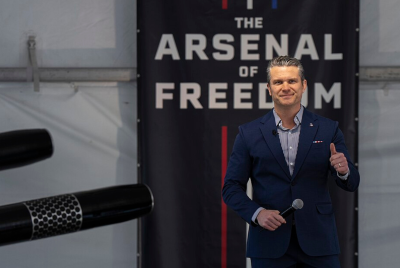
US Secretary of Defence Pete Hegseth's Pentagon briefing veered off script in a matter of minutes, exposing a flash of irritation that quickly overshadowed the message he was trying to deliver.
Hegseth was taking questions on Wednesday morning when pressed by the media on the apparent gap between past rhetoric and current policy. The Defence Secretary found himself cornered by a line of questioning that cut to the heart of US messaging on Iran.
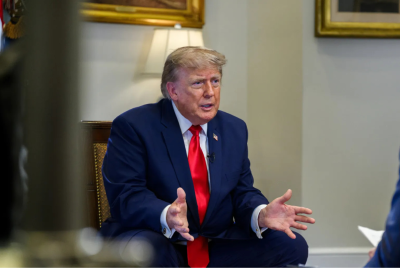
He had previously said President Donald Trump 'chose mercy', a phrase intended to frame restraint. Yet weeks earlier, he had warned that the United States would 'give no quarter to Iranian troops'. The contrast was difficult to ignore.
'Do you think your comments may have put American troops at risk?' a reporter asked.
'No. I try to be nice up here, but you did listen to what I said, right?' he replied. 'Typical ABC. It was an indictment framed as a question. No, you've had your chance.'
Another journalist interjected to point out that 'they're still firing ballistic missiles', Hegseth cut across the room. 'Excuse me. Why are you so rude? Just wait. So nasty.'
Q: You said the president 'chose mercy.' But you yourself said weeks ago that 'we will give no quarter to Iranian troops.' Do you think your comments may have put American troops at risk?
— Aaron Rupar (@atrupar) April 8, 2026
HEGSETH: No. I try to be nice up here, but you did listen to what I said, right? Typical… pic.twitter.com/2eb8VJBdsH
Clips Spread Faster Than Clarifications
Within minutes, the footage was circulating online. The reaction was swift and, in many cases, unforgiving.
On X, users were blunt. One described the performance as 'pathetic', while another pointed to the contradiction between invoking 'no mercy' in military terms and bristling at reporters' questions. A more measured critique cut through the noise. 'A defence secretary shouldn't be easily triggered. Just saying.'
Hegseth, critics argued, looked rattled.
The confrontation did not occur in isolation. Hegseth had been outlining Washington's position following a Pakistan-brokered ceasefire between the United States and Iran, a pause that already shows signs of fragility.
Reports emerged on Wednesday morning of Iranian-linked ballistic missile launches targeting sites in the Middle East. It remains unclear whether those strikes amounted to a deliberate breach of the agreement or a failure of coordination on the ground. Either explanation points to the same problem. The ceasefire is holding, but only just.
Hegseth sought to reinforce deterrence even as he defended the diplomatic track. He described the US operation as 'an overwhelming victory' and emphasised that American forces could resume bombing 'at a moment's notice'. It was a warning wrapped in reassurance, signalling both capability and restraint.
Conflicting Claims And Murky Control
Both sides have been quick to claim success. Iranian President Masoud Pezeshkian has said the ceasefire reflects Tehran's conditions, praising domestic efforts in securing the deal. The competing narratives are not unexpected, but they complicate the path forward.
Pakistani Prime Minister Shehbaz Sharif, who helped broker the agreement, has acknowledged that violations have already been reported. His intervention, intended to steady the process, instead underscored how tentative the arrangement remains.
Questions over the Strait of Hormuz have added another layer of uncertainty. The strategic waterway, critical to global oil flows, has become a focal point of confusion. The Iranian Navy appears to have restricted traffic, while US officials have avoided giving a clear answer on who currently holds operational control.
Signals From Washington And Beyond
Further details have emerged through US broadcast coverage tracking developments in real time. On ABC's World News Tonight, anchor David Muir noted that 'just hours after Trump announced the two-week ceasefire, Iran then said it had closed the Strait of Hormuz'. The sequence raises questions about how aligned the two sides ever were.
Chief White House Correspondent Mary Bruce added that negotiations are expected to begin in earnest this weekend in Pakistan. Even that timeline carries uncertainty. 'The two sides are not on the same page on a host of issues,' she said, pointing to gaps that remain unresolved.
Iran's insistence that the strait remains closed directly challenges one of Washington's core conditions. That standoff, unresolved and highly visible, risks undermining confidence before talks have properly begun.
© Copyright IBTimes 2026. All rights reserved.
- Recommended For You