Trump Meltdown: POTUS Claims 'Virtual Treason', Accuses Media Of 'Aiding The Enemy' Over Humiliating War Leak
Trump rages at 'virtual treason' as leaked intelligence suggests Iran has rebuilt key missile sites, deepening doubts over the White House's triumphant Iran war narrative

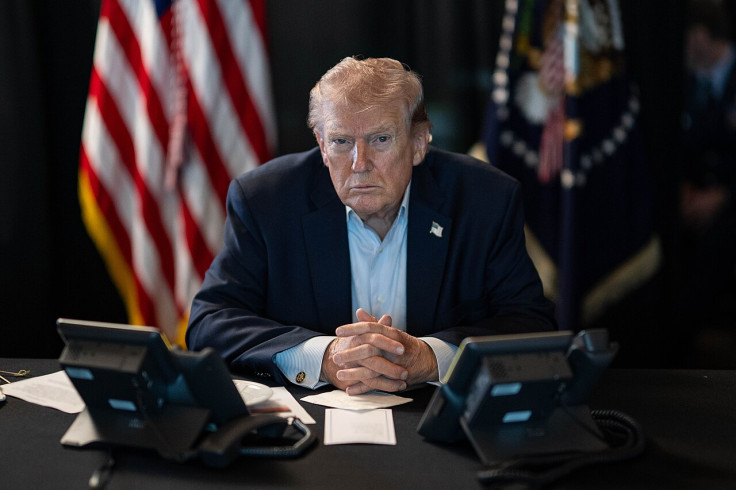
President Donald Trump has accused The New York Times of 'virtual treason' on Tuesday after the newspaper reported that, contrary to his repeated boasts, Iran has restored much of its missile capability following the launch of Operation Epic Fury in February 2026.
The clash over Iran's war damage comes after months of triumphal rhetoric from the White House about the campaign. Trump and Defence Secretary Pete Hegseth have sold Epic Fury as a decisive blow that left Iran's armed forces 'decimated' and 'combat-ineffective for years to come.' Since the joint US–Israeli strikes began in the early hours of 28 February, the administration's line has been simple and emphatic: Iran, militarily, is finished.
Meltdown Over Iran War Leak And 'Virtual Treason' Claim
The New York Times report, citing classified assessments from earlier this month, paints a sharply different picture of the Iran war. According to those assessments, Iran has regained access to 30 of its 33 missile sites along the Strait of Hormuz, a strategic artery for global oil shipments. Intelligence officials also concluded that Tehran has restored about 70 per cent of its missile launchers across the country and 70 per cent of its missile stockpile.
President Trump says that anyone reporting that Iran is doing well militarily is committing “virtual TREASON” and “aiding and abetting the enemy!” pic.twitter.com/VIUrZNQqUy
— OSINTtechnical (@Osinttechnical) May 12, 2026
Perhaps most awkward for the White House, the report says Iran has access again to roughly 90 per cent of its underground missile storage and launch facilities, described in the assessments as 'partially or fully operational.' That is a long way from 'no longer a threat.'
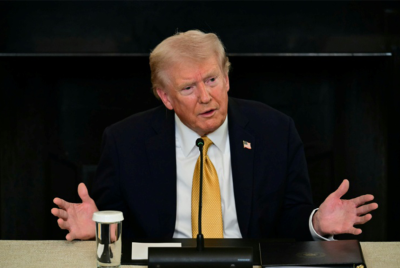
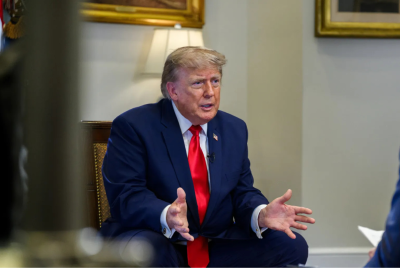
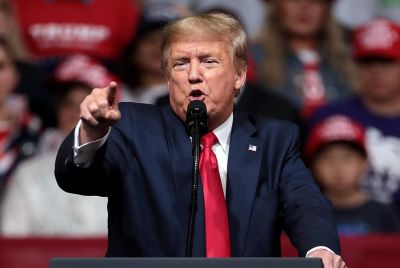
Trump's response was instant and furious. Posting on Truth Social on Tuesday afternoon, the 79-year-old president claimed that when 'the Fake News says that the Iranian enemy is doing well, militarily, against us, it's virtual TREASON in that it is such a false, and even preposterous, statement.'
'They are aiding and abetting the enemy!' he wrote. 'All it does is give Iran false hope when none should exist. These are American cowards that are rooting against our Country.'
He went on to insist that Iran's armed forces had been entirely wiped out, writing: 'Iran had 159 ships in their Navy — Every single ship is now resting at the bottom of the sea. They have no Navy, their Air Force is gone, all Technology is gone, their 'leaders' are no longer with us, and the Country is an Economic Disaster. Only Losers, Ingrates, and Fools are able to make a case against America!'
The language was vintage Trump: absolutist, aggrieved and politically useful. But it also placed him directly at odds with a growing stack of intelligence that has seeped into public view since the war began.
Iran War Claims Under Fire As Intelligence Leaks Mount
Weeks before this latest leak, multiple assessments had already chipped away at the administration's narrative of total victory in the Iran war. In early April, a classified report shared with US media concluded that about half of Iran's missile launchers had survived the strikes and that the country continued to have access to thousands of attack drones. One source familiar with that intelligence told CNN that Iran was still 'very much poised to wreak absolute havoc throughout the entire region.'
The Wall Street Journal echoed that picture a week later, confirming that Iran maintained access to thousands of ballistic missiles stored underground, which could be brought back into operation. Both accounts collided head‑on with Hegseth's confident assertion that Iran's 'missile program is functionally destroyed, launchers, production facilities, and existing stockpiles depleted and decimated and almost completely ineffective.' At the same press conference, he also claimed that 'Iran's air force has been wiped out.'
A CIA analysis circulated to policymakers earlier this month raised yet more questions. According to that assessment, Iran could withstand a US naval blockade for at least three to four months before experiencing 'significant economic hardship.' A US official who spoke to the Washington Post suggested even that estimate might be conservative, saying Iran's capacity to absorb economic punishment could be 'far beyond' what the agency had projected.
'The leadership has gotten more radical, determined, and increasingly confident they can outlast U.S. political will and sustain domestic repression to check any resistance' inside the country, the official said, drawing parallels with other regimes that survived years of embargoes and airpower-only wars.
Inside the US, public opinion is shifting into more familiar territory. Polling data cited by the Daily Beast, comparing attitudes to the Vietnam War in May 1971 and the current Iran conflict in April 2026, suggests a growing share of Americans now view the Iran war as a 'mistake,' though the precise figures are less important than the uncomfortable echo.
White House Doubles Down On Operation Epic Fury Narrative
Despite the mounting intelligence and media scrutiny of the Iran war, the White House is refusing to budge. Asked for comment by the Daily Beast, spokesperson Olivia Wales simply reiterated Trump's core message that Iran had been 'crushed militarily.'
'Their ballistic missiles are destroyed, their production facilities are dismantled, their navy is sunk, and their proxies are weakened,' she said, adding that Iran is being 'strangled economically' and losing $500 million per day under the US blockade of its ports. She argued that 'the Iranian regime knows their current reality is not sustainable, and President Trump holds all the cards as negotiators work to make a deal.'
Wales dismissed any suggestion that Iran had rebuilt its forces. 'Anyone who thinks Iran has reconstituted its military is either delusional or a mouthpiece of the IRGC,' she told the outlet.
At the Pentagon, officials have lined up behind the president's framing and pushed back at the New York Times coverage that triggered Trump's latest meltdown. Acting press secretary Joel Valdez told The Daily Beast it was 'so disgraceful that The New York Times and others are acting as public relations agents for the Iranian regime in order to paint Operation Epic Fury as anything other than a historic accomplishment.'
In a separate statement, Chief Pentagon spokesperson Sean Parnell praised the armed forces and insisted the US military 'has everything it needs to execute at the time and place of the President's choosing.'
The New York Times has been approached for comment on the administration's accusations. Nothing in the leaked assessments has been formally declassified, and none of the intelligence claims cited across outlets has been independently verified.
For now, though, the split-screen remains stark. On one side, Trump's insistence that Iran's navy, air force and missile arsenal have been erased. On the other, his own intelligence community quietly reporting that much of that arsenal is back on its feet and that Tehran may be more confident than Washington cares to admit.
© Copyright IBTimes 2026. All rights reserved.
- Recommended For You