Pete Hegseth Fury: Defence Secretary Accuses Ousted Generals of Ruining Military in Heated House Hearing
Hegseth's leadership overhaul faces scrutiny as blocked promotions and strategic priorities come under fire.


Defence Secretary Pete Hegseth explained why the Armed Services' recent revamp required a drastic overhaul of leadership.
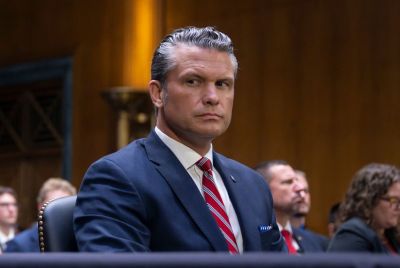
Hegseth launched into a fiery debate over his sweeping shake‑up of the senior ranks during today's House Armed Services Committee hearing, accusing the generals he removed of having helped erode the military's effectiveness.
He brushed aside repeated demands for detailed explanations of each firing, but insisted that he was solely responsible for deciding who would lead the services.
Pete Hegseth Explains the High-Level Army Firings
Hegseth argued the purged officers were no longer aligned with the current administration's strategic priorities, insisting that 'every officer serves at the pleasure of the president and when they need to be removed in order to ensure we have the right leadership in those services.' 'I will make those calls regardless of what you might say from the dais,' he asserted.
Asserting that the recent firings are not unique to the current administration, he said that 197 general officers were removed under the Obama administration. That number has previously been deemed inaccurate by the Pentagon.
Over the past 16 months, Hegseth has dismissed or sidelined at least 12 four‑star and three‑star generals and admirals, including Army Chief of Staff General Randy George, all without providing public reasons for the departures.
'The American people want to know from you,' Democratic Representative Derek Tran asked, 'did you ask the president for his permission before you fired General George?' Hegseth affirmed that he 'confer[s] with the Commander‑in‑Chief on especially high‑level personnel matters' and that the president 'was aware of the action that would be taken.'
Blocked Promotions of Qualified Officers Questioned
Tran also pointed to blocked promotions for Black and female officers, highlighting Army Secretary Dan Driscoll's testimony that he refused to strike the names of 'two female and two Black officers from a promotion list due to their exemplary service,' names that were ultimately removed anyway.
When Tran asked Hegseth whether he had ordered those names deleted, Hegseth confirmed, 'I know we removed those names,' and said promotions were now being reviewed more broadly, once again baulking when pressed for specific reasons.
Hegseth's supporters have framed the removals as a long‑overdue course correction, following years of a perceived liberal drift in the Pentagon's upper ranks. Hegseth had allegedly hinted at this, asserting that a 'new compass heading' must align force‑structure decisions with Trump's signature 'America First' doctrine.
How Will the Firings Impact the US-Iran Conflict?
Critics noted that the sheer number of high‑level firings under a single defence secretary is unprecedented in recent decades, and that the lack of explanation suggests that political loyalty now matters more than combat record. Pentagon officials interviewed for background checks reportedly confirmed that some of the removed generals were still considered operationally effective.
The House hearing unfolded against the backdrop of an active war in Iran, where General George's departure as Army Chief of Staff coincided with a major escalation in U.S. operations in the Strait of Hormuz. When grilled about removing the Army's top uniformed officer in the middle of a conflict, Hegseth stood by his assessment that the Army's leadership needed to be 'modernised.'
'I remain very hopeful that you can and will do better for the men and women who have dedicated their lives to protect our great country,' Tran said before the grilling. 'You're here to ask for $1.5 trillion. That's a huge budget, and I want to make sure that you have the ability to manage it.'
© Copyright IBTimes 2026. All rights reserved.
- Recommended For You