

Trump Cracks Down On Marriage Green Cards By Enforcing Spouses Into Intense Interrogations And Deep Bank Vetting
Exploring the implications of USCIS's discretionary approach to marriage green card applications.
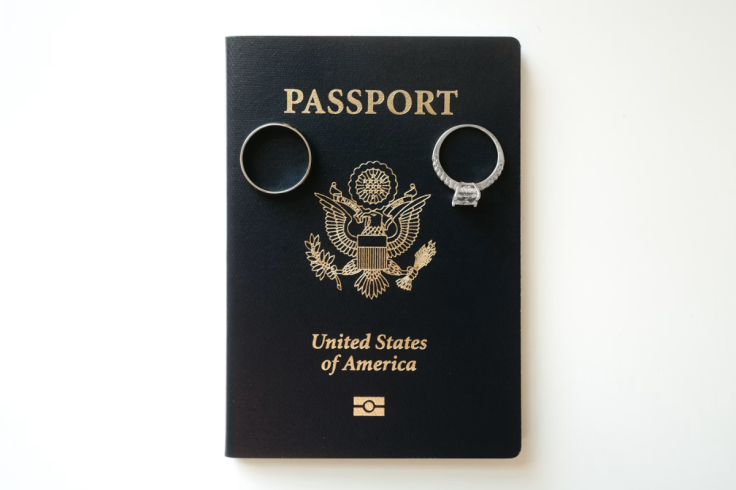
Trump administration immigration policy has raised new risks for marriage green card applicants, but the public record does not show a new rule requiring intrusive spouse interrogations or blanket bank-account examinations.
US Citizenship and Immigration Services issued Policy Memorandum PM-602-0199, which frames adjustment of status as discretionary and extraordinary relief rather than a routine alternative to consular processing.
The agency's announcement said it would grant adjustment of status only in extraordinary circumstances, a stance that can affect some spouses who seek permanent residence while already in the United States. USCIS has long examined whether a marriage is genuine, and it has long permitted interviews and financial evidence, but those checks are not evidence of a newly announced, universal bank-vetting or interrogation policy.
The 2026 Adjustment-of-Status Standard
Adjustment of status allows an eligible noncitizen in the United States to apply for lawful permanent residence without first obtaining an immigrant visa at a US consulate abroad. The governing regulation states that a person who is physically present, eligible for an immigrant visa and has a visa immediately available may apply, subject to listed bars and conditions.
Spouses of US citizens are 'immediate relatives' under federal immigration law. The regulation expressly exempts immediate relatives from several bars that apply to others, including some restrictions connected to unlawful status or unauthorised employment. That structure has made domestic adjustment a central route for many eligible spouses.
PM-602-0199 did not amend that statute or regulation. It instead directs officers to treat adjustment as an exercise of discretion and administrative grace when consular processing is available. USCIS's accompanying release adopted a much sharper public formulation, saying the agency would approve adjustment only in extraordinary circumstances.
That policy shift is consequential, but it is broader than marriage cases. It reaches adjustment applications generally, rather than establishing a separate marriage green card category. The memorandum may make domestic applications more uncertain for spouses who previously expected to complete the process in the United States, yet it does not itself establish a compulsory interview script or a new financial-document threshold.
Bona Fide Marriage Evidence Predates the New Memo
USCIS has always required a petitioner to show that a marriage is bona fide, meaning it was entered in good faith rather than solely to obtain an immigration benefit. Its Family-Based Petitions policy manual says officers may interview the petitioner, the beneficiary, or both, together or separately, at any stage of adjudication. The rule allows separation where the facts warrant it, but it does not say that every spouse must undergo a separate or unusually aggressive interview.
Financial records are also familiar evidence, not a new Trump-era requirement. USCIS guidance on conditional residence lists joint property, a shared lease and documentation showing commingled financial resources among possible proof of a bona fide marriage. Such records can include bank statements, but the guidance does not require every couple to hold a joint account or prescribe a blanket forensic review of private banking.
The distinction matters. USCIS's policy manual cautions that failure to prove a bona fide marriage does not, by itself, establish fraud. Officers must assess the full record, including documentary evidence and any interview testimony, before making a fraud finding. Ordinary evidentiary review must therefore be distinguished from an allegation that the government has created a new system of 'deep bank vetting.'
Family Petition Guidance and Enforcement Context
The administration has nonetheless taken actions that reinforce a tougher enforcement climate. On 1 Aug 2025, USCIS updated guidance for family-based immigrant petitions, including circumstances in which it may issue a Notice to Appear to a beneficiary who is otherwise removable. On 17 Oct 2025, it issued further guidance on recognised marriages and said the measure would strengthen its ability to identify marriage-based fraud at the early stages of the process.
USCIS also reported on 28 Apr 2025 that it had assisted an ICE investigation that dismantled what the agency described as a nationwide marriage-fraud operation. That law-enforcement case involved alleged misconduct by named defendants and should not be treated as proof that ordinary spouse petitions are presumptively fraudulent. Fraud investigations and adjudication standards are related, but they are not the same legal process.
The available primary materials therefore support a report about heightened discretion, more serious consequences for removable beneficiaries and a continuing fraud-enforcement push. They do not support a categorical claim that the government now forces all spouses into 'intense interrogations' or conducts a new, mandatory deep review of every couple's bank records. The operational impact of PM-602-0199 will depend on how field offices apply its discretionary framework and whether courts alter the policy.
For spouses seeking US green cards, the most defensible conclusion is that the route has become less predictable, not that every marriage case has been transformed into a financial inquisition.
© Copyright IBTimes 2026. All rights reserved.