

'Must Return Home': Donald Trump Memo Forces 1 Million Legal Green Card Applicants Out of the US
USCIS memo alters green card application process, impacting millions.
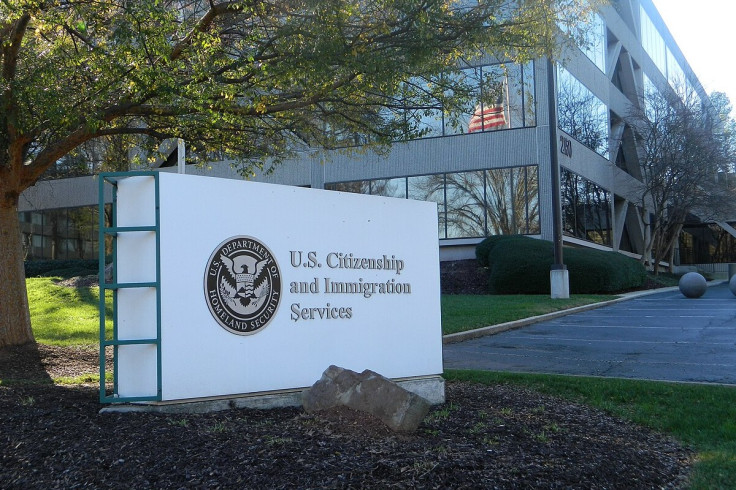
Donald Trump's green card applicants out of US policy has been thrust back into the spotlight after a May 21 memo from U.S. Citizenship and Immigration Services (USCIS) signalled that migrants already living legally in America may now be required to leave and apply from abroad, a shift that could affect roughly one million pending applicants.
The six-page directive, labelled PM-602-0199 and posted online the following day, states that individuals in the country on temporary visas 'must return' to their home country to pursue permanent residency, according to a Department of Homeland Security summary. USCIS spokesman Zach Kahler said the move restores 'the original intent of the law.'
Adjustment of status has long been the backbone of the US legal immigration system, allowing people on visas, from skilled workers to spouses of American citizens, to apply for a green card without leaving the country. It accounts for more than half of all legal immigration pathways over the past generation, according to analysis cited by the Cato Institute.
Green Card Applicants Out of US Policy Rewrites the Rules
What has changed is not the law itself but how it is applied. The memo recasts adjustment of status as 'an extraordinary form of relief' rather than a routine administrative step. Immigration officers are now instructed to weigh negatively the fact that applicants chose to remain in the US while applying.
Meeting eligibility criteria is no longer sufficient. Applicants must now demonstrate what the memo calls 'unusual or even outstanding equities' to justify approval. The burden has shifted, quietly but decisively.
Kahler argued the policy would 'make our system fairer and more efficient' and free up resources for other visa categories, including those for victims of violent crime and trafficking. Critics see something else entirely.
David Bier, director of immigration studies at the Cato Institute, described the change on X as 'the most anti-legal immigration admin in US history,' warning it could separate families and disrupt careers. That language is political, certainly, but the scale of the disruption is harder to dismiss.
USCIS data shows around 1.24 million Form I-485 applications were pending as of the third quarter of fiscal year 2025. Even a modest tightening of approvals would ripple across a vast group of workers, students and families who assumed the system they entered would hold.
Former USCIS official Michael Valverde told CBS News the move would 'disrupt the plans of hundreds of thousands of families and employers annually,' calling it 'largely unprecedented.' Doug Rand, who also previously served at the agency, said it could make it 'difficult or impossible' for US citizens to build lives with foreign-born spouses who entered legally.
And then there is the labour question. H-1B visa holders, alongside dependants, number close to 1.3 million in the US. These are engineers, doctors, finance professionals, the kind of people countries compete for. Representative Greg Stanton warned the policy could undercut that advantage, while Representative Ted Lieu went further, arguing it may hand an edge to geopolitical rivals.
Green Card Applicants Out of US Order Collides With Reality Abroad
The directive's core instruction, go home and apply, runs into a practical problem. For many applicants, there is no functioning 'home' consulate to return to.
The US has halted or limited immigrant visa processing in 75 countries, according to the data cited by Bier. There is no operating US embassy in Russia. Services remain restricted in countries such as Iran, Belarus and Venezuela. For applicants from those regions, the pathway outlined in the memo can quickly become a dead end.
Venture capitalist Nick Davidov highlighted the issue online, noting that founders in his portfolio would be directly affected. 'Russians don't have anywhere to go,' he wrote, adding that applicants from several countries cannot realistically return to complete the process.
Leaving the US after overstaying a visa, even briefly, can trigger re-entry bans of three or 10 years under existing immigration law. Waivers exist but require proof of 'extreme hardship' to a US citizen relative, a threshold immigration lawyers say is already difficult to meet.
That tension, between policy intent and legal reality, is likely to end up in court. Several law firms expect challenges arguing USCIS is effectively narrowing a pathway Congress created, without going through formal rulemaking.
There is precedent. Cato Institute analysis found Cuban adjustment of status approvals dropped 99.8 per cent between October 2024 and January 2026, despite the underlying law remaining unchanged. During the same period, ICE detentions of Cuban migrants rose 463 per cent, and a federal lawsuit was filed over delays affecting more than 100,000 cases.
The memo itself acknowledges its limits, stating it 'may not be relied upon to create any right or benefit' enforceable under law. That line, buried in bureaucratic language, may prove pivotal if judges are asked to weigh whether the agency has overreached.
What remains unclear is how the policy will be applied in the immediate term. USCIS has not confirmed whether pending applications filed before May 21 will be judged under previous standards. There is also no detailed guidance on what qualifies as 'extraordinary circumstances,' nor clarity on the fate of associated work permits.
Immigration attorney Ana Gabriela Urizar offered a more cautious reading, writing that the memo 'does not necessarily signal a major shift' for well-prepared cases, though she noted applicants may need to present stronger evidence of their contributions and ties to the US.
For now, those caught in the system are left in a kind of administrative limbo, following rules that appear to have shifted mid-process. The assumption that compliance would be enough, that if you waited your turn the door would eventually open, looks less certain by the day.
© Copyright IBTimes 2026. All rights reserved.