Trump 'Quite Interested' In Arab Funding For Iran War—White House Reveals Plan
White House says Trump may push Arab nations to fund Iran conflict as tensions rise and quiet diplomacy with Tehran continues behind the scenes.
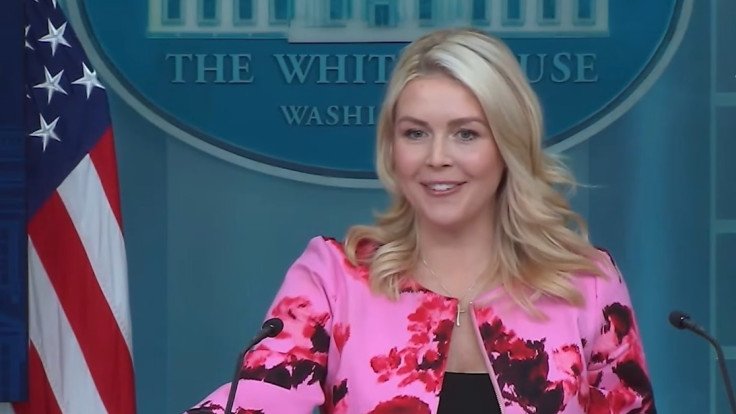
A proposal from Donald Trump to shift the financial burden of the Iran war onto Arab nations is raising fresh questions about the future of Middle East alliances. The idea, disclosed by White House Press Secretary Karoline Leavitt, suggests Washington could seek financial backing from regional partners if tensions escalate into a wider conflict — potentially signalling a significant recalibration of how the United States approaches both war financing and regional diplomacy.
Officials insist that diplomatic engagement with Tehran is still ongoing, creating a backdrop in which negotiation and escalation are unfolding simultaneously.
Trump Weighs Arab Funding for Iran War
Speaking at a press briefing, Leavitt confirmed that Trump is open to asking Arab countries to contribute financially to the Iran war effort. 'I think it's something the President would be quite interested in calling them to do,' she said, adding that it is an idea Trump has considered and may discuss publicly. Leavitt stopped short of outlining a formal plan but indicated the concept is under active consideration within the administration. The proposal reflects a broader burden-sharing approach that has been a recurring theme in Trump's foreign policy, particularly when dealing with allies.
Trump Warns on Iran's Energy Infrastructure
The funding discussion comes amid heightened tensions between Washington and Tehran, following renewed hostilities involving Israel and Iran-backed forces. Trump warned that Iran's energy infrastructure, including oil facilities, could be targeted if Tehran failed to comply with US demands regarding the strategic Strait of Hormuz, a warning that followed reports Iran had dismissed US peace proposals as 'unrealistic' while launching missile attacks linked to the broader regional conflict. The Strait remains one of the world's most critical oil transit routes, and any disruption would have immediate consequences for global energy markets and consumer prices.
Diplomatic Engagement Continues in Private
Despite the pressure, the White House maintains that diplomatic talks with Iran are ongoing and, according to Leavitt, progressing. 'What is said publicly is, of course, much different than what's being communicated to us privately,' she said, suggesting Tehran may be more flexible in closed-door discussions. Leavitt also said that Iran had privately agreed to certain US positions, though she provided no specific details. She stressed that any commitments from Tehran would be closely scrutinised, and that the United States would ensure Iran is 'held accountable to its word.' This reflects long-standing concerns over Iran's compliance with international agreements, particularly following disputes over nuclear commitments in previous years.
Arab Nations Face Difficult Choices
The suggestion that Arab nations could help fund the war against Iran introduces a significant dynamic into Middle Eastern geopolitics. Countries in the region, many of which have complex relationships with both the US and Iran, may face difficult choices if such a proposal is formally pursued. Regional analysts have suggested the move could deepen divisions within the region while reshaping alliances, particularly if financial contributions become tied to security guarantees.
Further escalation involving Iran risks disrupting oil supplies, potentially driving up fuel costs and affecting inflation globally. The White House has framed the funding idea as a possibility rather than a concrete policy, though its public acknowledgement suggests it is being seriously considered at the highest levels of government.
© Copyright IBTimes 2026. All rights reserved.
- MOST POPULAR IN World