

Jesse Watters Says Trump's Nicki Minaj Remark Could Reach 'Low Propensity Voters' Ahead of Midterms
The Fox News host said the provocative moment might break through to infrequent voters
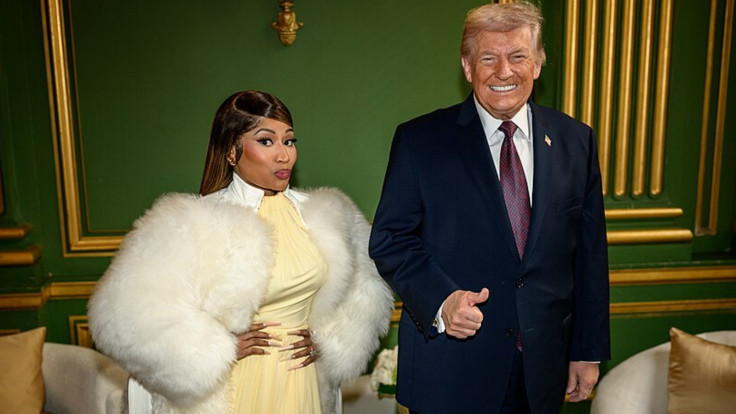
Fox News host Jesse Watters has argued that President Donald Trump's remark about rapper Nicki Minaj could attract voters who rarely participate in elections.
His comments came as Republicans campaigned ahead of the US midterm elections on 3 November 2026. The discussion followed Minaj's appearance at a Trump campaign rally in Port Huron, Michigan, on Sunday, 25 October.
Trump made an explicit remark about the rapper's body during his speech, drawing attention to a moment that quickly circulated beyond the campaign event.
Minaj, 43, attended the rally as a supporter of Trump. The president, 80, praised her appearance before asking her to stand. He then returned to his speech after acknowledging the attention his comments had attracted.
What Jesse Watters Said About Trump and Nicki Minaj
Watters discussed the incident on Fox News' The Five on Monday, 26 October. His argument centred on whether an unexpected celebrity-related remark could reach people who pay little attention to conventional political messaging.
'If Trump is talking about healthcare or the economy, is that gonna break through? But when he says that about Nicki's butt...low propensity voters that punctures their bubble,' Watters said.
Low-propensity voters are eligible voters who participate in elections inconsistently. Political campaigns may seek to reach them because their participation can affect electoral outcomes, particularly in closely contested races.
However, Watters' argument does not establish that the remark will change anyone's voting behaviour. No polling or turnout figures were presented in the quoted discussion to demonstrate such an effect.
The incident also raises a distinction between attracting attention and persuading voters. A controversial remark can circulate widely without necessarily changing opinions, motivating people to vote or influencing their choice of candidate.
The Irish Star report describes Watters' comments as a defence of Trump's remark. The original programme footage should remain the primary reference for his exact wording and the surrounding discussion.
The Wider Debate Over Political Messaging
The episode comes during the final stretch of campaigning before the midterms. Candidates and their allies are seeking attention from voters, but the electoral value of any particular campaign moment cannot be established from publicity alone.
Trump's comments about Minaj also highlighted the gap between a campaign's intended message and the moments that dominate subsequent coverage.
The remark concerned the rapper's appearance rather than a policy proposal, leaving the question of its political significance open.
A separate incident involving Defence Secretary Pete Hegseth illustrates how remarks at official events can generate attention beyond their original setting.
In April 2026, Hegseth delivered a prayer at the Pentagon that drew comparisons with dialogue from Quentin Tarantino's 1994 film Pulp Fiction. The prayer included wording adapted from the film's famous monologue, which its fictional speaker associates with Ezekiel 25:17.
Pentagon spokesman Sean Parnell defended the prayer, saying it and the film dialogue reflected the biblical verse. The episode therefore involved both the resemblance to a well-known film scene and the administration's explanation of the prayer's origins.
The comparison provides context for how public remarks can become subjects of wider debate. However, it does not establish that the two incidents had the same political consequences.
For Watters, the central question is whether provocative moments can reach voters who might otherwise ignore campaign messaging. His comments present that possibility as a political argument, not a demonstrated outcome.
With the midterms approaching, the broader electoral effects of such remarks remain uncertain. Their significance will depend on evidence of voter engagement and behaviour, rather than attention alone.
© Copyright IBTimes 2026. All rights reserved.