

Judge Orders Trump's Agriculture Secretary To Stop Sending Bible Verses and Christian Messages to 100K Workers
The preliminary injunction limits the agriculture secretary's use of official communications but allows private faith discussions with willing colleagues
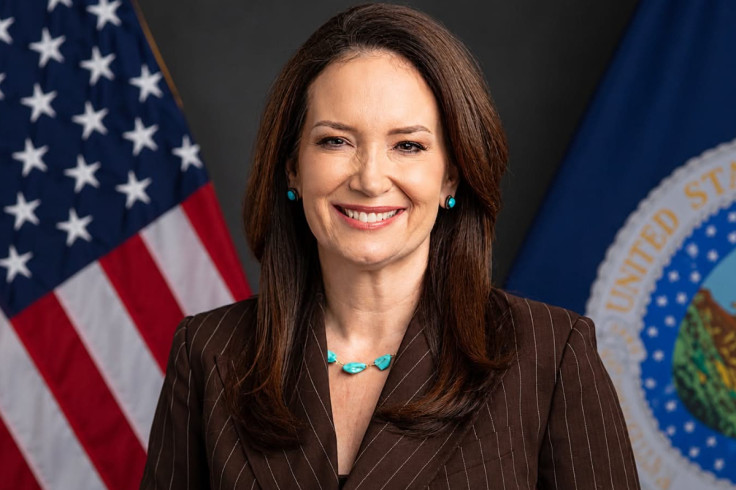
A federal judge has restricted Brooke Rollins' use of official US Department of Agriculture (USDA) communications to distribute religious messages to employees, issuing a preliminary injunction on 19 November 2026. The order followed a lawsuit over Christian messages sent through official channels to the department's roughly 100,000 workers. It does not prevent Rollins from discussing her faith with interested colleagues at work.
US District Judge Trina L. Thompson of the Northern District of California granted preliminary relief on the plaintiffs' First Amendment claim. She dismissed their claims under the Administrative Procedure Act (APA) but denied the government's motion to dismiss the constitutional claim. The wider case remains unresolved.
The lawsuit was filed on 13 May by the National Federation of Federal Employees and seven USDA employees. One employee, Adam Diamond, withdrew his claims on 19 May, leaving six individual employees in the case. The union represents approximately 110,000 federal workers, including more than 19,000 USDA employees.
The plaintiffs argued that the messages pressured employees to share Rollins' Christian beliefs. They challenged the communications as government-sponsored religious coercion, citing their wording, official distribution and the secretary's position of authority.
Thompson's findings appear in a 21-page court order filed on 19 November. She concluded that the Christmas and Easter messages went too far, suggesting pressure for employees to conform to the secretary's religious beliefs.
Christian Messages to USDA Staff Prompted Legal Challenge
On 23 December 2025, Rollins sent employees a Christmas video. She described Jesus as 'the gift of his Son and our Savior Jesus Christ' and said he came to free people from sin and open the door to eternal life.
On 5 April 2026, she sent an Easter email addressed to 'All USDA Employees'. It described Jesus' resurrection as 'the foundation of our faith' and compared employees to 'the very first disciples to encounter our risen Lord'. Rollins urged staff to embrace 'Paschal joy'.
The court focused on words such as 'we', 'us' and 'our'. Thompson said the wording presented Christianity as a shared belief across the department without recognising employees who followed other religions or held no religious beliefs.
The communications were distributed through Rollins' official account, which was also used for departmental announcements. The court considered her authority and how difficult it was for employees to ignore messages from their department head. Such communications could make workers feel pressured to adopt her beliefs or conceal their own.
Injunction Sets Limits on Rollins' Religious Expression at Work
Thompson stressed that her ruling did not condemn prayer or private religious belief. She wrote that the court's judgment said nothing about the value of prayer or those who believe in its power.
Under the injunction, Rollins must follow the USDA's workplace religious-expression policy. She must stop if a colleague asks her to, cannot create a hostile work environment through persistent unwelcome advances and cannot use her official authority to pressure subordinates.
She may still discuss her beliefs with interested colleagues, explain why her faith matters to her, politely invite co-workers to religious services or events and express religious views during appropriate conversations. The order does not restrict what she may do in her personal capacity.
The USDA described the decision as an unprecedented attempt to muzzle a Cabinet secretary and said it was considering an appeal, according to The Associated Press.
The ruling does not ban all religious expression at work. It restricts Rollins' use of official authority and departmental communications in ways that could pressure employees to adopt a particular religion.
© Copyright IBTimes 2026. All rights reserved.