

Supreme Court Rejects Trump Request To Restrict Transgender Prison Care Over 'Institutional Security'
The decision leaves a lower court order blocking revised Bureau of Prisons rules, including proposed limits on hormone therapy and other accommodations, while the lawsuit continues.
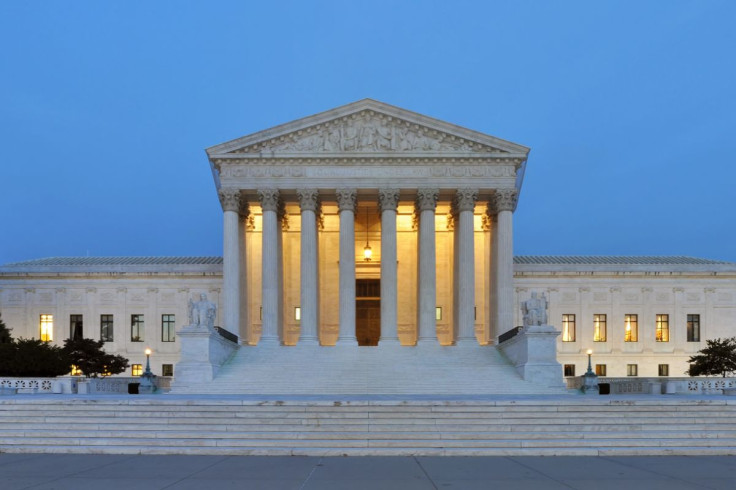
The US Supreme Court rejected the Trump administration's emergency request to restrict gender-affirming care for transgender people in federal prisons.
The ruling left a lower court's order in force, preserving access to hormone therapy while the lawsuit continued.
The dispute began with an executive order from President Donald Trump directing that federal funds no longer pay for certain gender-affirming medical treatments for people in the custody of the Bureau of Prisons.
A group of transgender federal prisoners sued the administration after the order. The bureau responded by revising its rules on medical care. The administration also sought to remove certain accommodations for transgender prisoners.
The Security Argument Before the Supreme Court
The US Department of Justice sought a stay of the district judge's order. A pause would have allowed the bureau to implement its revised policy while the lawsuit was pending.
The department argued in its emergency brief that the restrictions were necessary to 'maintain institutional security'.
The prisoners' lawyers challenged the justification. They argued that the administration had offered no evidence that gender-affirming medical care posed a threat to prison security.
'The denial of medically necessary health care, including gender-affirming health care, to people in prison is a violation of their fundamental constitutional rights,' stated Li Nowlin-Sohl, a lawyer with the American Civil Liberties Union.
'We will continue to defend the rights of our clients and all incarcerated people,' Nowlin-Sohl added.
Hormone Therapy at Stake in the Supreme Court Case
The Bureau of Prisons has provided hormone therapy since at least 1992. Its revised policy set out a plan to withdraw that care gradually from prisoners who were already receiving it.
Lawyers representing the prisoners said nearly 1,000 people in federal custody could be affected by the restrictions on gender-affirming care.
The bureau's longstanding policy also provided access to certain surgical procedures and accommodations for prisoners experiencing gender dysphoria.
The condition involves significant distress linked to a mismatch between a person's gender identity and the sex they were assigned at birth, as explained by the University of Pittsburgh Medical Center.
Explaining the revision, the bureau stated that its new policy would 'reflect treatment for gender dysphoria that is more aligned with the latest scientific information'.
How the Case Reached the Supreme Court
The prisoners had secured an order from a federal district judge blocking the revised policy before it could take effect. The US Court of Appeals for the DC Circuit declined to intervene. With the order still in force, the Justice Department took its emergency application to the Supreme Court.
Justices Clarence Thomas and Samuel Alito dissented from the decision to deny emergency relief. At the time of the ruling, the court had a 6-3 conservative majority, Reuters reported.
The emergency application dealt with enforcement of the revised rules during the lawsuit. The prisoners' underlying challenge to the restrictions on their medical care and accommodations remained unresolved.
Some of the proposed changes concerned accommodations available under the bureau's earlier policy. The district judge's order left those changes on hold, including planned restrictions on access to binders, padding and wigs.
© Copyright IBTimes 2026. All rights reserved.