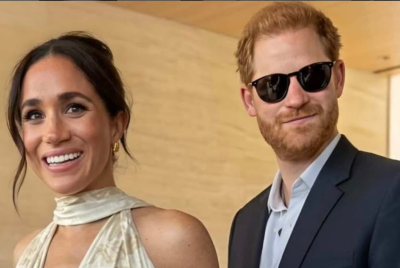
King Charles Allegedly Wants Prince Harry Back—But the Monarchy May Pay the Ultimate Price
A king's longing for his son is colliding with a nation's dwindling tolerance for royal second chances.

King Charles is quietly aligning himself with Prince Harry through a series of apparently coordinated public interventions in the UK, according to royal insiders. The questions are no longer just about whether the King wants his younger son back in the fold, but whether pursuing that reconciliation risks weakening the monarchy itself.
For context, the latest intrigue began with a week of strikingly similar messaging from father and son on one of the most sensitive issues in British public life. At the state opening of Parliament in London, King Charles read out his government's agenda and included a pointed promise that ministers would 'take urgent action to tackle antisemitism and ensure all communities are safe.'
Almost simultaneously, Prince Harry surfaced in the pages of the New Statesman, a left-leaning British magazine, with a lengthy opinion piece lamenting the rise of antisemitism in the UK.
Prince Harry has never previously been a prominent voice on antisemitism and, as critics note, his own record is hardly spotless. His decision as a young man to wear a Nazi uniform to a costume party continues to hang over his moral authority on the subject, even after his attempt in Spare to shift some blame onto Prince William and Catherine. So his sudden intervention on British antisemitism, from his Californian exile, raised eyebrows well before anyone clocked how neatly it echoed his father's public line.
The synchronicity did not end on paper. While Prince Harry was pushing his message in print, King Charles travelled to Golders Green, the heart of London's Jewish community, to meet two men who were stabbed in what police have described as an antisemitic terror attack on 29 April. He spoke with Chief Rabbi Sir Ephraim Mirvis, thanked the Shomrim volunteer patrol who helped detain the suspect, and greeted the Hatzolah ambulance team who treated the victims. To one onlooker, he remarked: 'It's a dangerous world, isn't it?'
When The Royalist pressed Prince Harry's camp on whether his New Statesman article had been coordinated with the Palace, Team Sussex insisted there had been no operational note from the King's office and dismissed the overlap as 'coincidence.' It is certainly a generous coincidence, and not the first of its kind.
Tom Sykes is having a huge meltdown cause he now believes King Charles and the British government are working in cahoots with Prince Harry, with coordinated messaging happening behind the scenes. After previously devoting reams of pages mocking Richard Eden’s “Project Thaw”… pic.twitter.com/wNIFdLZHld
— Senior Lieutenant Zandi Sussex (@ZandiSussex) May 15, 2026
Coincidence or Coordination? Scrutiny Grows Over Alleged Prince Harry–King Charles Alignment
In case you missed it, something similar unfolded earlier this year over Ukraine. Just days before King Charles addressed the US Congress, Prince Harry delivered his own speech on the war at the Kyiv Security Forum. Observers noted that the Duke's comments closely tracked the themes and tone his father later adopted in Washington.
Sources later told The Royalist that Prince Harry and King Charles were 'aligned' on the issue and that Harry was highly satisfied with what the King said to American lawmakers. At the time, this was framed as an ideological overlap between a father and son who share certain instincts, not evidence of a backchannel. With the antisemitism double act now in view, the pattern looks less accidental.
Prince Harry writing about anti-Semitism and Inti islam divides in the UK and suddenly King Charles is visiting Golders Green in order to support the Jewish community that was recently attacked. Prince Harry the global leader, everyone following behind him. pic.twitter.com/vEu6rLBGK7
— Nina (@ShakeLS) May 14, 2026
Seen from a more cynical angle, Prince Harry's Ukraine intervention raises uncomfortable questions. Was the government, or the Palace, effectively floating a quasi-official position through a semi-detached royal, testing how criticism of American policy might play with the Trump administration? If Donald Trump and his allies had reacted furiously, it is not hard to imagine the Palace insisting Harry spoke solely in a private capacity and quietly trimming the King's own language in Congress.
None of this is proven. Prince Harry's office denies formal coordination, and there is, so far, no documentary evidence of a structured joint strategy. For now, everything rests on timing, tone, and a run of unlikely 'coincidences,' which means any theory of a secret alliance should be treated with a grain of salt.
Did King Charles & Prince Harry coordinate their messages on hate crimes? https://t.co/9X8keZWUmd pic.twitter.com/7NDotKvkNk
— Kaiser@Celebitchy (@KaiseratCB) May 15, 2026
'Lost' in America, Prince Harry's UK Comeback Dream Allegedly Hits a Royal Wall
Behind these public set pieces lies a more personal story. Those close to the situation say Prince Harry has never given up on the idea of returning to Britain in some form, ideally as a 'half-in, half-out' figure combining private projects with a semi-royal role. Every recent intervention, from Ukraine to antisemitism, has been aimed squarely at British concerns. For a man who insists he is settled in California and has not properly lived in the UK for six years, his sudden focus on domestic British issues feels telling.
Based on conversations over the past year, royal reporters say Prince Harry does intend to move back in some shape or form. Whatever success Meghan Markle may be having with her lifestyle venture and its much-discussed jars of jam, the perception in royal circles is that America has not delivered what Harry hoped. The word used repeatedly is that he looks 'lost.'
Are King Charles and Prince Harry in Cahoots Amid Heated Family Feud? Inside the Clues https://t.co/A89d04YjVS pic.twitter.com/K8RcY5koTc
— OK! Magazine USA (@OKMagazine) May 15, 2026
If he is to re-establish himself in Britain, he will need far more than a change of heart. Security is the most obvious hurdle. Prince Harry reportedly believes his father 'holds the keys' to resolving his legal and protection disputes. Without firm backing from the Palace and at least tacit support from the political establishment, any substantial return looks impossible.
That places King Charles in a tight corner. Those who know him well say his 'dearest wish' is to reconcile with Prince Harry, and his next, only slightly lesser, wish is that Harry and William can repair their shattered relationship. King Charles has always insisted on being seen as human, emotional, and compassionate. Any parent estranged from a child will recognise the pull.
Are King Charles and Prince Harry working together? Our royal experts discuss after they spoke out in support of the Jewish community. Watch the latest episode of Talking Royals on YouTube, ITVX or wherever you get your podcasts. pic.twitter.com/G9FIlUM9UE
— Cherry (@Mis_Angel_888) May 15, 2026
Yet the King is also custodian of an institution that many Britons feel Prince Harry has spent the past four years attacking. Spare, the couple's Netflix series, the relentless public airing of private grievances, forgiving all of that and ushering Harry back in would strike many as indulgent at best, weak at worst.
Polling underlines the risk. King Charles's approval rating sits at around 60 per cent. It is respectable rather than euphoric, and heavily buttressed by residual respect for the Crown. Ask people what should happen to Prince Harry, or indeed Prince Andrew, and the consensus is closer to Prince William's reported stance: they tried to wreck the monarchy and should be kept firmly at arm's length.
IBTimes UK has reached out to King Charles and Prince Harry's reps for comments.
© Copyright IBTimes 2026. All rights reserved.
- Recommended For You