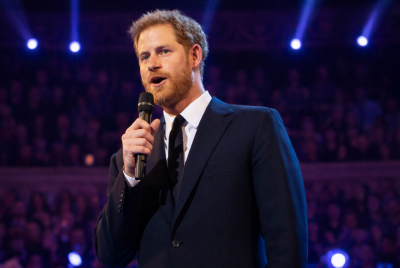
'Hate Is Not Protest': Prince Harry Breaks Silence on UK Antisemitism Surge
The Duke of Sussex calls for clearer lines between legitimate criticism of states and prejudice against entire peoples, drawing on his own past mistakes to argue for responsibility and unity.
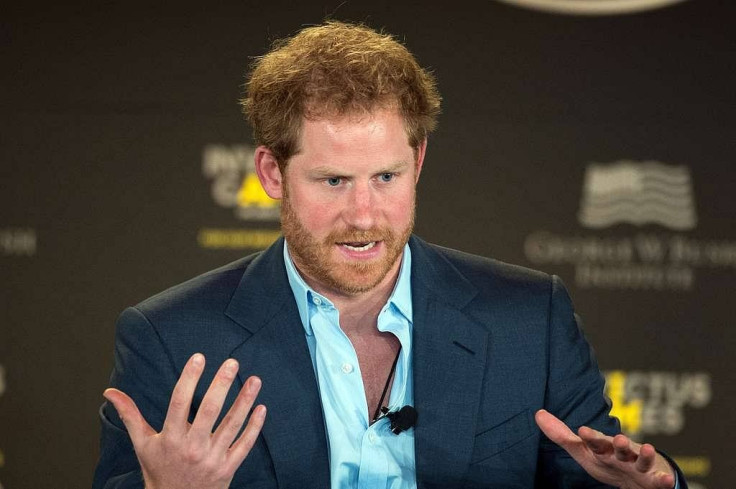
Prince Harry has used an opinion article published in The New Statesman this week to warn of what he called a 'deeply troubling' rise in antisemitism in the UK, saying hostility towards Jewish people was being allowed to blur into public anger over events in the Middle East.
Writing from California but addressing Britain directly, the Duke of Sussex said he felt compelled to speak because silence lets 'hate and extremism' grow unchecked, and argued that criticism of a state must never be turned on to an entire faith or community.
Prince Harry Says UK Antisemitism Is 'Deeply Troubling'
In his New Statesman essay, titled 'MY FEARS FOR OUR DIVIDED KINGDOM', Prince Harry argues that British Jews are 'being made to feel unsafe in the very places they call home' and that this should 'alarm us, but also unite us.'
He frames the recent surge in antisemitic incidents as part of a broader problem with public discourse. 'Over the past several years, I have spoken about the consequences of a world in which outrage outpaces humanity – where fear and division are amplified faster than truth, and where people are too easily reduced to categories, identities or opposing sides,' he writes.
MY FEARS FOR OUR DIVIDED KINGDOM
— The New Statesman (@NewStatesman) May 14, 2026
BY PRINCE HARRY
Over the past several years, I have spoken about the consequences of a world in which outrage outpaces humanity – where fear and division are amplified faster than truth, and where people are too easily reduced to categories,… pic.twitter.com/EAydV0wUNK
The Duke links that pattern directly to events in the UK. 'Across the country, we are seeing a deeply troubling rise in anti‑Semitism,' he says, adding that recent episodes of 'lethal violence in London and Manchester have brought this into sharp and deeply troubling focus.'
Throughout the piece, he stresses that his criticism is not aimed at protest itself. 'We have seen how legitimate protest against state actions in the Middle East does exist alongside hostility toward Jewish communities at home – just as we have also seen how criticism of those actions can be too easily dismissed or mischaracterised,' he argues.
'Hate Is Not Protest': Harry Calls For Clarity Over Anger
A central theme of the article is Prince Harry's insistence that people in Britain must be much clearer about the targets of their anger when they respond to conflict abroad.
He acknowledges what he calls 'deep and justified alarm' about casualties in Gaza, Lebanon and elsewhere in the region, and accepts that the impulse 'to speak out, to march, to demand accountability' is 'human and necessary.'
But he warns that 'these two realities are being dangerously conflated': on one side, legitimate criticism of governments and state actions; on the other, hostility aimed at whole communities.
'Nothing, whether criticism of a government or the reality of violence and destruction, can ever justify hostility toward an entire people or faith,' he writes. Later, he puts it even more bluntly: 'Because hatred directed at people for who they are, or what they believe, is not protest. It is prejudice.'
Harry repeatedly refers to 'the state' rather than naming Israel directly. He argues that 'when states act without accountability, and in ways that raise serious questions under international humanitarian law – criticism is both legitimate, necessary and essential in any democracy', but insists that 'the onus falls squarely on the state – not an entire people.'
Prince Harry Links Antisemitism Stance To His 'Past Mistakes'
In an unusually personal passage, Prince Harry acknowledges that his own record shapes how he speaks about antisemitism now.
'I am acutely aware of my own past mistakes – thoughtless actions for which I have apologised, taken responsibility and learned from,' he writes, in what is widely understood as a reference to the 2005 episode in which he attended a fancy‑dress party in a Nazi uniform with a swastika armband. At the time, the then‑20‑year‑old prince issued a public apology and called it 'a poor choice of costume.'
That scandal has long shadowed his public image. In the New Statesman piece, he suggests it also underpins his current stance. 'That experience informs my conviction that clarity matters now more than ever, at a time when confusion and the distortion of truth are doing real harm – even when speaking plainly is not without consequence,' he says. 'It requires responsibility from all of us.'
Harry argues that remaining silent in the face of rising hate is not an option. He says he felt compelled to speak because saying nothing allows 'hate and extremism to flourish unchecked' and insists his desire 'to fight against injustice' does not depend on where he lives, despite his move to California with Meghan, Duchess of Sussex, and their children.
Antisemitism, Anti‑Muslim Hate And A 'Divided Kingdom'
The essay broadens out in its final sections to address not only antisemitism but also anti‑Muslim hatred and what Harry sees as an increasingly fractured national conversation.
He criticises what he calls a 'polarised' public debate that, in his view, deepens the 'confusion that fuels division.'
He worries about a climate where 'fear and division are amplified faster than truth' and where people are 'too easily reduced' to opposing camps.
Harry urges those participating in protests to be 'clear' about 'where anger is directed, and where it must never be allowed to fall.' 'When anger is turned toward communities – whether Jewish, Muslim, or any other – it ceases to be a call for justice and becomes something far more corrosive,' he writes.
The Duke finishes with an appeal for 'unity' and a warning about the cost of simply trading injustices. 'We cannot answer injustice with more injustice. If we do, we don't end the cycle, we extend it. The only way to break it is to refuse to pass it on,' he says, calling on readers to 'stand against anti‑Semitism wherever it appears, while recognising that anti‑Muslim hatred and all forms of racism draw from the same well of division.'
As of writing, no government department or senior minister is quoted responding directly to Prince Harry's comments in the material provided, and there is no indication of an official Palace reaction.
The Duke of Sussex's intervention follows a series of attacks on Jewish individuals and sites, including what he describes as 'lethal violence' in London and Manchester.
Police have reported incidents such as the stabbing of two Jewish men in Golders Green on 29 April, while ministers have claimed that some pro‑Palestinian marches have been used as cover for antisemitic activity
Against that backdrop of heightened tension over the war in Gaza and the wider Middle East, Harry has chosen to address both the right to protest and the dangers he sees in targeting entire communities.
© Copyright IBTimes 2026. All rights reserved.
- Recommended For You