Prince Harry Blasts 'Lethal' UK Antisemitism 20 Years After Nazi Uniform Shame
Prince Harry's New Statesman column denouncing 'lethal' UK antisemitism, written two decades after his Nazi costume scandal, arrives as Prince William also sounds the alarm.

Prince Harry has condemned what he calls 'lethal' antisemitism in the UK in a strongly worded article published this week, using the piece to denounce violent attacks on Jewish communities in Manchester and London while pointedly revisiting his own past scandal of wearing a Nazi uniform to a party nearly 20 years ago.
The Duke of Sussex was engulfed in controversy in January 2005 when, at the age of 20, he was photographed in a Nazi fancy-dress costume, complete with swastika armband.
The image, splashed across front pages at the time, drew international criticism and has since shadowed his public life. It is that 'past mistake,' as he now calls it, which hangs over his intervention on antisemitism, lending it an awkward but undeniable weight.
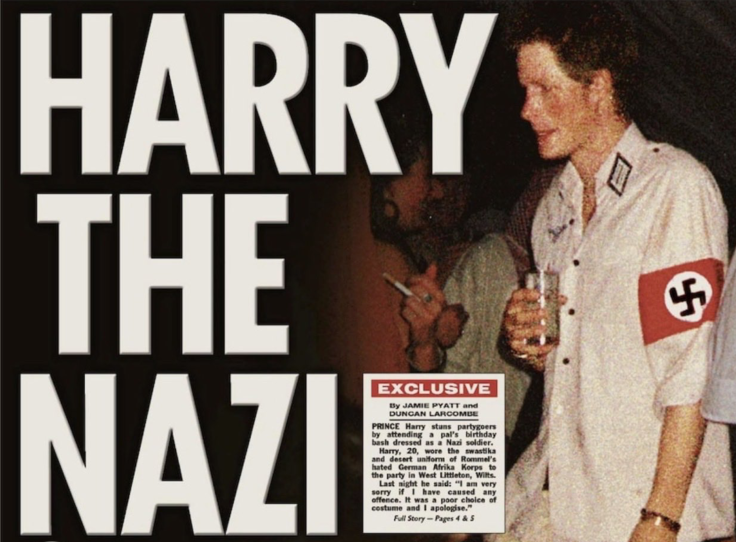
Prince Harry Confronts His Nazi Uniform 'Mistake' And Rising UK Antisemitism
In the New Statesman column, Harry acknowledges those 'past mistakes' before turning squarely to what he describes as a deeply troubling surge in antisemitic incidents across Britain.
He writes of 'lethal violence' directed at Jewish communities in Manchester and London, and warns that staying silent in the face of such hatred allows 'hate and extremism to flourish unchecked.'
There is a deliberate effort to draw a bright line between anger at governments and animosity towards people of a particular faith. 'Nothing, whether criticism of a government or the reality of violence and destruction, can ever justify hostility toward an entire people or faith,' he argues.
It is a simple sentence, but it is also an implicit rebuke to those who slide from protest slogans into threats against visibly Jewish targets on British streets.
Harry also addresses the wars in Gaza and Lebanon, describing what he calls 'deep and justified alarm' at the scale of loss there. Yet he insists that protesters should be clearer about where their outrage is aimed. In his words, the 'onus falls squarely on the state – not an entire people.'
The full Opinion Piece by Prince Harry for The New Statesman pic.twitter.com/PCwx8T6Ff2
— Sayid 🃏 (@SayidMet) May 13, 2026
The choice of phrasing is careful to the point of caution, and it becomes even more noticeable for what he does not say.
Despite repeated references to 'the state' and its responsibilities under international humanitarian law, Harry does not mention Israel by name once in the article. 'We cannot ignore a difficult truth,' he writes instead.
'When states act without accountability, and in ways that raise serious questions under international humanitarian law, criticism is both legitimate, necessary and essential in any democracy. The consequences do not remain contained within borders. They reverberate outward, shaping perception, inflaming tensions.'
Harry wants to affirm the right to protest over events in the Middle East, to acknowledge the suffering of Palestinians and others, and at the same time to insist that Jewish communities in Britain must not bear collective blame for the actions of a government thousands of miles away.
Antisemitism, Protest And The Role Of The Media
The Duke is not only criticising extremists. He spends part of the piece turning his fire on the media, accusing commentary around recent attacks of flattening a complex landscape into polarised talking points. According to Harry, this lack of nuance deepens confusion and 'fuels division' in public debate.
He does not dismiss protest as such. Taking to the streets is described as 'human and necessary,' a response that many people will recognise from the huge marches seen in London and other cities.
But he insists on a firm distinction between challenging the conduct of a state and blaming entire communities closer to home. Responsibility, he says, should lie with those who wield power, not with neighbours or fellow citizens who share a faith or ethnicity.
The article ends on a note of something close to moral instruction. Harry calls for 'unity' against both antisemitism and anti-Muslim hatred, arguing that once anger is turned towards communities, whether Jewish, Muslim, or any other, it stops being a demand for justice and becomes 'something far more corrosive.' It is one of the few lines where a royal sounds less like a campaigner and more like a pastor.
Alongside Harry's intervention, his brother has been making his own, quieter effort. The Prince of Wales raised the issue of antisemitism during an investiture ceremony on Wednesday, when he appointed Dr Bea Lewkowicz, the daughter of Holocaust survivors, an OBE.
Speaking afterwards to the Press Association, Dr Lewkowicz said William emphasised the urgency of 'preserving the truth' at a time when 'Holocaust distortion and rising antisemitism' were ever-present threats in the age of digital media.
The two brothers now live very different public lives on opposite sides of the Atlantic, but on this subject, they appear unexpectedly aligned.
Harry, writing from California, uses his most notorious misstep as a warning about where hateful symbols can lead. William, in the formal surroundings of an honours ceremony, urges vigilance against the erosion of historical fact.
© Copyright IBTimes 2026. All rights reserved.
- Recommended For You