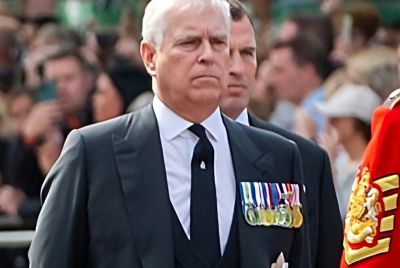
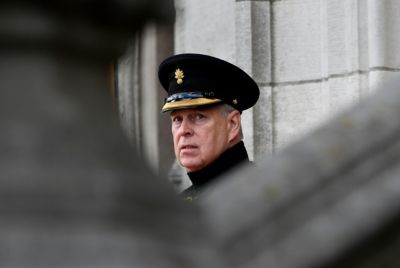
King Charles 'Seething' Over Legal Barriers To Kicking Out Disgraced Andrew: Report
King Charles and Prince William are reportedly furious that complicated succession laws are stopping them from cutting ex-Prince Andrew Mountbatten-Windsor out of the line to the throne.


King Charles is 'seething' over the legal and constitutional barriers stopping him from forcing disgraced ex-Prince Andrew Mountbatten-Windsor out of the royal line of succession, with Prince William said to share his anger.
Andrew, 66, is still eighth in line to the throne despite being stripped of his 'His Royal Highness' style and military patronages last year, following intense public backlash over his association with convicted sex offender Jeffrey Epstein and his recent arrest on suspicion of misconduct in public office. While he no longer carries out official duties, his place in the succession remains untouched, protected by centuries-old law that does not easily bend to modern scandal or public sentiment.
Behind palace walls, that reality appears to be wearing thin, according to insiders quoted by OK! magazine, both King Charles and the Prince of Wales have explored whether Andrew could be formally removed, only to be warned that the legal path is murky at best. Parliamentary clerks and constitutional advisers have reportedly told them there is no straightforward mechanism to excise a single individual from the line without potentially rewriting the rules for everyone.
One senior royal source put it bluntly: 'There is a palpable sense William and Charles are seething and frustrated behind the scenes over the labyrinthine complications stopping Andrew being axed from the line of succession, because while the public mood is clear, the legal reality is just proving far too extraordinarily difficult to navigate.'
The Succession Dilemma
The heart of the problem lies in the dense thicket of succession law that underpins the monarchy. The 1701 Act of Settlement, still in force, guarantees succession rights to the Protestant descendants of the Electress Sophia of Hanover. More recent frameworks, such as the Statute of Westminster 1931, add another layer by tying any change to the rules of succession to the consent of all 15 Commonwealth realms that share the monarch as head of state.
In other words, removing Andrew Mountbatten-Windsor from the line of succession is not something the King can do with a stroke of a pen. It is not even something the UK Parliament can do alone. Any attempt to adjust the order in which the Crown passes would, in principle, require matching legislation across all those independent countries.
A second palace source, quoted by OK!, said Charles and William had hoped for 'swift action' but have been forced to confront the reality of that constitutional straightjacket. 'They would love to see swift action, but the system itself is so complex that even beginning that process raises questions that do not have straightforward answers,' the source said.
The King has already gone as far as he can unilaterally. In 2022, Charles removed Andrew's HRH style and remaining honorary military titles, effectively freezing him out of formal royal life. Yet none of that touched his legal status in the succession, which flows automatically from birth and statute, not from titles or patronages.
Public Anger And A 'Global Mess'
The political and diplomatic calculus is not helping royal tempers. Behind the scenes, insiders say officials have been examining whether a bespoke law could target Andrew alone or whether any measure would inevitably spill over to his immediate family. That, in turn, raises questions about fairness, precedent and the risk of opening up broader debates about who should and should not be in line to the throne.
A parliamentary source acknowledged that the work underway is cautious and slow. 'There is ongoing work to understand whether it is even feasible to remove him as an individual without triggering wider constitutional consequences,' the insider said. 'That uncertainty is part of what is fuelling the frustration at the highest levels. But it is not simply a matter of political will – it is about untangling centuries of legal precedent.'
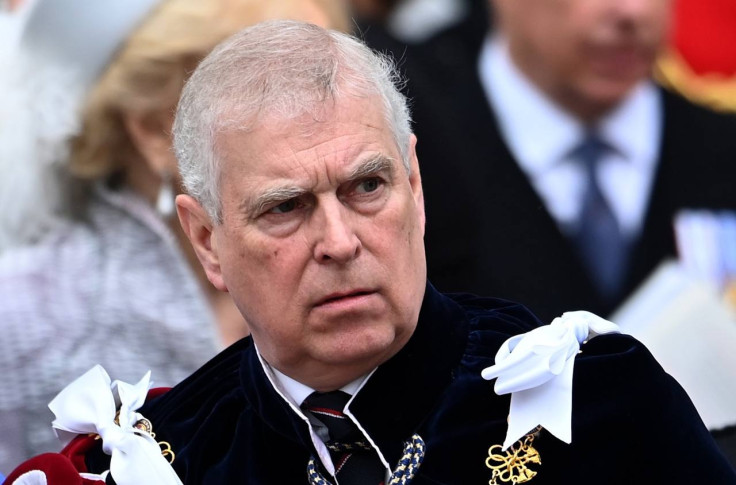
Public opinion, meanwhile, has raced ahead. A recent YouGov poll cited in the reporting found that 82 per cent of Britons want Andrew Mountbatten-Windsor removed from the line of succession, with just 6 per cent opposed. That makes him one of the least publicly supported figures to retain such a prominent formal position in the royal hierarchy.
Constitutional experts, however, are warning politicians and palace officials not to underestimate the fallout of acting on that anger. One scholar told OK! that any attempt to amend the line of succession for Andrew's sake 'is not simply a domestic issue – it would require coordinated legislative changes across multiple independent nations. In practical terms, it risks becoming what many have described as a global mess.'
A second source close to the royal household said that the collision between personal conviction and constitutional rigidity is what truly rankles Charles and William. 'That is at the heart of why William and Charles are so angry – they are confronted with a situation where the desire for change collides with a constitutional framework that is incredibly rigid,' the source said. 'Even if there is consensus in Britain, aligning all the Commonwealth realms on such a sensitive issue would be a significant diplomatic and political challenge.'
Westminster Shelves Succession Reform
For now, the government in Westminster is not planning to introduce any legislation to change the rules of succession. A UK parliamentary insider suggested that some Commonwealth countries may be reluctant to spend political capital on a figure who, practically speaking, is highly unlikely ever to become King.
A palace source summed up the stalemate: 'For now, Andrew remains in the line of succession by operation of law – and disentangling him from it would require a level of international co-ordination that is difficult to achieve. In practical terms, his position is largely symbolic given how many people stand ahead of him.'
© Copyright IBTimes 2026. All rights reserved.
- Recommended For You