

KPop Demon Hunters' 'Golden' Grammys Win, Rosé Performance Spark Fear Over Korean Music's Future
Global validation brings success but deepens anxiety over what K-Pop may be leaving behind
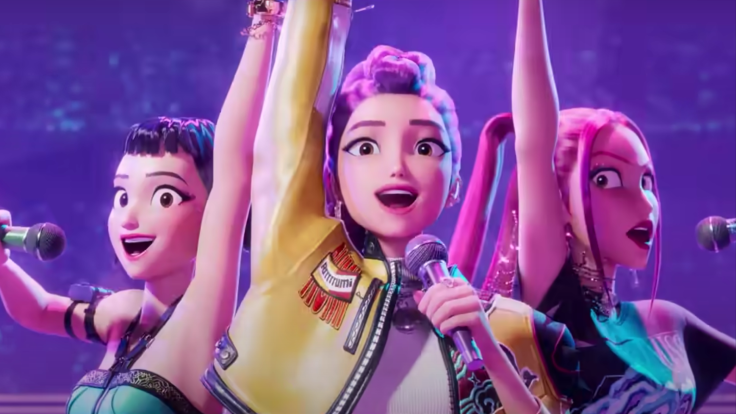
As K-pop claims global recognition, critics warn its emotional core may be slipping away. K-pop reached a historic high at the 2026 Grammy Awards, but the celebration came with an undercurrent of unease. The triumph of KPop Demon Hunters' song 'Golden' and BLACKPINK member Rosé's solo performance marked a breakthrough many fans had waited years to see.
For some within the industry, however, the breakthroughs raised an uncomfortable question: what happens when global validation rewards music that looks and sounds less Korean? As K-pop cements its place in Western awards culture, critics argue the genre may be reshaping itself to fit international expectations.
The debate reflects a deeper tension facing Korean music today: how to grow without losing the emotional storytelling and cultural specificity that defined its rise.
A Grammys Moment That Changed the Conversation
'Golden,' performed by the fictional group KPop Demon Hunters, won big despite being part of a US-produced animated project. While it draws on Korean aesthetics and language motifs, critics noted the song itself was written and produced by American creatives.
According to a report by BBC News, the win was hailed as a milestone for K-pop's global reach, but it also prompted debate over authorship and cultural ownership. Some industry voices questioned whether success built on hybrid projects risks redefining what qualifies as Korean music.
'It is meaningful that K-pop songwriters won their first Grammy,' music critic Lim Hee-yun stated, as quoted by Korea Herald. 'I see 'Golden' as an American pop song. 'KPop Demon Hunters' is a US-made project that incorporates Korean elements. Musically, it follows American pop conventions, and the structure with Ejae as a lead vocalist rather than a traditional idol group dynamic is not particularly K-pop-like.'
The concern is not about influence, critics argue, but about direction. 'Golden' fits comfortably within mainstream pop structures, leading some to fear that emotional nuance is being replaced by global palatability.
Rosé's Historic Performance and a New Standard
Rosé became the first solo K-pop artist to perform at the Grammys, an achievement widely praised across the industry. Forbes reported that her appearance signalled a breakthrough moment not just for her career, but for Korean artists seeking individual recognition beyond group identities.
However, her English-language performance and Western-leaning sound reignited concerns already stirred by 'Golden.' Commentators noted that the Grammys appear to reward K-pop artists most when they align with global pop norms.
Even though Rosé's success was celebrated, critics in South Korea questioned whether future artists would feel pressure to abandon Korean-language releases to compete internationally.
Global Success, Local Anxiety
The growing concern among Korean critics highlighted that K-pop's emotional storytelling often rooted in youth struggles, longing and vulnerability may fade as production increasingly targets global charts.
K-pop Demon Hunters, while praised for representation, became a symbol of that anxiety. The project's US origin, critics argue, reflects a shift where Korean culture becomes a design element rather than the foundation.
'"Golden" shows how K-pop is evolving,' cultural critic Jung Deok-hyun said. 'When you remove the "K," it becomes closer to pop. The song sounds more like American pop than K-pop, which likely made it more accessible and successful.'
This trend worries songwriters and trainees alike, who fear that cultural specificity may become a commercial risk rather than a strength.
Jung cautioned that the genre's increasing alignment with global pop standards raises challenging questions. According to Jung, 'the concern is whether K-pop's distinctive identity and emotional characteristics are gradually being diluted in the process.'
Industry Impact Beyond the Awards
Major labels are already adapting strategies in response to Grammy recognition, prioritising English-language tracks and Western collaborations, Hollywood Reporter noted.
For fans, the stakes feel personal. K-pop's appeal was built on emotional connection and cultural identity, not just refinement. As global audiences grow, long-time listeners fear the genre may lose the qualities that made it resonate in the first place.
The Grammys wins did not end that story, but they may have changed its direction.
© Copyright IBTimes 2026. All rights reserved.