

'I Never Paid Epstein for Women': Leon Black Breaks Silence on Why He Paid Jeffrey Epstein $158M
In a high-stakes appearance before the House Oversight Committee, co-founder of Apollo Global Management insisted his financial relationship with the late sex offender was strictly professional.

Billionaire investor and co-founder of Apollo Global Management Leon Black has publicly defended the $158 million (£118 million) he paid Jeffrey Epstein, telling House Oversight Committee staff on Friday that the money was for tax, estate planning, and family office advisory work, not for access to women or any criminal activity.
Appearing voluntarily at the Rayburn House Office Building, Black sought to address years of speculation surrounding his financial relationship with the convicted sex offender, insisting he had 'never paid Epstein for access to women' and had no knowledge of Epstein's crimes until his 2019 federal trafficking case.
Black's payments to Epstein have been scrutinised since they became public several years ago, prompting questions about why one of Wall Street's most prominent financiers continued working with Epstein after his 2008 conviction.
Black said Friday's appearance was intended to 'set the record straight,' arguing that an independent investigation commissioned in 2020 had already examined the relationship in detail and found no evidence linking him to Epstein's criminal conduct.
The $158M Payment to Jeffrey Epstein
Black told committee staff he first met Epstein in the mid-1990s, years before any financial arrangement existed between them. At the time, he said, Epstein sat on the boards of Rockefeller University, the Council on Foreign Relations, and the Trilateral Commission and maintained relationships with influential figures across finance, politics, academia, and science.
According to Black, he did not begin paying Epstein until 2013 after concluding that Epstein possessed exceptional expertise in tax planning, trusts, estates, and insurance matters. He said Epstein also advised his newly established family office.
'I paid Epstein for his bona fide advice on these matters, in addition to helping to manage and improve the operation of my nascent Family Office,' Black said.
Addressing perhaps the most damaging allegation directly, Black declared, 'I have never abused a woman. I have never been with an underage woman. I have never engaged in sex trafficking. I have never paid Epstein for access to women. I was never blackmailed by Epstein. I was not involved with, and had no knowledge of, any of Epstein's heinous conduct.'
Black acknowledged knowing that Epstein pleaded guilty in 2008 to state charges involving prostitution with a minor. However, he claimed Epstein convinced him the case stemmed from 'an isolated incident resulting from a fake ID', adding that he now deeply regrets believing that explanation.
'Five years after his conviction, I gave Epstein a second chance, as did many others. I wish I had not,' Black said.
Leon Black Cites Independent Report And Defends His Actions
A substantial portion of Black's statement also focused on the independent investigation conducted by the Dechert law firm in 2020.
According to Black, former federal prosecutors reviewed 60,000 documents, interviewed 20 people, and examined his financial records without restrictions.
Black said the resulting January 2021 report confirmed that he paid Epstein $158 million (£118 million) and concluded that the services provided were legitimate tax and estate-planning work for his family office. He also said the report determined that Apollo Global Management never retained Epstein or conducted business with him.
'The Dechert report concluded that I had paid Epstein $158 million,' Black said, adding that investigators found Epstein's work generated billions of dollars in tax savings for his family and had been reviewed by established legal and accounting firms.
Black also argued that Epstein had misled him financially.
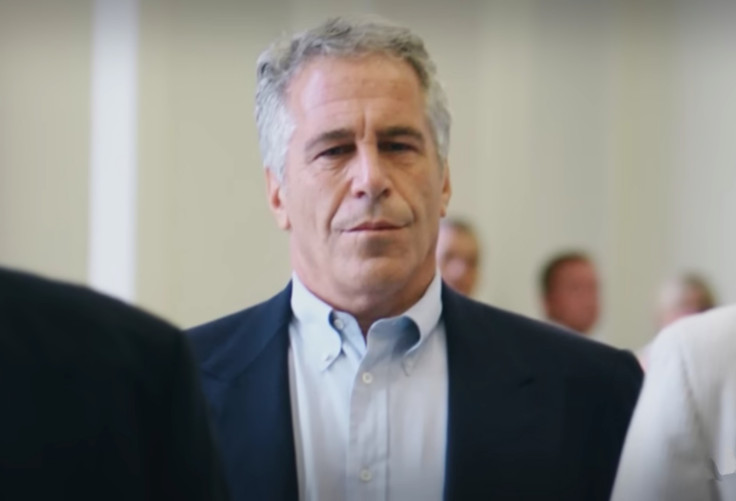
He claimed Epstein repeatedly described his fees as '60-cent dollars', telling him they would effectively be tax-deductible. Black said he later discovered that the representation was false and that what he believed were roughly $95 million (£71.2 million) in net fees were, in reality, the full $158 million (£118 million).
'With hindsight, I now see that Epstein exaggerated, embellished, manipulated, and outright lied,' Black said. 'I knew Jekyll. I didn't know Hyde.'
Black said he ultimately ended the professional relationship in 2018 after becoming frustrated by what he described as Epstein's repeated demands for additional payments, misrepresentations regarding the fee arrangements, and failure to repay most of a $30 million (£22 million) demand loan.
In Response to Lawsuits From Women
Black also used his testimony to push back against allegations made in civil lawsuits filed by women who claimed links to Epstein. He said three separate lawsuits had accused him of serious misconduct, but he maintained each case was based on fabricated claims.
According to Black, the first two lawsuits were dismissed with prejudice, meaning they cannot be refiled. He said one plaintiff 'never met Epstein' and that her claims were 'wholly without merit,' while he stated he had 'never even met' the second plaintiff.
He devoted particular attention to the third lawsuit, saying a federal judge appointed by former President Joe Biden issued a 76-page ruling last month sanctioning both the plaintiff and her legal team for submitting false and fraudulent evidence. Black said the plaintiff had falsely claimed under oath that she gave birth to four of Epstein's children, three of whom she alleged were kidnapped at birth, while also making a series of other allegations that the court ultimately found lacking credibility.
Black further claimed that the law firm representing the plaintiff had been warned before filing the lawsuit that her allegations were fraudulent, but the firm proceeded regardless. He said another federal judge had also found the plaintiff was not credible.
'To be clear, I categorically deny the baseless and fabricated allegations in that case and in the other two lawsuits that were filed against me and that have now been dismissed,' Black said.
He argued that the initial allegations received widespread media attention, while subsequent court rulings and dismissals attracted comparatively little coverage. Black said the fallout had resulted in death threats against him and forced his family to hire security, adding that the prolonged speculation had caused 'extraordinary damage' to his family.
Leon Black Expresses Regret in Meeting Epstein
Black closed his opening statement by expressing regret over his association with Epstein, describing it as one of the biggest mistakes of his life. While continuing to deny any involvement in Epstein's criminal conduct, he acknowledged that his decision to work with the disgraced financier had brought lasting consequences for his family and reputation.
'I wish I had never met Epstein. I regret ever doing business with him,' Black said, adding that the years of speculation, litigation, and public scrutiny had created what he described as 'a toxic environment' for his wife and children.
He told committee members he was appearing voluntarily to answer questions specifically about the professional services Epstein performed and the fees he received. However, Black said he would not discuss his personal life or the private lives of women who had not chosen to be associated publicly with Epstein, arguing that doing so would only add to the harm already caused.
Black also sought to shift attention towards his philanthropic work, highlighting more than half a billion dollars in charitable donations made by his family. He pointed to support for the Melanoma Research Alliance, veterans' programmes, mental health initiatives, organisations assisting women in need, Jewish causes, and projects supporting higher education and the arts.
Ending on a personal note, Black said he hoped his testimony would help lawmakers understand the facts surrounding his relationship with Epstein and allow both him and his family to move forward after years of controversy. 'I am hopeful that the Committee will find my voluntary testimony useful,' he said before inviting members to begin questioning him.
© Copyright IBTimes 2026. All rights reserved.
- Recommended For You


