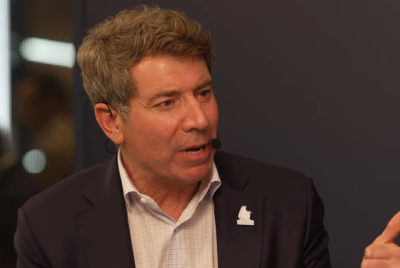
Michael Burry Warns of Trump's Market-Driven War Management in the Middle East
The 'Big Short' investor claims the White House is trapped between military strikes and a market crash, as a deleted social media blunder sends oil prices into a tailspin.


The investor who famously predicted the 2008 housing collapse has issued a chilling new warning: the US President's military strategy is being held hostage by the S&P 500.
Michael Burry, the contrarian fund manager depicted in The Big Short, claims that Donald Trump's handling of the escalating conflict with Iran is being shaped by an 'allergy to market dips.'
In a scathing Substack post, Burry argued that the administration is prioritising the 'scoreboard' of the New York Stock Exchange over national security, creating a dangerous scenario where gas prices and retirement accounts react to the same chaotic headlines.
The scrutiny intensified this week after the White House extended its deadline for strikes on Iran's energy infrastructure to 7 April 2026. While the administration cited 'negotiation progress,' Burry suggests the delay was purely a move to prevent a total market capitulation.
The Deleted Clip And The 7 April Deadline
Market nerves reached a breaking point following a digital blunder from the official White House account on X. A cryptic, pixelated image of the President was posted alongside a seconds-long video, quickly deleted, in which a woman asks, 'Is the launch happening soon?' to which a voice replies, 'Yes.'
The resulting panic sell-off wiped billions off US indices within minutes. Burry described the stock market as 'Trump's kryptonite', suggesting the President's Iran strategy is simply to 'get out before the market crashes too much'. He added: 'It's a shame that Americans died for this,' referencing the human cost behind the high-stakes financial juggling.
Strait Of Hormuz: Why Oil Is The Ultimate Inflation Input
For the average household, this geopolitical chess match is manifesting as 'sticky inflation'. Threats to oil shipments in the Strait of Hormuz have driven crude prices into wild daily swings, affecting everything from the pump to the grocery aisle.
Federal Reserve Bank of Chicago President Austan Goolsbee recently warned on CNBC that the uncertainty is unprecedented. 'Nobody can tell us what is going to happen on the ground... and how long that lasts,' Goolsbee stated. Because oil is a primary input for almost all US sectors, the Middle East conflict 2026 threatens to keep interest rates elevated for longer, further squeezing consumer budgets.
401(k)s As A Political Scoreboard
President Trump has consistently used the stock market as a proxy for his administration's success, frequently boasting about record rallies and the growth of American 401(k)s. This focus has led to allegations of market-driven war management. Reports of major, well-timed trades placed just hours before the strike delay have only added to the scrutiny, though the White House has flatly refuted any claims of insider influence.
The President continues to project an image of 'imminent success', claiming that US forces have already crippled Iran's military infrastructure. However, the American public appears unconvinced. A recent Reuters poll found that 55 per cent of citizens say their finances have already been impacted by the crisis, while a staggering 87 per cent expect prices to rise further over the next month.
The Economic Reality Of War Risk
As the 7 April deadline approaches, the tension between military objectives and market stability remains the primary driver of US policy. For investors, the takeaway from Burry's warning is clear: in 2026, the 'Big Short' is no longer about subprime mortgages, but about the volatility of a presidency that views a red day on Wall Street as a personal defeat.
Whether the administration can navigate this 'fraught moment' without a full-scale economic correction remains the multi-trillion-dollar question hanging over the global economy.
Disclaimer: Our digital media content is for informational purposes only and not investment advice. Please conduct your own analysis or seek professional advice before investing. Remember, investments are subject to market risks and past performance doesn't indicate future returns.
© Copyright IBTimes 2026. All rights reserved.
- MOST POPULAR IN Invest