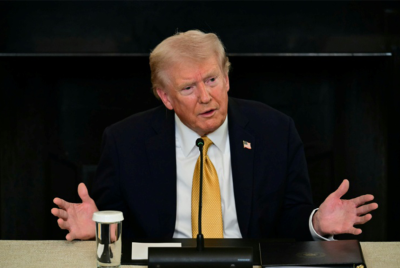
'Are They Stupid People?': Trump Questions Iranian Intellect as Uranium Proposal Collapses
Tensions escalate as Iran and the US clash over uranium stockpile control, impacting global energy markets.

Donald Trump has escalated his war of words with Tehran, publicly branding Iran's leadership 'stupid people' after the collapse of its latest peace counterproposal over one pivotal issue: who controls Iran's stockpile of highly enriched uranium.
The breakdown marks the sharpest rupture yet in Pakistan-mediated negotiations since a conditional ceasefire was brokered on 8 April 2026, a truce that halted military hostilities but has failed to resolve the underlying conflict that began with US and Israeli air strikes on Iran on 28 February. Trump declared Iran's counterproposal 'totally unacceptable,' while Tehran vowed it would 'never bow', prolonging a standoff that has choked the the Strait of Hormuz and roiled global energy markets. With no resolution in sight, the stakes – nuclear, diplomatic and economic – have rarely been higher.
Trump's Fury Spills Over As Peace Talks Collapse
The president's frustration spilled into public view across multiple platforms and press interactions over the weekend of 10–11 May 2026. Trump wrote on Truth Social: 'I have just read the response from Iran's so-called "Representatives." I don't like it, TOTALLY UNACCEPTABLE!'
Speaking separately to reporters at the White House, Trump went further. 'Forty-seven years, they've been toying with these stupid people,' Trump said, referring to Iran's leaders. 'In many cases, stupid people. They should have been done by Obama. He went the other way. He was giving him cash.'
Trump also accused Iran of reneging on an earlier commitment to allow the United States to remove its enriched uranium. 'They told me, number one, you're getting it, but you're going to have to take it out,' Trump told reporters. 'They just can't get there,' he added. 'They agree with us and then they take it back.'
The president additionally described a divide within Tehran's negotiating structure. He told reporters that there are 'moderates' and 'lunatics' within Iran's camp, and that 'the moderates are dying to make a deal.'
🚨 WOW! President Trump just PUMMELED IRAN
— Eric Daugherty (@EricLDaugh) May 11, 2026
"Are they STUPID people? They didn't want to believe it. They think that, well, I'll get tired of this. I'll get bored or I'll have some pressure? But there's NO pressure."
"They give us a STUPID proposal. It's a STUPID proposal.… pic.twitter.com/nAkIoxoKqc
Inside The Uranium Deal: Clash Of Red Lines
The substance of the dispute centres on Iran's estimated 440-kilogram stockpile of uranium enriched to 60 per cent purity, a level well beyond civilian power-generation requirements. Under Washington's 14-point peace proposal, Iran would be required to halt all uranium enrichment for at least 12 years, hand over its entire enriched uranium stockpile and agree not to develop a nuclear weapon. In return, the United States would gradually lift sanctions, release billions of dollars in frozen Iranian assets, and both sides would reopen the Strait of Hormuz within 30 days of any signed agreement.
Tehran rejected those core terms outright. According to people familiar with Iran's counterproposal, as reported by the Wall Street Journal, Tehran offered to dilute some of its highly enriched uranium and transfer the remainder to a third country, but with a provision requiring it to be returned if the United States exits any eventual deal. Iran also said it was willing to suspend enrichment for a shorter period than the 20-year moratorium Washington proposed, and rejected dismantling its nuclear facilities entirely.
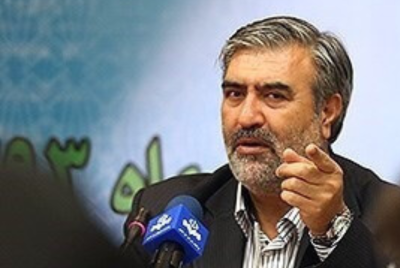
Iran's Foreign Ministry spokesman Esmail Baghaei defended the counterproposal on Monday, stating: 'We did not demand any concessions, the only thing we demanded was Iran's legitimate rights. The American side still insists on its one-sided views and unreasonable demands.' Iranian state media characterised the US proposal not as a peace framework, but as a demand for 'surrender'.
'Everything We Proposed Consisted of Reasonable, Responsible Demands & Generous Proposals' - 🇮🇷 FM Spox on Tehran's Response to US Peace Proposal
— RT_India (@RT_India_news) May 11, 2026
‘The only thing we demanded was Iran's legitimate rights,’ Esmail Baghaei told reporters.
📹: Mehr News https://t.co/LXN0azFggx pic.twitter.com/tiRlOfJVTs
The Uranium Standoff and the Price of Deadlock
The impasse over enriched uranium has deep roots. The head of Iran's Atomic Energy Organisation has stated that Iran will not accept limits on its nuclear enrichment, whilst the Iranian Foreign Ministry has declared that uranium 'will under no circumstances be transferred anywhere'. That position stands in direct opposition to a core US demand that has been non-negotiable since the outset of the conflict.
Earlier in the negotiations, US envoy Steve Witkoff had proposed a 20-year moratorium on Iran's uranium enrichment during weekend talks in Islamabad. Iran countered with a five-year moratorium. Washington rejected that figure, and the talks collapsed after 21 hours of negotiations. Trump subsequently distanced himself from even the 20-year proposal, insisting he would not allow Iran to enrich 'any' uranium under a final deal.
Israeli Prime Minister Benjamin Netanyahu, in a CBS interview, warned that the war was 'not over' because Iran had 'neither surrendered its enriched uranium nor dismantled enrichment sites, and continues to support regional proxies and advance its ballistic missile programme.'
The economic consequences of the continuing standoff are acute. Saudi Aramco chief executive Amin Nasser warned analysts that if the reopening of the Strait of Hormuz is 'delayed by a few more weeks, then normalisation will last into 2027', and that even if the critical waterway reopened immediately, it 'would still take months for the market to rebalance'.
Israeli Prime Minister Benjamin Netanyahu told CBS’s 60 Minutes the war with Iran is “not over”, saying enriched uranium must be removed and Iran’s enrichment sites dismantled. pic.twitter.com/Xv5SlvoT9F
— Al Jazeera English (@AJEnglish) May 11, 2026
High-Stakes Diplomacy And An Uncertain Endgame
While a conditional ceasefire remains in place, almost no shipping has used the Strait of Hormuz since its closure, and the US has announced a counter-blockade targeting ships seeking to use Iranian ports. The waterway accounts for roughly 20 per cent of global oil and gas shipments, and its continued closure is applying sustained upward pressure on energy costs worldwide.
A regional source close to the negotiations told CNN that movement in the talks would 'depend on the results of President Trump's visit to Beijing', and that Iranian Foreign Minister Abbas Araghchi's presence at the BRICS Foreign Ministers' meeting in Delhi was considered 'important', given the simultaneous attendance of Saudi and Egyptian counterparts.
Ali Shamkhani, an adviser to Iran's leadership, dismissed Trump's desired level of control over Iran's nuclear programme as a 'fantasy'.
The outcome of one of the most consequential diplomatic stand-offs of the post-Cold War era may ultimately hinge not on proposals exchanged through Pakistani intermediaries, but on whether either side decides that the cost of continued deadlock finally outweighs the price of compromise.
© Copyright IBTimes 2026. All rights reserved.
- Recommended For You