Trump Won't Be Rushed in Ending the Iran War; POTUS Hits Politicians Rushing the Deal for 'Helping the Other Side'
Trump defends prolonged Iran war, citing US leverage while clashing with Congress over timing and authority

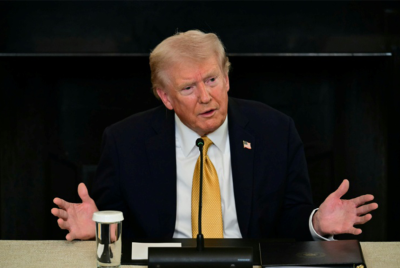
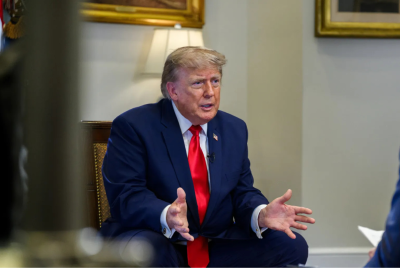
Donald Trump has declared he will not be pressured into ending the Iran war prematurely, accusing political rivals at home of undermining US leverage. Speaking in a direct phone interview, Trump insisted that calls from both Democrats and some Republicans to accelerate a peace deal risk weakening America's negotiating position at a critical moment.
The conflict, now stretching into its eighth week, has become as much a political battleground in Washington as it is a military standoff abroad.
Trump tells The Post he 'won't be rushed' to end Iran war, lashes out at pols urging him to settle: 'They are helping the other side' https://t.co/hMyDIw22YZ pic.twitter.com/gkeU8V7J5l
— New York Post (@nypost) April 20, 2026
Trump Defiant as Pressure Mounts in Washington
Trump's core message is clear: the United States holds the upper hand, and rushing negotiations would squander that advantage. He argued that Iran has been pushed into a 'perfect position', citing both military setbacks and diplomatic isolation.
'When you are in the middle of negotiations and you have got the Iranians in a perfect position... how bad is it when people from your own country are trying to reach a deal?' he said, underscoring his frustration with domestic critics.
The president went further, accusing political opponents of effectively aiding Tehran. 'They are helping the other side. The other side has nothing, they have no cards,' he said, suggesting that public pressure from Washington is being exploited by Iran to delay concessions.
Trump has repeatedly emphasised his self-described strengths as a dealmaker, portraying patience as a tactical necessity rather than indecision. His refusal to 'be rushed' signals a willingness to extend the conflict if it yields more favourable terms.
Military Gains and Strategic Leverage
The administration maintains that recent military actions have strengthened its negotiating position. The conflict, which began with a joint US-Israeli offensive, has seen significant escalation, including a naval blockade targeting Iranian ports.
On 19 April, the USS Spruance fired on and seized the Iranian-flagged cargo vessel Touska after a six-hour standoff in the Gulf of Oman, following repeated warnings from the US Navy that the ship violated the blockade. The seizure, confirmed by US Central Command, marked the first direct enforcement action of the blockade and underscored the intensity of the operation. These operations form part of a broader strategy aimed at cutting off economic lifelines and compelling Tehran to negotiate from a weakened stance.
Trump told Reuters on 17 April that the US would work with Iran to recover its enriched uranium, and separately claimed that Tehran had agreed to permanently end its uranium enrichment programme — a development that would mark a dramatic reversal from Iran's long-standing position. While Iranian officials have publicly denied such concessions, the White House insists progress is being made behind closed doors.
A second round of talks, expected to follow earlier negotiations in Islamabad, is anticipated to test whether that progress can translate into a formal agreement.
Congressional Tensions and Legal Constraints
Despite the administration's confidence, the war's duration is becoming a flashpoint in Washington. Under the War Powers Resolution of 1973, presidents are generally required to seek congressional approval for military engagements exceeding 60 days.
With the conflict approaching that threshold, lawmakers from both parties are raising concerns. Senator Josh Hawley warned that 'the clock is ticking', urging the administration to outline an exit strategy that protects US interests while limiting economic fallout, including rising fuel costs.
Similarly, Senate Majority Leader John Thune has indicated that Congress will closely scrutinise the administration's next steps, particularly any request for additional funding tied to the campaign. Democrats, led by figures such as Chuck Schumer, have broadly opposed the operation, arguing that it risks entangling the US in a prolonged and costly conflict without clear authorisation.
A Familiar Constitutional Debate
The standoff reflects a long-running tension between the executive branch and Congress over war powers. Historically, enforcement of the War Powers Resolution has been inconsistent, with courts often reluctant to intervene.
During the Libyan Civil War, for example, legal challenges failed to compel then-President Barack Obama to halt US involvement, reinforcing the view that such disputes are ultimately political rather than judicial matters.
Congress retains the ability to exert pressure through funding decisions, but such measures are often politically fraught, particularly during active military operations.
High-Stakes Diplomacy Ahead
As the conflict enters a decisive phase, Trump's stance suggests that negotiations will proceed on his terms, with timing dictated by perceived strategic advantage rather than political urgency.
The coming days will be critical. If diplomatic talks yield tangible concessions, the president may claim vindication for his refusal to rush. If not, pressure from Capitol Hill is likely to intensify, raising the stakes for both the administration and its critics.
For now, Trump remains resolute, framing patience as strength and dissent as a liability — an approach that could shape not only the outcome of the Iran war but also the broader balance of power in Washington.
© Copyright IBTimes 2026. All rights reserved.
- Recommended For You