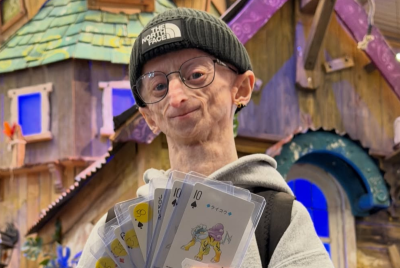
Quick Facts About Michael Patrick: Cause of Death, Career Highlights, and the Chillingly Accurate Prediction of His Passing
Inside the actor's final months, his MND diagnosis, and the unanswered questions his passing leaves behind.

Actor Michael Patrick's death has left fans of stage and screen grappling with grief, but also with difficult questions about how quickly his condition progressed and whether more could have been done.
Best known as a Game of Thrones actor and a respected presence in Irish theatre, Michael Patrick died at just 35 after battling Motor Neurone Disease. His passing, confirmed by his wife Naomi Sheehan, has drawn global attention not only for his talent, but for the haunting way his final months unfolded.
Cause of Death and Diagnosis Timeline
As reported by People, Michael Patrick's cause of death was complications related to Motor Neurone Disease, often abbreviated as MND. The condition, known for progressively weakening muscles and affecting mobility, speech, and breathing, has no cure.
He was diagnosed in 2023, placing him among a growing number of cases often described in the media as 'Irish actor MND diagnosis 2023'. According to reports, his condition advanced rapidly, underscoring how unpredictable and aggressive the disease can be.
Patrick spent his final days receiving care at Northern Ireland Hospice, a facility known for providing end-of-life support to patients with complex conditions.
🕊️ "Game of Thrones" actor Michael Patrick has died at 35.
— TMZ (@TMZ) April 8, 2026
What we know: https://t.co/EAInwq9tWo pic.twitter.com/0SCENQxvnN
A Career Rooted in Stage and Screen
While many international viewers recognise him as a Game of Thrones actor, Patrick's artistic roots ran deep in theatre.
He earned praise for his role in the stage production of My Right Foot, where his performance captured the emotional and physical challenges of disability with nuance and respect. Colleagues often described him as a dedicated performer who brought quiet intensity to every role.
His work across television and theatre positioned him as one of Ireland's promising talents, making his early death even more difficult for the creative community to process.
🕊️ El mundo del entretenimiento despide a #MichaelPatrick, actor de Game of Thrones, quien falleció a los 35 años tras luchar contra la ELA.
— POSITIVA FM TUNJA (@POSITIVAFMRADIO) April 9, 2026
Su legado es de talento, valentía e inspiración. 🙏🏻 pic.twitter.com/Nb52txmrQh
The Chillingly Accurate Prediction of His Passing
One of the most talked-about aspects of the Michael Patrick death story is what many are calling his 'accurate death prediction'.
In the months before his passing, Patrick openly acknowledged the seriousness of his illness. Reports indicate he had been given a general expectation of limited time, yet the speed of his decline came as a shock.
This gap between expectation and reality has struck a chord with readers worldwide. It highlights a sobering truth about Motor Neurone Disease: timelines can shift dramatically, leaving patients and families with little time to prepare.
Irish actor Michael Patrick has died at 35 after a three-year battle with motor neurone disease. Known for Game of Thrones, Blue Lights, and BBC's My Left Nut, he made history in 2024 as the first disabled actor to play Richard III on the island of Ireland. pic.twitter.com/sRfUvr2E8K
— Shanghai Daily (@shanghaidaily) April 9, 2026
A Family's Final Words
His wife, Naomi Sheehan, confirmed his passing in a statement that reflected both heartbreak and gratitude. She described the depth of their loss while also honoring the life he lived and the impact he had on those around him.
Her words have since circulated widely, resonating with audiences who see in them the universal experience of losing someone too soon.
Did Healthcare Delays Play a Role?
As discussions around Michael Patrick's death continue, some conversations have turned toward healthcare timelines and access to treatment.
While primary reports focus on the progression of Motor Neurone Disease itself, the broader context of care for MND patients often includes complex decisions about interventions, timing, and resource availability.
In many countries, including parts of the UK and Ireland, healthcare systems face pressure from staffing shortages and high demand. These systemic challenges can sometimes affect how quickly patients receive specialised procedures or support.
In Patrick's case, no confirmed evidence from primary sources directly caused his death. However, the speed of his decline has prompted wider reflection on how healthcare systems manage rapidly progressing neurological illnesses.
RIP Michael Patrick/Campbell, Actor
— LegacyTributes (@InMemoriamX) April 9, 2026
Game of Thrones, Blue Lights, This Town, Krypton
The Tragedy of Richard III
Judges’ Award at the Stage Awards#InMemoriam #RIP pic.twitter.com/lkgGfIfPL0
Why This Story Matters
Stories like Patrick's do more than inform; they spark necessary conversations.
More than anything, his story forces a spotlight onto Motor Neurone Disease, a brutal illness that still leaves families racing against time, searching for answers, and often confronting a system that struggles to keep up. It is not just a quiet tragedy; it is a wake-up call.
Because in the end, the story of Michael Patrick is not simply about a life cut short, it is about the uncomfortable questions his death leaves behind, the urgency it demands from healthcare systems, and the haunting reminder that even when you think you have time, everything can change in an instant.
© Copyright IBTimes 2026. All rights reserved.
- Recommended For You