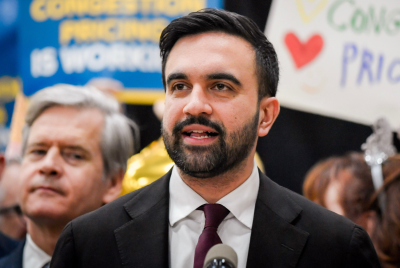
Who is Drew Roach? The Only Representative Who Voted 'NO' On Banning The Use Of AI To Create N*de Photos Of Children
Rep. Drew Roach's lone dissent against HF1606 sparks controversy amid bipartisan support.

In a vote so lopsided it barely constituted a debate, one Republican state lawmaker stood alone against a bill banning AI tools used to generate nude images of children.
On 23 April 2026, the Minnesota House of Representatives passed HF1606, titled 'Nudification technology access prohibited', by a vote of 132–1. The bill targets websites, apps, software and services that allow users to generate or alter images to depict intimate parts of an identifiable person without their consent, including child sexual abuse material. The sole dissenting vote came from Rep. Drew Roach, a first‑term Republican from Farmington, whose name has since become synonymous with one of the most widely condemned legislative positions of the year.
Who Is Drew Roach?
Drew Roach, born 28 January 1985, is a Republican representing District 58B in the Minnesota House of Representatives. He was elected in November 2024, defeating DFL candidate Ian English with 59 per cent of the vote, and took office on 7 January 2025, succeeding Pat Garofalo. Roach attended the Minnesota School of Business and previously worked as a small business owner.
In a 2024 Ballotpedia survey, he said his political philosophy is guided by 'The Bible and The Constitution of the United States', and identified elections, public safety, education and tax as key priorities. He also cited honesty and integrity as the most important qualities in an elected official.
His time in office has been marked by controversy from the start. In January 2025, after Minnesota Secretary of State Steve Simon adjourned a House session for lack of quorum, Roach told Simon that his presiding over the House was 'a sham' and that he 'should not have the gavel.'
That same year, Roach co‑hosted a video podcast called 'Minnesota Liberty Network' alongside State Senator Bill Lieske, during which both men called the 6 January 2021 Capitol insurrection a 'hoax', claiming the Trump supporters who stormed the Capitol were 'actors.' Roach has also sought to repeal Minnesota's ban on conversion therapy for gay people, arguing 'the government has no business mandating what outcomes people must pursue in the privacy of their counselling sessions.'
— Drew Roach (@DrewRoachMN) April 30, 2026
Inside The Bill Roach Tried To Stop
HF1606 was authored by Rep. Jessica Hanson, a Democrat from Burnsville, and had been building bipartisan momentum for months before reaching the House floor. According to the official Minnesota House Session Daily, Hanson made the bill's purpose explicit during floor debate: 'We need to ban nudification features because they allow users to create non-consensual, unauthorised deep fakes of sexually explicit content, including child sexual abuse material.'
Hanson described how nudification technology has 'empowered and enabled paedophiles and sexual predators around the globe', harming children made victims by their peers and women targeted by men they had trusted. She noted that the bill took 'an indescribable amount of courage, strength and support' from victims who testified publicly to make possible.
Under HF1606, civil penalties of up to $500,000 apply for each unlawful access, download or use of a nudification platform. Victims can sue in district court for compensatory damages, including for mental anguish, up to three times their actual damages, as well as punitive damages, injunctive relief and attorney's fees. The Minnesota Attorney General would be empowered to enforce the law, with penalty proceeds routed into grants for organisations serving victims of sexual assault and domestic violence.
In a press release issued the same day, Rep. Hanson stated: 'No one should have to worry that nude images of themselves can be generated by AI, without their permission, at the push of a button. Governments around the world have failed to react quickly enough to the dangers of AI. But today, House DFLers are taking action to protect Minnesotans online.' The bill now moves to the Minnesota Senate.
Roach's Lone 'No' Vote And The Backlash
During floor debate, Roach acknowledged that material generated through nudification technology is 'disgusting' and 'vile', and that victims deserve accountability and justice. But he opposed the bill on the grounds that it fails to address the root cause, arguing that someone with technical skill could still create the same material without using a platform covered by the legislation.
In his own words on the House floor, Roach said: 'What we're going to do here is we're going to attack a software, a manufacturer and instead, shifting our focus on that instead of the perpetrators of these crimes. If we want to prevent this from happening in the future, we should go after those perpetrators with the full force of the law.'
🚨 PUBLIC SERVICE
— Drew Roach (@DrewRoachMN) April 29, 2026
ANNOUNCEMENT 🚨
I want to be VERY clear and address some "NEWS" stories written about me that suggest that I voted against a bill making AI generated child pornography or images illegal. These stories are dangerous as they push a false… pic.twitter.com/uJuQIeKTcJ
Hanson directly rebutted that argument, stating that the bill gets at the root cause by targeting content creation itself, and that whilst the state does pursue perpetrators, 'the law is not strong enough to catch a lot of them.' HF1606 is not written as a new criminal statute. It creates civil liability and enforcement tools targeting those who own, control, advertise, promote or provide access to nudification technology, shifting legal accountability upstream to the point of creation, not merely distribution.
Roach's 'no' vote drew immediate backlash. His position becomes harder to defend in the context of the wider AI crisis it addresses. An estimated three million sexualised images were generated by Elon Musk's AI chatbot Grok between 29 December 2025 and 9 January 2026 alone. Of those, over 23,000 appeared to depict children, according to the Centre for Countering Digital Hate. Amsterdam's District Court has since issued a landmark injunction banning Grok from generating non-consensual nude imagery, with fines of up to ten million euros for non-compliance.
Minnesota's House has historically struggled to reach the kind of near‑unanimous consensus HF1606 achieved. Of the 134 members of the chamber, 132 voted for the bill. One member was absent. One voted no. That solitary dissent, in a chamber otherwise united across party lines on the question of protecting children from AI‑generated sexual abuse, is now Drew Roach's most visible legislative legacy.
The bill awaits action in the Minnesota Senate.
© Copyright IBTimes 2026. All rights reserved.
- Recommended For You