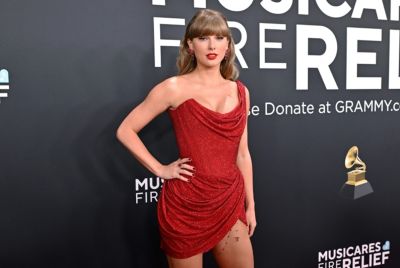
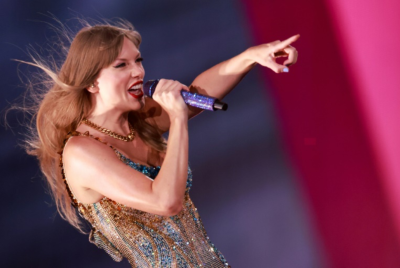
Olivia Rodrigo, Taylor Swift 'Feud' Explained: Vampire Singer 'Caught Off Guard' by the Deja Vu Songwriting Credit Controversy
Olivia Rodrigo denies feud with Taylor Swift and reflects on 'deja vu' credit controversy and rumours.

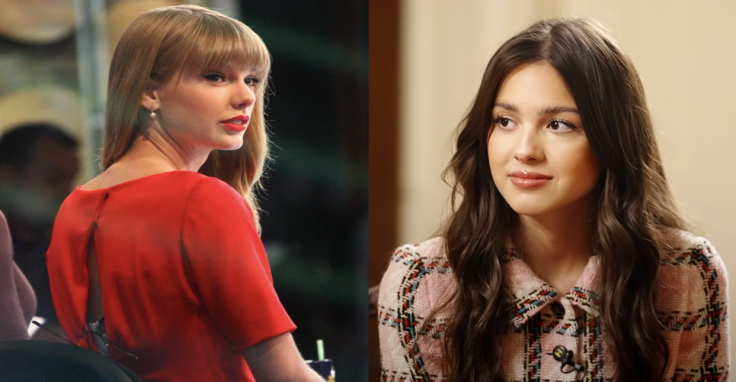
Olivia Rodrigo has again addressed the long-running Olivia Rodrigo-Taylor Swift feud speculation, saying in a recent interview that she avoids engaging with online narratives, even as questions linger over the controversial 'deja vu' songwriting credits that once linked her work to Swift's.
The speculation dates back to 2021, when Swift and producer Jack Antonoff were added as credited songwriters on Rodrigo's track 'deja vu' from her debut album Sour. The move followed comparisons between the song and Swift's 'Cruel Summer,' prompting widespread debate about influence, ownership and industry power dynamics. At the time, neither camp publicly framed the development as a dispute, but online commentary quickly filled the gap.
Feud Rumours Resurface
Speaking on the Popcast podcast, Rodrigo struck a notably restrained tone when asked about the persistent chatter. She made clear that disengagement has become a deliberate coping mechanism rather than avoidance.
'I don't really read too far into it,' she said, framing speculation as an unavoidable byproduct of visibility rather than something she actively tracks. 'If I dove into every internet detective or sleuth... I think I'd just go crazy. There's not enough time in a day.'
That distance, she suggested, is something learned rather than instinctive. Rodrigo described trying to remain emotionally 'detached' from narratives about her personal and professional relationships, a stance that sits in contrast with the intensity of fan-driven scrutiny surrounding her rise.
It is a careful balancing act. Rodrigo does not deny that the conversation exists, but she declines to validate its premise. In doing so, she sidesteps reinforcing a storyline that has largely been constructed outside formal statements or confirmed disputes.
'Deja Vu' Credit Dispute And Its Fallout
The songwriting credit issue remains the clearest flashpoint in the discussion. Rodrigo has previously acknowledged that she was 'a little caught off guard' by how the situation unfolded, though she has stopped short of detailing the negotiations or decisions behind the scenes.
Her comments hint at unease without escalating into accusation. 'I don't think I would ever personally do that,' she said of the credit arrangement, before tempering the remark with a broader reflection on experience and time. 'But who's to say where I'll be in 20, 30 years.'
That ambiguity has allowed multiple interpretations to coexist. Some view the credits as a standard industry precaution in cases of perceived similarity. Others see it as an example of how emerging artists navigate influence under the shadow of more established figures. Rodrigo herself appears unwilling to anchor the moment to a single narrative, instead redirecting attention to her own creative process.
In a separate interview with Rolling Stone, she was more direct in rejecting the feud label altogether. 'I don't have beef with anyone,' she said, describing a deliberately small personal circle and limited engagement with social media discourse. 'There's nothing to say.'
The persistence of the rumour cycle, however, suggests that denial alone has not been enough to quiet speculation. Part of that stems from the interpretive nature of Rodrigo's songwriting. Tracks like 'vampire' have been dissected line by line by listeners searching for real-world targets, despite her consistent refusal to identify specific subjects.
'I never want to say who any of my songs are about,' she said, reinforcing a long-held boundary. 'I think it's better to not pigeonhole a song to being about this one thing.'
Notably, she has also expressed surprise at the suggestion that 'vampire' could be linked to Swift, indicating that some of the narratives circulating online may say more about fan culture than about the artists themselves.
Public appearances have offered little support for the idea of a rift. At the 2024 Grammy Awards, Swift was seen standing and singing along during Rodrigo's performance of 'vampire,' a moment widely shared at the time as evidence of mutual respect rather than tension.
Still, without a definitive account of how the 'deja vu' credits were negotiated, the episode remains open to interpretation. What is clear is that Rodrigo has chosen not to litigate the past in public, even as it continues to shape perceptions of her relationship with one of pop's most influential figures.
© Copyright IBTimes 2026. All rights reserved.
- Recommended For You