

How Healthy Is Donald Trump? White House Defends 79-Year-Old President Energy
A viral clip raises fresh questions about Trump's health, but the White House insists he remains fully energetic.

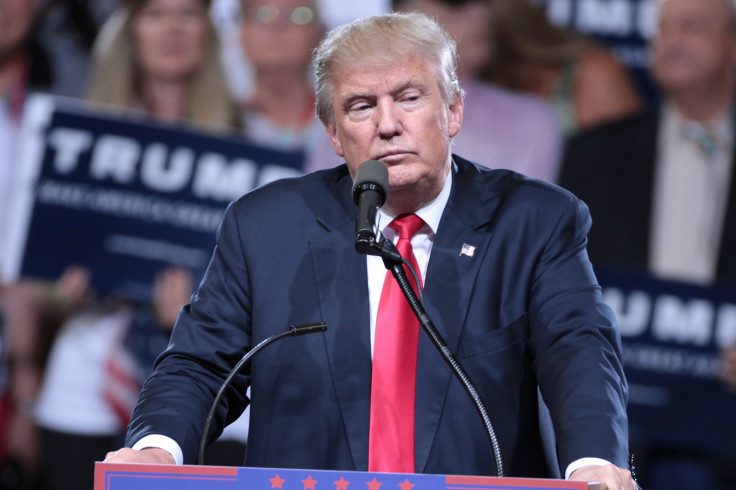
The public discourse surrounding Donald Trump's health has intensified following viral footage captured during a Memorial Day ceremony at Arlington National Cemetery on 27 May, with the clip spreading rapidly online and prompting questions about his energy levels and fitness for office.
The 79-year-old President was recorded with his eyes closed for a period that observers interpreted as him nodding off. While the White House has moved quickly to dismiss these concerns as partisan, the moment has reignited a wider debate about the US President's age and the demands of the world's most high-pressure office.
Questions around Trump's health have surfaced repeatedly in recent months, often driven by images and clips circulating on social media that critics say show him appearing fatigued during official engagements.
Health Debate Rekindled By Arlington Footage
The Arlington appearance was intended as a solemn tribute to fallen service members, but attention shifted when a video showed Trump seated with his eyes closed. The clip quickly gained traction online, becoming the latest in a series of viral moments scrutinised by both political opponents and commentators.
Trump falls asleep as speakers talk about service members dying for their country on Memorial Day pic.twitter.com/QXq455Tmhq
— Headquarters (@HQNewsNow) May 25, 2026
Similar instances have been cited in recent weeks. Trump has been photographed with his eyes closed during briefings, press events, and meetings in the Oval Office. Other clips, some taken at public appearances such as church services and policy discussions, have also been shared as evidence of what critics characterise as a recurring issue.
Not all of these moments are independently verified as instances of the president falling asleep, and the context of each clip varies. Still, the accumulation has sharpened attention on his public demeanour, particularly as he approaches his 80th birthday.
Dr. Jonathan Reiner: "The president has severe daytime somnolence. He falls asleep very often. He's fallen asleep in the Oval Office on multiple occasions with people talking to him in the cabinet room, and I was concerned yesterday that he might have fallen asleep at Arlington… pic.twitter.com/e44DRs1rzI
— Aaron Rupar (@atrupar) May 26, 2026
Medical commentary has added another layer to the discussion. Dr Jonathan Reiner, a CNN medical analyst and professor of medicine, said the behaviour is consistent with 'severe daytime somnolence.' He claimed Trump 'falls asleep very often,' including during meetings where others are speaking.
Reiner also pointed to broader risks associated with chronic sleep disruption. 'Chronic insomnia is a severe illness. It can result in an increase in risk of dementia, a decrease in cognitive effects in older people,' he said. His remarks reflect a general understanding of medicine, though he has not presented direct clinical evidence regarding Trump's condition.
White House Pushes Back On Health Claims
The White House has rejected the narrative outright, describing the claims as politically motivated speculation rather than medically grounded assessment. Spokesman Davis Ingle criticised what he called 'armchair diagnosis' and dismissed Reiner as a 'hack doctor' in comments to multiple outlets.
🚨 JUST IN: President Trump ACES annual health checkup at Walter Reed, the left is FURIOUS 🔥
— Eric Daugherty (@EricLDaugh) May 26, 2026
"Just finished my 6 month physical at Walter Reed Military Medical Center. Everything checked out PERFECTLY. Thank you to the great Doctors and Staff! Heading back to the White House."… pic.twitter.com/YbyCpW4JTr
Ingle defended the president's stamina and mental sharpness, stating that Trump remains 'the sharpest, most accessible, and energetic president in American history.' The administration has not released new medical data in response to the latest round of scrutiny.
Trump himself has repeatedly downplayed concerns about his age and health. Speaking at a recent White House event, he said, 'I feel the same as I felt 50 years ago,' adding, 'I'm not a senior. I'm far younger than a senior.'
The debate is unfolding against the backdrop of Trump's demanding schedule and well-documented late-night social media activity. Posts from his accounts frequently appear in the early hours, leading some observers to question whether irregular sleep patterns could contribute to perceived daytime fatigue. There is no official confirmation linking his posting habits to any medical condition.
The president continues to undergo routine medical evaluations. A recent visit to Walter Reed National Military Medical Centre was described by the White House as a standard check-up, with no abnormal findings publicly disclosed.
What remains unclear is whether the viral moments reflect a genuine health issue, isolated lapses, or simply the optics of a presidency conducted under constant surveillance. Without detailed and current medical records, much of the debate rests on interpretation rather than verifiable evidence.
© Copyright IBTimes 2026. All rights reserved.
- Recommended For You


