

Why Is Pete Hegseth Pushing For Military Testosterone Screening? The Drive for 'Masculine' Force
Defence chief Pete Hegseth is rolling out testosterone screening for troops over 30. What does it reveal about his tougher 'fit for duty' vision?
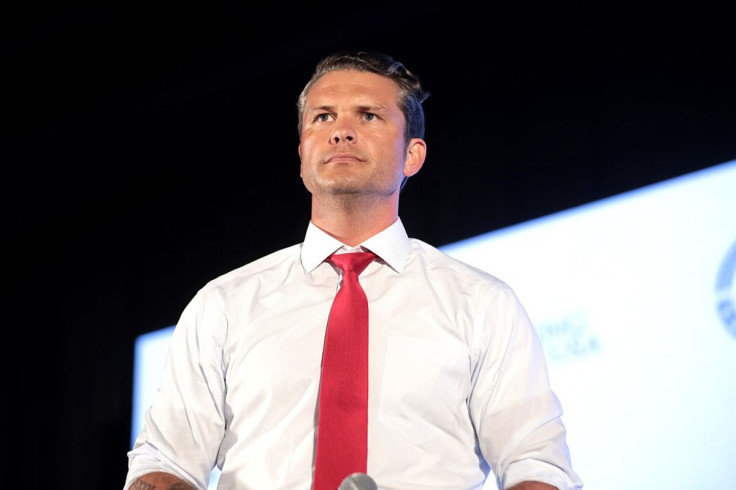
Defence Secretary Pete Hegseth is ordering compulsory annual testosterone tests for all US troops aged 30 and over, formally tying hormone screening to what it means to be 'fit for duty' in his war‑focused Pentagon.
The checks are being brought in as he accelerates a wider drive to toughen physical standards and revive what he calls a 'warrior' culture across the armed forces.
Under the policy, soldiers, sailors, airmen and Marines past their 30th birthday will have testosterone levels measured once a year alongside routine medical assessments, while younger personnel can request screening but will not be required to take it.
The move adds a new annual medical test for older service members, whose testosterone levels will now be checked alongside existing health assessments.
The change gives ageing troops an additional health check on top of stricter body‑fat rules, daily exercise requirements and higher performance benchmarks for combat roles.
It also links hormone levels to Hegseth's push to restore a harder 'warrior ethos', a shift that analysts say raises questions about how far medical data will shape decisions on who is considered ready for front‑line duty.
New Testosterone Tests For Troops
In a recorded announcement, Hegseth said the Pentagon would begin screening for 'testosterone deficiency' to keep personnel 'at their absolute best' and protect readiness. He described the programme as a way to spot and treat low hormone levels before they undermine performance or push experienced service members out of uniform.
Officials say the tests will be compulsory for eligible troops but that any follow‑on treatment will remain voluntary, agreed between individuals and military doctors.
Hegseth insists the aim is to 'restore and optimise' natural capabilities rather than create pressure for performance‑enhancing shortcuts.
'Fit For Duty' In A Tougher Military
The defence chief has presented testosterone screening as a readiness measure, telling troops it is meant to keep them 'on the leading edge of lethality' and fit for what he has elsewhere described as a 'brutal and unrelenting' security environment.
Pentagon reporting on the rollout notes that a full timetable and detailed medical guidance have yet to be published, leaving open how quickly the new regime will begin and how test results will be handled.
The policy builds on a broader overhaul of fitness rules launched in 2025, when Hegseth ordered a review of standards and later unveiled tighter expectations for grooming, physical training and body composition.
At a high‑level briefing he told senior officers that unfit troops and what he labelled 'fat generals' would no longer be tolerated, according to official and media accounts of the event.
Warrior Ethos And A 'Masculine' Force
Those reforms require active‑duty personnel to exercise vigorously every working day and to complete two physical fitness tests a year.
Combat roles are being shifted to gender‑neutral but high minimum standards, with guidance stating that jobs involving direct fighting must be measured against the same demanding benchmarks regardless of sex, based on existing male fitness criteria.
JUST IN: Defense Secretary Pete Hegseth announces the Pentagon will require annual testosterone screenings for all active duty service members age 30 and older, saying the move is intended to improve military readiness.
— Republicans against Trump (@RpsAgainstTrump) July 15, 2026
If a service member is found to have low testosterone,… pic.twitter.com/pgpkfFcq5X
Hegseth has argued that bureaucracy, relaxed physical expectations and years of diversity‑focused initiatives have weakened readiness and diluted what he sees as a more traditionally masculine 'warrior ethos'.
He has told lawmakers and troops that his mandate from Donald Trump was to centre the department on 'lethality, meritocracy, warfighting, accountability and readiness', and conservative commentators have framed the hormone‑testing push as consistent with that agenda.
Health Case And Concerns Over Hormone Focus
Advocates of the new screening, including military health researchers and clinicians who have pushed for better testing and treatment of low testosterone among long‑serving troops, say it could uncover underlying medical problems and improve quality of life for mid‑career service members who might otherwise ignore fatigue, low mood or reduced strength until they are forced out.
Critics, including former officers and defence commentators, question whether focusing on testosterone and ever‑stricter physical demands gives too narrow a picture of what modern militaries need.
Former Navy officer Laura McTaggart, writing in an opinion column for Boston public radio station WBUR, warned that Hegseth's fixation on pull‑ups, twice‑yearly fitness tests and visible toughness reflects a 'one‑dimensional view of combat readiness' that risks sidelining technical skills and judgement needed for high‑tech operations.
© Copyright IBTimes 2026. All rights reserved.