'Your Body, Your Faith': 160 Air Force Troops Fall Ill Following Hegseth's Decision to Make Flu Shots Optional
Military readiness questioned as flu outbreak hits Lackland Air Force Base following policy change
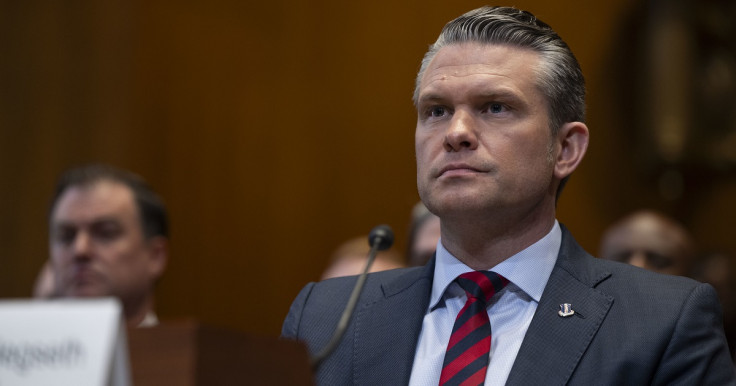
Nearly 160 Air Force trainees have fallen ill during a flu outbreak at a Texas military base just weeks after Defence Secretary Pete Hegseth ended the military's long-standing requirement for annual influenza vaccinations. The outbreak has reignited questions about military readiness, public health and the consequences of making routine vaccinations optional in one of the world's largest fighting forces.
The outbreak occurred at Lackland Air Force Base in San Antonio, home to the Air Force's primary basic military training programme. According to defence officials, the virus spread rapidly through a training wing where recruits live in close quarters, sleep in open dormitories and share dining facilities.
The situation became more serious after trainee Keon McDaniel, who was in his sixth week of training, died following an illness and transfer to Brooke Army Medical Center. Air Force officials have not confirmed whether his death was linked to the flu outbreak. A medical investigation is underway to determine the cause.
The outbreak emerged less than two months after Hegseth reversed a policy that had required flu vaccinations for service members for years.
A Policy Shift Faces Its First Major Test
Hegseth announced the change on 21 April, framing the decision as a matter of personal liberty and religious freedom rather than public health policy.
In a video message unveiling the new rules, he criticised the previous administration's approach to military health requirements.
'Under the disastrous Biden administration, this Pentagon waged an unrelenting war on our warriors on many fronts, including when it came to denying them simple medical autonomy and the freedom to express their religious convictions,' Hegseth said.
The War Department is once again restoring freedom to our Joint Force.
— Secretary of War Pete Hegseth (@SecWar) April 21, 2026
We are discarding the mandatory flu vaccine requirement, effective immediately. pic.twitter.com/9K5W8g0NsD
He described the mandatory flu shot programme as an 'absurd, overreaching' policy that had weakened military effectiveness.
The argument reflected a broader shift inside parts of the Trump administration, where individual choice has increasingly been prioritised over vaccine mandates. Yet the outbreak at Lackland has quickly become the first major real-world test of that philosophy.
According to an Air Force official, only about 40 per cent of trainees chose to receive the flu vaccine after the requirement was lifted.
Military training environments have long been considered particularly vulnerable to infectious diseases because of crowded living conditions, intense physical activity and the constant arrival of new recruits from across the country.
Air Force Reverses Course At Outbreak Centre
As cases mounted, Air Force officials moved to contain the spread.
The service issued an exception to Hegseth's voluntary vaccination policy, requiring recruits at Lackland to receive flu shots as part of a wider response effort. Medical personnel have also been monitoring trainees and providing antiviral treatments to those exposed to infected individuals.
Officials described the outbreak as localised to a specific training wing and said affected recruits would return to training once medically cleared.
'Once they are cleared by medical professionals, they will return to training,' the Air Force said in a statement.
The decision to reintroduce mandatory vaccination at the centre of the outbreak underscores a tension that has followed the debate from the beginning. Military leaders traditionally view vaccination programmes through the lens of readiness, arguing that preventing illness protects operational capability.
Readiness Versus Personal Choice
Senator Roger Wicker, the Republican chairman of the Senate Armed Services Committee and an Air Force veteran, openly questioned the move.
'The reason it was mandatory was to enhance readiness,' Wicker said shortly after the policy was unveiled.
'You know, you do give up certain rights when you take the oath. It's just part of it.'
The Pentagon continues to defend the decision. Sean Parnell, the department's chief spokesman, said the policy changes were based on detailed assessments designed to maximise military readiness and effectiveness.
Since returning to office, Hegseth has made reversing vaccine-related policies a priority. He has pushed to reinstate service members who left the military after refusing Covid-19 vaccinations, including restoring rank, benefits and back pay where applicable.
Roughly 8,700 active-duty and reserve personnel either voluntarily or involuntarily left military service after refusing the Covid vaccine before that mandate was rescinded in 2023. As of last year, only 13 had returned to service.
An Impact Brought By Broader Vaccine Debates
The administration's approach also overlaps with broader vaccine debates involving Health Secretary Robert F. Kennedy Jr., who has spent years questioning aspects of vaccine policy and regulation.
Even so, vaccination requirements remain firmly embedded throughout the military. Service members are still required to receive immunisations against diseases including measles, mumps and polio, while additional vaccines may be mandated depending on deployment risks and occupational requirements.
In April, while ending the mandate, Hegseth still encouraged troops to receive the vaccine.
'We will not force you because your body, your faith and your convictions are not negotiable,' he said.
Weeks later, as nearly 160 trainees recover from a flu outbreak at one of the military's most important training facilities, that decision is facing its most significant scrutiny yet.
© Copyright IBTimes 2026. All rights reserved.
- Recommended For You