Prince Harry And King Charles Speak With 'Exactly Same Tone' On Antisemitism, Critic Says
Sussex aides deny any coordination, insisting the overlap was a coincidence amid ongoing tensions in the royal family.

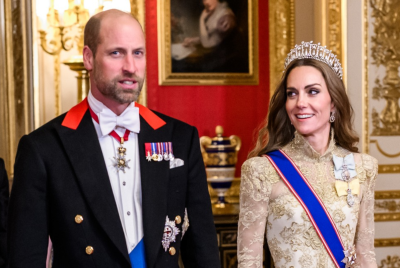
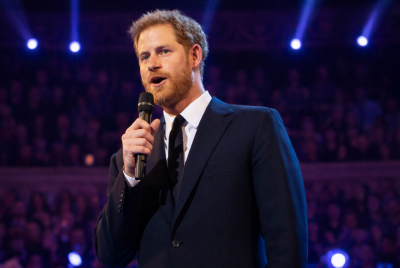
Prince Harry and King Charles both condemned rising antisemitism in the United Kingdom in separate public statements issued within roughly 24 hours of each other in London, prompting a royal commentator to argue that father and son were suddenly speaking with 'exactly the same tone' on one of the country's most sensitive issues.
The news came after the State Opening of Parliament on Wednesday 13 May, when King Charles delivered the government's legislative agenda in the Lords. Buried in the formal language was a clear pledge: 'My government will take urgent action to tackle antisemitism and ensure all communities are safe.'
Within hours, Harry's byline appeared in The New Statesman, where he warned of a 'deeply troubling' rise in antisemitism in Britain and urged readers not to confuse hatred with protest.
King Charles And Prince Harry Align On Antisemitism
At the Palace of Westminster, King Charles set out the promise to act on antisemitism as part of his government's programme.
The following day he travelled to Golders Green in north London, an area with a large Jewish community, where he met Shloime Rand and Norman Shine, two men stabbed in an antisemitic terror attack on 29 April.
On the pavement in Golders Green, his tone shifted into something more conversational. 'It's a dangerous world, isn't it?' he remarked, according to those present. The visit was framed as a show of solidarity with a community rattled by violence and a wider climate of fear.
Almost in parallel, Prince Harry's essay for The New Statesman focused on the same subject from a different vantage point. He wrote that 'hatred directed at people for who they are, or what they believe, is not protest. It is prejudice,' and argued that silence in the face of extremism allows 'hate and extremism to flourish unchecked.'
Harry used the piece to revisit what he described as his 'past mistakes', a reference to the moment, aged 20, when he wore a Nazi fancy‑dress costume to a party.
The photograph, splashed on the front page of The Sun at the time, has followed him ever since and remains one of the most damaging images of his early public life. In the article, he cast that episode as part of a long process of learning, without disputing the offence it caused.
'Two Windsors. Same Day. Same Issue'
Royal commentator Tom Sykes, writing in his Substack newsletter The Royalist, was among the first to link the strands. He noted that King Charles and Prince Harry had, in effect, launched a joint assault on antisemitism, even if they insisted they were doing so independently.
'Two Windsors. Same day. Same issue. Exactly the same carefully calibrated tone,' Sykes wrote. He added that Harry 'has not spoken out about anti‑semitism in the past, and for very good reason', a pointed nod to the Nazi costume scandal that many critics still regard as disqualifying him from lecturing others.
MY FEARS FOR OUR DIVIDED KINGDOM
— The New Statesman (@NewStatesman) May 14, 2026
BY PRINCE HARRY
Over the past several years, I have spoken about the consequences of a world in which outrage outpaces humanity – where fear and division are amplified faster than truth, and where people are too easily reduced to categories,… pic.twitter.com/EAydV0wUNK
Intrigued by the timing, Sykes said he 'went directly to the Sussex offices' to ask whether Harry's New Statesman article had been coordinated with the King's team.
According to Sykes, 'Team Sussex denied it. They said they never received an operational note about the king's visit, that it was a "coincidence". They said the New Statesman went to print several days ago, though of course that wouldn't rule out coordination.'
Prince Harry, Past Mistakes And A Sensitive Audience
What makes this overlap so charged is Harry's own history. The Nazi uniform incident has never really faded, and Sykes reflects a view still held in some quarters: that 'a man who wore a Nazi uniform to a party is not a good person to lecture the rest of us about anti‑semitism.'
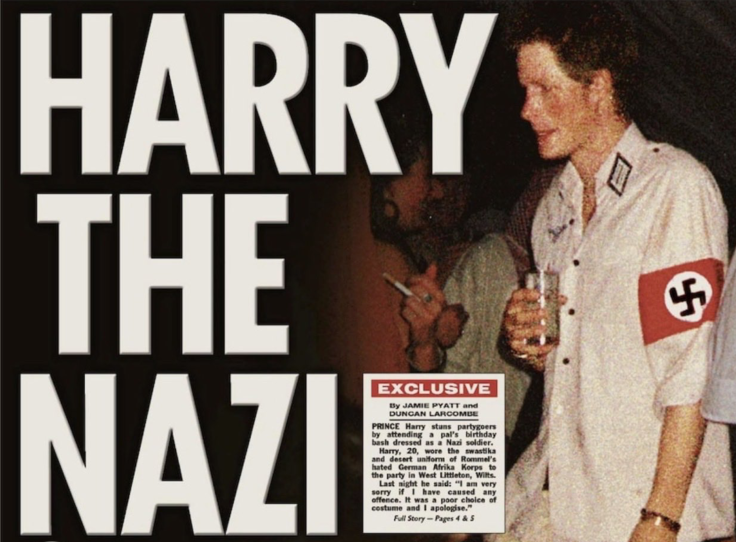
Harry, for his part, has repeatedly described that night as a shameful error and, in Spare, suggested he was encouraged by his brother and sister‑in‑law. That framing has done little to soften critics who see it as shifting blame.
His decision to address antisemitism now, and to connect it to a broader argument about extremism, inevitably invites people to judge whether they believe in his evolution. Supporters may see a man confronting his failures; detractors see brand‑management wrapped in moral language.
What The Alignment Means For The Royal Rift
Beyond the content of the statements, there is the question of what this says about the relationship between King Charles and Prince Harry. Sykes suggests that Charles 'does not want his final years to be defined by estrangement from his son', describing reconciliation with Harry as the King's 'dearest wish', followed by a hope that Harry and Prince William might one day repair their own rift.
Against that backdrop, any perceived alignment between the King and the Sussexes is politically delicate. Harry's book Spare, his television interviews and his Netflix series delivered some of the fiercest criticism of the institution in recent memory. For die‑hard monarchists, the idea of Harry edging back towards a semi‑regular presence in Britain is explosive.
Sykes goes as far as to warn that 'it is going to trigger outrage amongst the British population if we start to see Harry headquartering himself here.'
Earlier reporting has pointed to what was described as a 'secret summit' between Harry's team and a senior aide to King Charles around ten months ago, intended to improve diary coordination and avoid public clashes.
Separate outlets have also claimed that there is some level of information‑sharing between the two offices. As of writing, none of that proves they are coordinating on messaging.
For now, both camps insist the antisemitism statements were not planned together, and nothing in the available reporting definitively contradicts that.
What is undeniable is that on one of the most fraught issues in British public life, King Charles and Prince Harry suddenly sounded as if they were reading from the same script, even if each insists he wrote his own lines.
The news came after years of distance between father and son, a relationship that has remained strained since Harry stepped back from royal duties in 2020 and later moved to Southern California with Meghan Markle and their family.
© Copyright IBTimes 2026. All rights reserved.
- Recommended For You