Prince Harry's Invictus Games Under Fire Over $63 Million Extravagance Claims: Report
A $63.2m price tag for Canada's Invictus Games raises tough questions over Prince Harry's charity record, public money and his future as a royal figure.

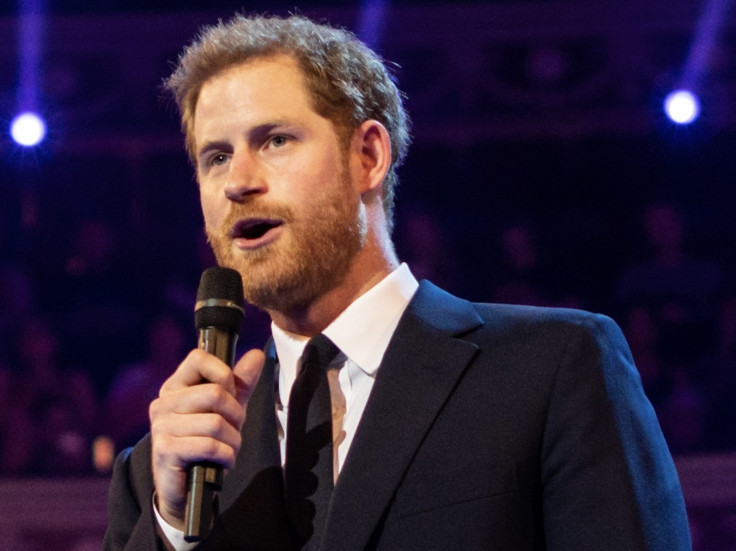
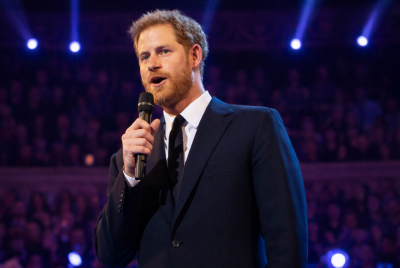
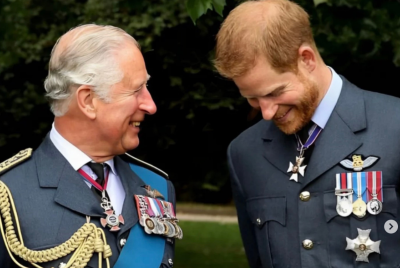
Prince Harry's Invictus Games are facing fresh scrutiny in Canada, where a researcher alleges that the 2025 edition of the event will cost around $63.2 million for just 543 competitors, equating to roughly $118,000 per veteran. The figures, which relate to the next Invictus Games scheduled to be held in Canada, have triggered questions over public spending and the Duke of Sussex's role in the high-profile tournament for wounded service personnel.
The claims land at a fraught moment for Harry's public image as a philanthropist. The news came after his and Meghan Markle's Archewell charity was criticised over rising costs and relatively modest grant-making, and amid persistent doubts about whether Harry could ever resume a working role within the Royal Family. The latest controversy has effectively fused three sensitive topics into one: veterans' welfare, public money and royal reputation.
The spending accusations have been driven by Canadian investigator Rachel Maxwell, who published her analysis on her Montecito Minimalist Instagram account and blog. Citing publicly available documents, she says the 2025 Invictus Games will draw about $30 million from Canadian taxpayers, with the rest coming from private donors. In an interview referenced by US outlet NewsNation, Maxwell described the sums involved as 'life-changing money' and argued that many veterans might prefer direct support over what she portrays as an expensive spectacle.
'Would the veterans have preferred $117,000 to purchase new prosthetics, to make their house ADA compliant, to purchase vehicles that could support their wheelchairs?' she asked, suggesting that the Canadian government was attempting to 'sweep the spending scandal under the rug.'
Spending Row Under Pressure
The Invictus Games, co-founded by Prince Harry in 2014, were created to showcase the resilience of injured and sick service members through sport. That original mission still carries considerable goodwill. Yet Maxwell contends the Canadian staging has drifted away from lean support and towards big-budget production.

She points to cheaper models elsewhere. The US Warrior Games, another competition for wounded service personnel, reportedly runs on a budget of around $2 million a year. A separate Invictus-style programme in Germany is said to spend roughly $200,000 and hosts about half as many competitors as the upcoming Canadian event. On those figures, the per-athlete cost in Canada looks unusually high.
None of that automatically proves money is being misused, but it does raise uncomfortable questions for Harry, who has built much of his post-royal brand around the Invictus Games. Royal commentator Hilary Fordwich told the US tabloid National Enquirer she believes there should be complete transparency over whether the duke derives any financial benefit.

'The question I have is: Does Prince Harry use the Invictus Games as a tax write-off, and is he making money off the backs of veterans?' she said. 'If he's not, there should be full disclosure that he is not. Show us that he's not [profiting].'
There's no evidence in the available reporting that Harry personally profits from Invictus. Furthermore, Canadian authorities haven't publicly confirmed any formal investigation into the 2025 budget. Much of the current debate hinges on Maxwell's interpretation of spending plans, lacking official documentation or a detailed breakdown from the organisers.
Questions Deepen Concerns
The controversy over the Invictus Games has inevitably bled into wider concerns over Harry and Meghan's philanthropic ventures. Archewell Foundation, rebranded as Archewell Philanthropies late last year, shifted to a fiscal sponsorship model at the same time as unanswered questions swirled over its finances.

According to published records cited in the report, Archewell's expenses in 2024 reached $7.5 million, considerably higher than the previous year. Donations totalled $3.1 million, while grants distributed came to just $1.8 million. That imbalance has fed a narrative, particularly in some US and tabloid outlets, that the couple's charity machine spends heavily on operations while giving comparatively little away.
Rumours of a US investigation into Archewell have been firmly rejected by the couple's representatives. They have also pushed back on suggestions that $4 million went 'missing' from the 2022 tax return, insisting that money later appeared in the 2023 filings. On the face of the available documents, there is no confirmation of any wrongdoing, but the optics are challenging, especially when set against the Invictus debate.

At the same time, the Sussexes' commercial projects appear to be in transition. Their initial Netflix deal, widely reported to be worth around $100 million, has ended, while Meghan's two podcasts have stopped production. The duchess' lifestyle show With Love, Meghan is also no longer proceeding, meaning her As Ever line of fruit spreads, teas and wines has lost a major platform and now has to find an audience without the streaming giant's support.
Sources quoted by the Enquirer claim the pair are under financial pressure despite living in a large Montecito home where their annual mortgage, security and staffing costs are estimated at about $6.8 million. Those figures have not been independently confirmed, but they feed into a broader perception problem for Harry: he is asking for trust over veterans' charities while living a life that looks, at least from the outside, extremely expensive.
His charitable reputation has already taken one knock. In 2023 he unexpectedly stepped down as patron of Sentebale, the African charity he founded in 2006 in memory of Princess Diana. The organisation's chief, Dr Sophie Chandauka, later described his exit as 'harassment and bullying at scale,' according to The Guardian. The UK's Charity Commission went on to investigate and said it found no evidence of wrongdoing.
What remains is a patchwork of doubts and perceptions rather than hard findings. Fordwich argues that the 'cumulative fallout' from such rows will make any future reconciliation with the Royal Family harder, particularly with Prince William, who is increasingly seen as the steady centre of the monarchy. For the Invictus Games, which rely on moral authority as much as money, that reputational drift may prove more damaging than any single invoice.
© Copyright IBTimes 2026. All rights reserved.
- Recommended For You