Trillionaire Claims Elon Musk's Quadrillionaire Status Is 'Not Impossible'
Elon Musk's claim that it is 'not impossible' for him to become a quadrillionaire comes days after SpaceX's record‑breaking IPO.
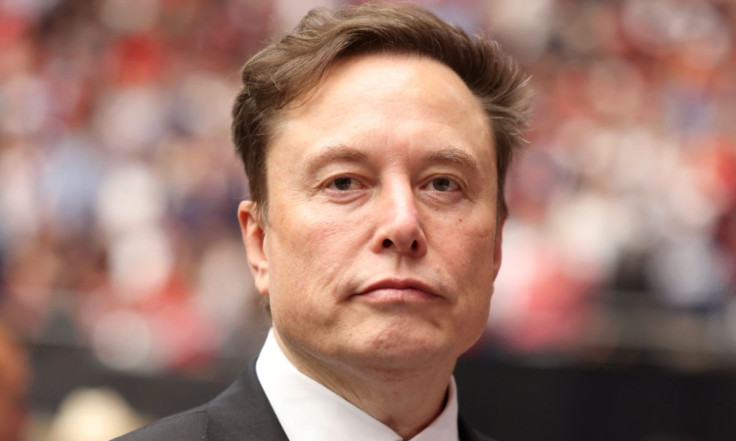
Elon Musk has claimed it is 'not impossible' for him to become humanity's first quadrillionaire, telling followers on X on Sunday that such a leap in wealth would likely depend on SpaceX building factories on the Moon and Mars and on a future global economy measured in 'mass and energy' rather than dollars.
For context, the comment landed at the end of a wild few days for Musk and SpaceX. On Friday, the rocket company floated on the Nasdaq under the ticker SPCX in what has been billed as the largest initial public offering on record.
SpaceX sold 555.6 million shares at $135 each, raising $75 billion and closing its first trading day at $160.95, a 19 per cent jump that valued the firm at more than $2.1 trillion. That valuation, according to Forbes estimates cited in the report, pushed Musk's personal fortune to about $1.1 trillion and effectively crowned him the world's first trillionaire.
Not impossible, but definitely requires factories on the Moon and Mars to achieve.
— Elon Musk (@elonmusk) June 14, 2026
By then, I don’t think dollars will be used as currency. Just mass and energy.
Quadrillionaire Talk Tied to SpaceX and Kardashev Civilisation
The latest quadrillionaire claim emerged when a user on X pointed out Musk would need another $998.9 trillion to hit the next mind‑bending milestone. Musk replied: 'Not impossible, but definitely requires factories on the Moon and Mars to achieve. By then, I don't think dollars will be used as currency. Just mass and energy.'
It can be recalled that similar language surfaced earlier this year when details of Musk's massive, milestone‑driven SpaceX equity package made headlines ahead of the summer IPO. Critics warned that, if SpaceX hit its most ambitious targets, the stock awards could turn him into the world's first multi‑trillionaire.
Musk pushed back by arguing that the package would be a 'good deal' only if humanity advanced towards what physicists call a Kardashev II civilisation, a theoretical stage where a species can harness energy on a stellar scale.
He told followers then that at such a point 'won't be using dollars for currency at that point, just mass and energy,' framing his potential wealth not as personal excess but as a side‑effect of building planetary‑scale infrastructure. It is a familiar Musk move: he tends to answer questions about his net worth by changing the subject to civilisation‑level engineering.
There is, of course, no independent verification that a quadrillion‑dollar personal fortune will ever exist, let alone be held by Musk. The entire conversation is speculative and hinges on technological and economic shifts that are nowhere near proven.
SpaceX IPO and the First Trillionaire Label
The quadrillionaire chatter came directly after SpaceX's blockbuster debut, which has put Musk in a rarified financial bracket even by his own standards. SpaceX's opening price of $150, intraday high of $176.52 and close at $160.95 established it as the sixth‑most valuable public company in the United States by market capitalisation, according to the report.
For starters, that scale matters far beyond Musk's personal bragging rights. A $2.1 trillion valuation gives SpaceX staggering leverage in capital markets and sends a loud signal about investor faith in everything from reusable rockets to satellite internet.
It also sharpens questions about concentration of wealth and power in the hands of one tech founder whose companies increasingly underpin critical infrastructure, including broadband coverage and launch capacity.
On Sunday, riding that wave, Musk went further and posted yet another bold forecast: 'I think SpaceX might be able to reach approximately $1T revenue in 2030.' There was no detailed breakdown of how the firm might get there, and no formal guidance from SpaceX as a listed company attached to that figure.
Elon said SpaceX could hit $1T in revenue by 2030
— Mario Nawfal (@MarioNawfal) June 15, 2026
That's triple what Morgan Stanley's saying ($330B) and double Goldman's ($474B).
Banks still underestimating the space AI compute wave hard. 2030 gonna be crazy if he's right.@elonmusk @SpaceX / Writers: Lucas…
As with so many of Musk's projections, the statement reads less like a conventional forecast and more like an attempt to stretch the Overton window of what investors even consider possible.
Regulators or market watchdogs have not publicly weighed in on the $1 trillion revenue claim. Analysts typically warn that forward‑looking statements at this scale need to be treated with caution given the uncertainties involved in space launch economics and new business lines.
Moon City, Mars Dreams and a Very Earthbound Reality
Musk has long sold his vision of Mars settlement to investors and fans, but recently he has started sketching out something broader: a network of lunar factories, a 'Moon City' and off‑Earth infrastructure to support artificial intelligence and manufacturing. The quadrillionaire scenario neatly plugs into that narrative. In effect, he is saying: you want numbers that big, you need an industrial civilisation that spans multiple celestial bodies.
The news came after a series of posts in which Musk talked up these off‑world plans. Yet even in his own framing, the path there is full of giant ifs. SpaceX still relies on Starship achieving full reusability at scale, on radically lowering launch costs and on technologies that have not been commercially proven.
There are also political and legal questions around resource extraction in space that no tweet can magic away.
According to Benzinga's Edge Rankings cited in the report, SpaceX stock currently shows a weaker price trend across short‑, medium‑ and long‑term horizons.
That is a reminder that even a $2.1 trillion space company is not immune to market jitters or profit‑taking after a record IPO. The numbers on a screen in the first trading week are not the same thing as a stable, decades‑long growth story.
What Musk is undeniably good at is fusing hard engineering, sci‑fi aesthetics and financial hype into one rolling narrative.
The quadrillionaire line, tied to Moon and Mars factories and an economy priced in mass and energy, sits perfectly in that blend. Whether it ends up as a footnote in his biography or a prophecy that reshapes capitalism is the part nobody can price in yet.
© Copyright IBTimes 2026. All rights reserved.
- Recommended For You