Trump's Third Walter Reed Visit in 13 Months Triggers Fresh Scrutiny as Doctors Say White House 'Lacks Candour'
Concerns grow over Trump's health transparency amid frequent Walter Reed visits

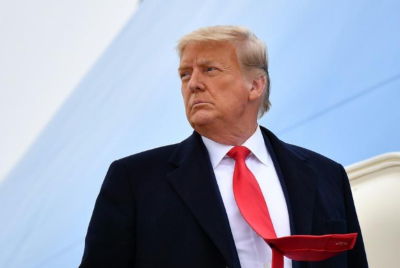
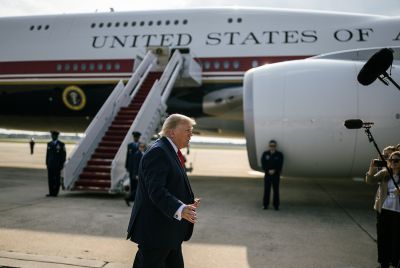
Donald Trump is heading back to Walter Reed National Military Medical Center for the third time in just over a year, and the frequency of those visits is drawing renewed attention from medical professionals. The White House characterised the upcoming appointment as a routine medical and dental check-up, but independent physicians say the administration has consistently fallen short on transparency regarding the 79-year-old president's condition.
Trump first visited Walter Reed in April 2025 for what was described as his annual physical, then returned six months later in October under circumstances that took weeks to fully clarify. That second visit sparked weeks of inquiries about Trump's diagnosis and procedures that the White House repeatedly sidestepped. The back-to-back trips raised eyebrows among health professionals, given that presidents usually make just one annual trip to Walter Reed unless they have an urgent condition.
Trumps third “annual physical” in the 13 months.
— Nick Mark MD (@nickmmark) May 25, 2026
I wonder how much of his desperation to build the ballroom is the massive expansion of medical facilities at the White House.
Would make these medical visits much more discreet…https://t.co/FLM54geXGt
A Scan That Took Months to Accurately Describe
The October visit produced its own controversy. Trump initially told reporters he had undergone an MRI, saying aboard Air Force One that 'the doctor said some of the best reports for the age, some of the best reports they've ever seen.' Months later, a different picture emerged. Trump and the White House clarified that the president had in fact received a CT scan, with his doctor Sean Barbabella describing the imaging as preventive 'to definitively rule out any cardiovascular issues.'
Trump later told the Wall Street Journal he regretted taking the scan, saying it gave Democrats health 'ammunition.' The drawn-out correction fuelled concerns among doctors about whether the administration is being fully forthcoming about the president's medical care.
'A Lack of Candour From the White House'
Jonathan Reiner, a cardiologist and professor of medicine at George Washington University Hospital who served for years as cardiologist to former Vice President Dick Cheney, was pointed in his assessment. 'This White House just doesn't seem to want to acknowledge any physical ailment, but older people develop medical issues, and the president is almost 80 years old,' he said. 'There just seems to be a lack of candour from the White House.'
Reiner also raised pointed questions about the president's swollen legs, a condition that went unmentioned in the April 2025 medical report before being publicly diagnosed as chronic venous insufficiency in July 2025. He said that if Trump had developed swollen legs after that April exam, it would point to acute edema — and 'that usually warrants an in-depth evaluation to make sure that you don't have conditions like congestive heart failure.' The administration has separately attributed visible bruising on Trump's hands to his regular aspirin intake and the physical demands of frequent handshaking.
BREAKING NEWS: Trump in fresh health storm as he returns to hospital for THIRD time in 13 months
— Daily Mail US (@Daily_MailUS) May 25, 2026
Public Confidence Dropping
Beyond the medical community, broader public trust in Trump's fitness appears to be softening. A Washington Post-ABC News-Ipsos poll published in early May 2026 found that 59 per cent of Americans said Trump does not have the mental sharpness to lead the country, with only 40 per cent saying he is mentally equipped for the role. On physical fitness, 55 per cent said he is not in good enough health to serve effectively, while 44 per cent disagreed. Both figures represent a significant decline compared to the previous September, according to the same polling series.
Trump has pushed back consistently, regularly citing his cognitive test performance at public events and repeating claims about his cognitive scores as recently as a rally on Friday. The White House has continued to insist the president is in excellent shape, pointing to assessments signed off by his physician.
Three Walter Reed visits in 13 months, a CT scan initially described as an MRI, chronic venous insufficiency, and a medical report that took months to fully surface, taken together, these have prompted calls for greater institutional oversight. Some lawmakers from both parties have called for an independent commission to formally assess the president's health. With Trump due to turn 80 in June, those calls are only likely to grow louder.
© Copyright IBTimes 2026. All rights reserved.
- Recommended For You