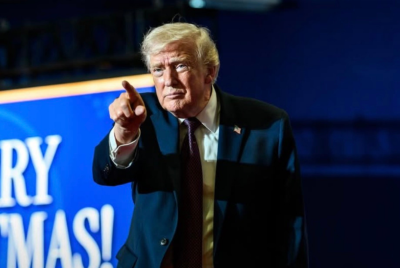
Trump's Swollen, Discoloured Hand Sparks Fresh Health Fears Amid Viral Walter Reed Hospital Rumours
Visible swelling and bruising reignite debate over Trump's health transparency as aides deny hospital claims
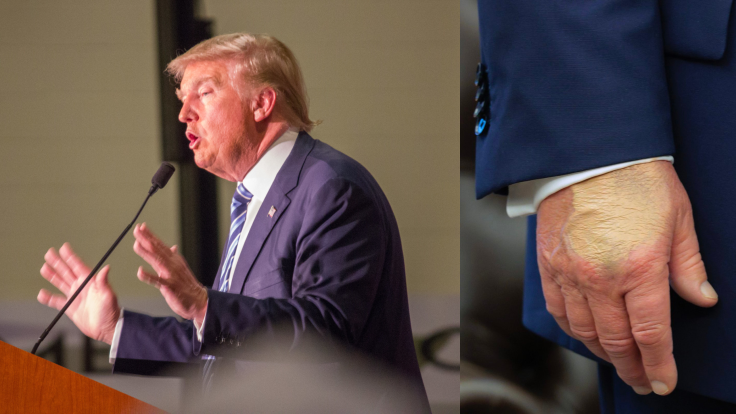
A visibly swollen and discoloured hand has once again placed Donald Trump at the centre of mounting questions over his health, as fresh speculation spreads online and a routine holiday photo-op turns into a flashpoint.
New images from the White House Easter Egg Roll show the US president with pronounced bruising on his right hand, prompting renewed scrutiny just days after aides denied claims he had been treated at Walter Reed National Military Medical Center.
The episode has reignited debate about transparency around presidential health, particularly as Trump's public schedule appears to have narrowed during his second term and voters increasingly parse his appearances for signs of strain.
Easter Appearance Revives Focus On Visible Bruising
Trump appeared alongside First Lady Melania Trump at the White House's annual Easter Egg Roll, a long-standing presidential tradition. Observers quickly noted what appeared to be a darkened, swollen area on the back of his right hand, partially concealed with what looked like cosmetic coverage.
The event marked his first public appearance in several days, a gap that had already prompted online speculation. Footage circulated widely across social media platforms, where users questioned whether the recurring bruising could indicate an underlying medical issue.
Social media users quickly drew attention to the footage in widely shared posts, with many noting that 'the back of Trump's right hand is extremely swollen and discoloured'. The images rapidly gained traction online, amplifying broader discussion about the president's condition and fuelling renewed speculation about his health.
The White House did not provide a detailed medical explanation following the event. However, officials reiterated previous claims that visible bruising had benign causes, including frequent handshaking or minor accidental injury.
Back of Trump's right hand visibly discolored during White House Easter egg roll — Photo (Anna Moneymaker/Getty) pic.twitter.com/YBx4f6n9gM
— NewsWire (@NewsWire_US) April 6, 2026
White House Denials And Conflicting Explanations
In response to viral claims that Trump had been hospitalised, the White House issued a firm denial. A statement from the administration's Rapid Response team dismissed the reports as unfounded, attributing them to online speculation rather than verified information.
Officials have previously offered varying explanations for similar bruising. In earlier instances, aides suggested that repeated handshakes had caused irritation and minor trauma, describing Trump as a 'man of the people' who regularly engages with supporters. On another occasion, the White House said the president had 'clipped' his hand on a table.
Such explanations have not fully quelled public curiosity, particularly given the frequency with which the bruising has appeared. Photographs from multiple appearances over the past year show similar marks on the backs of both hands, suggesting a recurring issue rather than an isolated incident.
The lack of a consistent or detailed medical account has contributed to an environment in which speculation thrives. Without formal disclosure, observers are left to interpret visual evidence that may have multiple plausible explanations.
Deranged liberals cook up insane conspiracy theories when @POTUS goes 12 hours without speaking to press.
— Rapid Response 47 (@RapidResponse47) April 4, 2026
(They said nothing when Biden routinely went 12 days without speaking to press)
Fear not! President Trump literally never stops working. https://t.co/Tu9KvLnYDR
Medical Experts Urge Caution Over Visual Diagnosis
Medical professionals caution against drawing definitive conclusions from images alone. Dr Jonathan Reiner of George Washington University School of Medicine and Health Sciences has noted that bruising can result from relatively minor trauma, particularly in older adults.
'Bruising can be just simply a one-off thing when you have some trauma, you bump into something,' Reiner said in a televised interview. He added that medications such as aspirin can increase susceptibility to bruising by affecting blood clotting.
According to the National Health Service, bruising and swelling are common and often harmless, though persistent or unexplained symptoms may warrant further medical evaluation. Age-related changes in skin and blood vessels can also make bruising more visible and more frequent.
Some online commentators have speculated about intravenous treatments or other medical interventions, though no evidence has been provided to support those claims. Experts emphasise that such conclusions cannot be substantiated without clinical information.
the back of Trump's right hand is extremely swollen and discolored, as you can see in this clip pic.twitter.com/lr9S1Lr4a4
— Aaron Rupar (@atrupar) April 6, 2026
Broader Questions Over Health Transparency
The latest episode has revived longstanding questions about how much health information presidents should disclose. While sitting presidents typically undergo annual physical examinations, the level of detail released to the public varies significantly.
During his first term, Trump's medical reports often drew scrutiny for their brevity and tone. In one widely cited letter, his physician described his health in notably glowing terms, raising questions among some observers about the objectivity of official disclosures.
Recent reporting has also pointed to changes in Trump's public schedule. An analysis by The New York Times in November found that his appearances had declined compared with his first term, with engagements increasingly concentrated within limited hours of the day. While such scheduling decisions can have multiple explanations, they have contributed to broader discussion about his health and stamina.
The political context further amplifies these concerns. Health has long been a sensitive issue in US presidential politics, with voters often weighing a candidate's physical fitness alongside policy positions and leadership style.
The viral spread of images from the Easter event demonstrates how quickly visible signs, however ambiguous, can shape public perception. In the absence of detailed medical disclosure, even minor or routine symptoms can take on outsized significance.
A single moment at a traditional Easter event has once again underscored how closely the health of a president is watched, and how quickly uncertainty can turn into a global conversation.
© Copyright IBTimes 2026. All rights reserved.
- Recommended For You