Donald Trump Faces Fresh Health Scrutiny Ahead of Third Walter Reed Visit in 13 Months
Trump is set to visit WR Medical Centre for the third time in 13 months, intensifying scrutiny of his age, visible bruising and unexplained rashes.
Donald Trump will return to Walter Reed Medical Centre on Tuesday for what aides describe as a routine medical and dental check-up, marking the 79-year-old President's third hospital visit in 13 months and sharpening public and professional scrutiny of his health and fitness for office.
The latest trip follows an annual physical at Walter Reed in April 2025 and a 'scheduled follow-up' in October, according to The Washington Post. Since then, the president has repeatedly appeared in public with visible bruises and red marks on his skin, including on his neck, hands and ankles, feeding a steady churn of speculation that the White House has struggled to put to rest.
Those suspicions are not purely anecdotal. A Washington Post–ABC News–Ipsos poll conducted in April found only 40% of Americans now believe Trump has the mental sharpness to serve as president, down from 47% in September. On physical fitness, the picture is even harsher: 44% say he is fit for the job, compared with 54% last autumn. The erosion is politically awkward for a president who made Joe Biden's age and acuity central to the 2024 campaign.
Trump in fresh health storm as he returns to hospital for THIRD time in 13 months. pic.twitter.com/DfeWiZdL93
— Daily Mail (@DailyMail) May 25, 2026
Visible Signs Fuel Donald Trump's Health Questions
The news came after months of close-up photographs showing Donald Trump with swollen ankles, purpled knuckles and what appears to be a red, sore-looking rash on his neck.
In July 2025, cameras captured Trump in the Oval Office with Bahrain's Crown Prince, his left ankle clearly swollen above his shoe. In March, a high-definition shot at a White House event showed an angry red patch creeping across the side of his neck. Another image, taken on 25 August during a meeting with South Korean President Lee Jae Myung, revealed a dark bruise spread across the back of Trump's hand.
watch Trump here. not only is his hand disfigured, but his eyes are closed and he looks like he's about to tip over pic.twitter.com/LA4v6J4UOG
— Aaron Rupar (@atrupar) May 18, 2026
The White House has tried to explain some of this away. Officials disclosed last year that Trump had been diagnosed with chronic venous insufficiency, a common vein condition that can cause leg and ankle swelling, particularly in older adults. The President has also blamed the bruising on what he calls a 'mega' daily aspirin dose, a medication well known to increase bruising and bleeding risk in patients his age, especially at higher doses.
As for the photographs and video clips that appear to show him sitting motionless with his eyes closed during Cabinet meetings and Oval Office sessions, Trump has flatly rejected the suggestion that he is dozing off. He insists he is closing his eyes to listen more intently while others speak. Still, the overall picture has left many doctors uneasy.
Donald Trump's discolored hand was shown and photographed today by Kevin Dietsch of Getty Images
— Lucas Sanders 👊🏽🔥🇺🇸 (@LucasSa56947288) May 25, 2026
(Donald Trump is going to Walter Reed for another exam tomorrow)
Will he take a fourth cognitive test? pic.twitter.com/4godeP6gK7
Former White House Doctors Challenge Trump's Transparency
Several physicians with experience caring for presidents have gone on the record to say they see gaps in what the public is being told about Trump's health.
'This White House just doesn't seem to want to acknowledge any physical ailment, but older people develop medical issues, and the President is almost 80 years old,' Dr Jonathan Reiner, a former cardiologist to Vice President Dick Cheney, told the Washington Post. 'There just seems to be a lack of candour from the White House.'
Donald Trump's frequent sleep in meetings, bruises in their hands, rotations in his neck are on the world agenda.
— GNXNews (@Gnx_news) May 23, 2026
Is Trump hiding his disease? pic.twitter.com/MSKY6tUOw4
Jeffrey Kuhlman, who previously served as White House physician to Bill Clinton, George W Bush and Barack Obama, was even blunter in his assessment of the broader pattern. 'After a decade of delusion, deceit, denial or delay from the administrations and White House physicians regarding presidential evaluations, my expectation bar is pretty low,' he said. 'I hope they are at least transparent and truthful.'
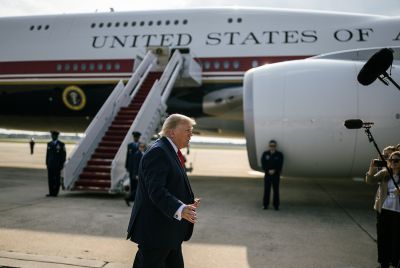
bruising and discoloration is visible on the back of Trump's right hand as he boards AF1 a few moments ago
— Aaron Rupar (@atrupar) May 22, 2026
(Brendan Smialowski/AFP via Getty) pic.twitter.com/Auf3PwUfVU
Presidents are not legally required to release their annual health records, and Trump has repeatedly leaned on that latitude. He has frequently boasted that he is in 'excellent health' and claims to have received 'strong' cognitive scores on all mental health exams, although those test results have not been made available for independent review.
In Congress, frustrations on both sides of the aisle have helped drive calls for an independent commission to assess presidential health. That idea has gathered bipartisan interest in recent months, though nothing is confirmed yet, so any formal changes to how the president's medical information is vetted or disclosed should be treated with a grain of salt.
Trump, aka Dozy Don, presents himself as the healthiest 79-year-old in human history. At the same time, his body tells a different, unavoidable story: the drooping face, the forward-leaning gait, the bruised hands that keep migrating from one limb to the other, the vacant stares,… pic.twitter.com/s3SAijzlEJ
— BigDaddy (@strujillo075) May 23, 2026
White House Defends Donald Trump With Testosterone Boast And Online Offensive
Inside the administration, Trump's allies have pushed hard against the narrative that the President is physically or mentally diminished.
Health Secretary Robert F Kennedy Jr told a podcast hosted by Katie Miller that television doctor Mehmet Oz had reviewed Trump's records and pronounced his testosterone levels the highest he had ever seen in someone over 70. The claim, offered as proof of continued vigour, has not been independently verified and sits awkwardly alongside the momentum of Trump's hospital visits.
US President Donald Trump has been diagnosed with a "chronic condition that undermines the flow of blood from his heart."
— Sprinter Press Agency (@SprinterPress) July 19, 2025
The White House says this is why his ankles looked severely swollen lately, and some people speculate this is also why the bruises on his hands were covered… pic.twitter.com/aPXJ4XbrcR
Meanwhile, the White House has adopted an unusually combative posture toward online discussion of Trump's condition. As his medical appointments have become more frequent, rumours and conspiracy theories have multiplied across social media, from anonymous claims of secret hospitalisations to amateur diagnoses based on slowed speech or a stiff gait.
One flashpoint erupted in early April, when viral posts asserted that Trump had been rushed to Walter Reed. The White House responded that he was, in fact, in the Oval Office and Situation Room, overseeing search-and-rescue operations in Iran. To drive home the rebuttal, officials created a digital 'Wall of Shame' calling out not only influencers who had spread the false claim, but also journalists and outlets that had noted his sudden disappearance from public view.
We all want him to pay the price for his actions. He is in pain, has swollen ankles, wears diapers, wears leg braces. He’s suffering everyday. #Karma pic.twitter.com/LFpyVNU9CB
— 💙 Sheila Stewart 💙 (@sheila_linstrom) May 24, 2026
In a furious written statement, the administration argued: 'Trump was in the Oval Office and Situation Room commanding one of the most daring, complex military search-and-rescue missions in modern American history, the radical left revealed the true sickness rotting their souls.'
That sort of language may play well with Trump's core supporters, who have long viewed questions about his health as just another front in a partisan war. For voters already wary of a nearly 80-year-old commander-in-chief making repeated trips to Walter Reed, it is unlikely to quiet the doubts now following him into every examination room.
© Copyright IBTimes 2026. All rights reserved.
- Recommended For You