

The White House Posted an AI Photo of Trump Donning as Agent 007 and the Internet is Not Having It
AI imagery of Trump as James Bond becomes a viral meme, sparking online parody and criticism.
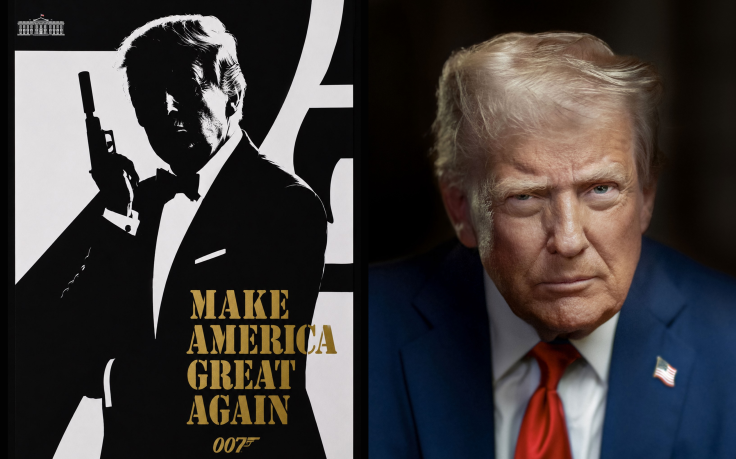
The White House thought it was posting a slick James Bond tribute. Instead, it handed the internet another meme template and watched critics turn Donald Trump into everything from a Big Mac-wielding spy to 'License to Groom' 007 edits within hours.
The AI-generated image, shared by the official White House social media account, reimagined Donald Trump as a gun-holding version of James Bond complete with dramatic lighting and the slogan 'Make America Great Again'. The timing was deliberate. Reports had just emerged that Amazon MGM Studios had officially begun auditions for the next Bond actor following Daniel Craig stepping away from the role.
The reaction online was immediate and brutal.
👀 https://t.co/k8RYZ3XSDW pic.twitter.com/FEnJjOvmWS
— The White House (@WhiteHouse) May 16, 2026
The Internet Quickly Hijacked The Joke
Social media users wasted little time dismantling the White House's attempt at cinematic cool. One viral response renamed the fake film 'License to Groom' alongside an image referencing Jeffrey Epstein, reviving scrutiny over Trump's past social connections with Epstein before the financier's death in 2019.
This is better. pic.twitter.com/V2lFrEf0zq
— 🪴🖼️ Muscab Issa Mohamud 🇺🇸🇺🇦 (@realmuscabm) May 16, 2026
Trump…President Trump 🇺🇸 pic.twitter.com/cc60JOShsE
— VigilantVet 🇺🇸 (@_____USA___) May 17, 2026
You do know Bond is a British Spy... moron #smokefleet pic.twitter.com/ifCUK8y7tF
— Nova’ar | Serving the Tea w/ Footnotes (@Secondstar14) May 16, 2026
Other users leaned fully into parody. One widely shared image transformed Trump into an overweight Bond figure clutching a Big Mac instead of a pistol beneath the title 'Pie Another Day'. Another mocked the president's recent comments about economic concerns by adding the caption: 'I Don't Care About Your Finances.'
— OBSY 🏴 (@artbyOBSY) May 16, 2026
The pile-on revealed something increasingly familiar about Trump-era internet culture. Any attempt at grandiose political branding now immediately becomes collaborative comedy material online, especially when AI imagery is involved.
Fixed it. #smokefleet pic.twitter.com/MWrtylzec6
— Al Camino™️🌊 🇺🇸 🇺🇦 (@lacho_ai_) May 16, 2026
Within minutes, the Bond meme no longer belonged to the White House. The internet had already rewritten it.
Trump's Growing Fascination With AI Mythmaking
The Bond image did not emerge in isolation. Trump and accounts linked to his administration have increasingly embraced AI-generated visuals that cast him less as a politician and more as a larger-than-life cultural figure.
Previous posts have depicted Trump as a Christ-like healer, a pope-like religious figure and even futuristic action heroes resembling video game characters. The imagery often feels less like standard political messaging and more like fandom culture colliding with campaign propaganda.
Critics argue the strategy reflects an obsession with spectacle over substance. Supporters, meanwhile, see it as deliberate trolling designed to dominate online conversation regardless of backlash.
Either way, it works, badly so.
That shift matters because it blurs the line between political communication and entertainment even further. A White House social media account posting the president as James Bond would once have seemed bizarrely unserious. Now it barely survives a single news cycle before another AI-generated image replaces it.
James Bond Fans Were Never Going To Let This Slide
The Bond angle also triggered a different kind of backlash. For many fans, the idea of an American president portraying Britain's most famous fictional spy was absurd from the outset.
Bond is not simply a generic action hero. The character is tightly bound to British identity, serving as an MI6 intelligence officer whose image has long been shaped by actors including Sean Connery, Roger Moore and Craig.
That cultural disconnect became part of the mockery online. Users joked that Trump would fail a Bond audition before reaching the opening credits, while others pointed out that a 79-year-old American president was perhaps an unlikely candidate for tuxedoed espionage fantasies.
The White House post appeared designed to capitalise on renewed interest in the franchise after reports that casting director Nina Gold had begun searching for Craig's successor. British actor Tom Francis is reportedly among those auditioning.
Instead of tapping into Bond excitement, though, the post mainly reignited debate over how political institutions increasingly behave like social media influencers competing for engagement.
© Copyright IBTimes 2026. All rights reserved.
- Recommended For You


