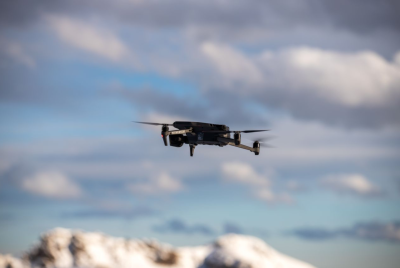
UK Air Safety Board Says 'Flying Saucer' Sighting Near Gatwick Posed a Risk to Passenger Jet
The UK Air Safety Board has concluded that a reported 'flying saucer' sighting near Gatwick Airport posed a risk to a passenger aircraft during its approach.
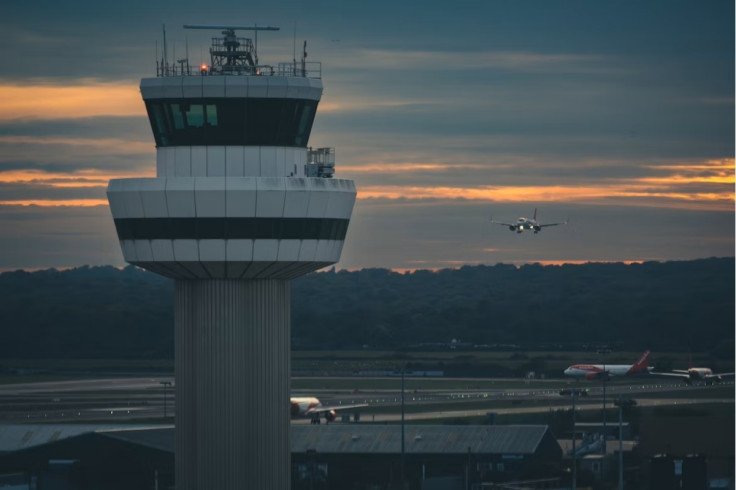
A newly released UK Air Safety Board report has concluded that a reported 'flying saucer' sighting near London Gatwick Airport reduced the safety of a passenger jet after the unidentified object passed within an estimated 100 to 300 feet of the aircraft during its approach in April. The report is based on a pilot's account of the encounter, though investigators did not identify the object.
To recall, the UK Airprox Board investigates near-miss incidents involving aircraft to improve aviation safety across the UK. Its latest report covers several incidents recorded in April, including a separate drone encounter near Heathrow Airport, highlighting the continued risks posed by unidentified objects operating close to busy flight paths.
According to the report, the pilot of an Airbus A319 spotted a disc-shaped object with darker markings around its rim while the aircraft was descending and banking left towards London Gatwick Airport.
The object was travelling in the opposite direction and passed the aircraft's right wing at roughly the same altitude. Although the pilot suspected it may have been a drone, its identity could not be confirmed.
Report Details 'Flying Saucer' Sighting Near Gatwick
According to the report, the Airbus A319 was descending and banking left during its approach into London Gatwick Airport when the pilot spotted an object travelling in the opposite direction.
🚨PILOT REPORTS "FLYING SAUCER" NEAR GATWICK
— Skywatch Signal (@UAPWatchers) August 2, 2026
A passenger jet pilot has reported seeing a disc shaped object pass dangerously close to an Airbus A319 as it approached Gatwick Airport.
According to the UK Airprox Board report, the object was travelling in the opposite direction… pic.twitter.com/cVLsCepbGa
The crew described it as a disc with darker markings around its rim, prompting the pilot to liken it to a 'flying saucer'. The object was estimated to have passed between 100 and 300 feet from the aircraft's right wing.
Although the pilot suspected it may have been a drone, the object's identity could not be confirmed.
Because the aircraft was already committed to its landing manoeuvre, no emergency evasive action was taken. Even so, the reported proximity of the object prompted an investigation by the UK Airprox Board, which examined the circumstances surrounding the encounter.
The board concluded that the incident had reduced the safety margin available to the aircraft. While no collision occurred, investigators determined that the separation between the aircraft and the unidentified object was close enough to warrant official concern.
The report does not identify the object or conclude whether it was a drone, another type of aircraft, or something else. With no confirmed identification, the pilot's description remains an eyewitness account rather than a fact.
Heathrow Drone Incident
The Gatwick encounter was not the only event highlighted in the latest report.
Investigators also examined a separate April incident involving an Airbus A321 approaching Heathrow Airport. In that case, the pilot reported seeing a drone pass so close to the aircraft's left side that its colour, overall shape and spinning propellers were clearly visible.
Unlike the Gatwick incident, the UK Airprox Board concluded there had been a definite risk of collision. Investigators said 'providence' had played a major part in preventing an accident, indicating that the outcome relied more on circumstance than deliberate avoidance.
The two cases illustrate the continuing challenge posed by unidentified objects and drones operating close to commercial flight paths. Even where no impact occurs, sightings during critical phases of flight such as approach and landing can trigger detailed investigations because pilots have limited time and room to react.
Drone activity near airports has attracted growing scrutiny in recent years as aviation authorities seek to reduce the risk posed to passenger aircraft. The latest UK report comes as an addition to that concern, with investigators continuing to assess incidents that could compromise flight safety.
Drone Operations Under Crackdown
The issue is not confined to Britain. The report notes that aviation regulators elsewhere have also taken enforcement action against unsafe drone operations.
In one recent case, the US Federal Aviation Administration imposed a lifetime drone ban on a YouTuber after determining that the individual had flown within controlled airspace near Philadelphia International Airport and at one stage lost control of the aircraft above a populated area.
While the Gatwick object's true identity remains unknown, the report makes clear that investigators considered the incident significant enough to classify it as one in which aircraft safety had been reduced. Without additional evidence, however, there is no confirmation that the object was a drone or anything resembling the pilot's initial description of a 'flying saucer'.
© Copyright IBTimes 2026. All rights reserved.
- Recommended For You