

'Pilot and Crew Handled It Perfectly': Passenger Speaks Out After Southwest Flight WN4761 Emergency Diversion
Emergency landing in Charleston after fuel leak indication on Southwest flight
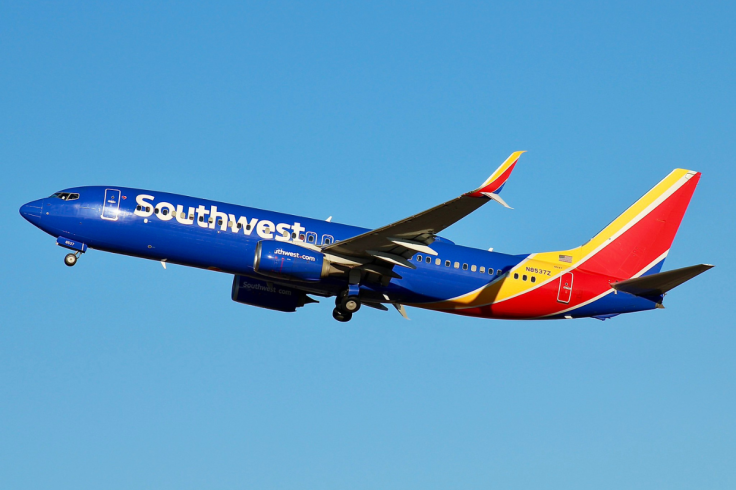
A Southwest Airlines flight from Orlando to Manchester, New Hampshire, diverted to Charleston, South Carolina, on Monday 20 July after the crew of Flight WN4761 reported a suspected fuel leak while cruising at 37,000ft, according to the airline and flight tracking data.
The Boeing 737-800 had taken off from Orlando International Airport at 8.54am Eastern Time on a scheduled non-stop service to Manchester-Boston Regional Airport.
About an hour into the journey, as the aircraft crossed South Carolina, the pilots received what Southwest later described as a 'maintenance indication', prompting them to break off the flight and seek an emergency landing at Charleston International.
Crew Declare Emergency and Head for Charleston
As soon as the crew saw signs of a possible fuel leak, the pilots declared an airborne emergency and set their transponder to the 7700 emergency code, the standard signal that tells air traffic control an aircraft needs immediate priority.
Controllers then cleared the Boeing 737-800 for a rapid descent into Charleston International Airport, with emergency vehicles positioned alongside Runway 15 as a precaution before the jet touched down.
No injuries were reported among the 137 passengers and crew on board. The aircraft, an 11-year-old Boeing 737-8H4 registered N8662F, remained on the ground in Charleston for what Southwest described as a '360-degree maintenance inspection' to determine what triggered the fuel leak indication.
Neither Southwest nor maintenance teams have yet confirmed whether there was a physical fuel leak or whether the alarm stemmed from a faulty sensor, valve issue or other technical anomaly.
Southwest said in a written statement that the aircraft landed 'without incident' and that all passengers were 'reaccommodated on a different flight', adding that 'nothing is more important to Southwest than the safety of its customers and employees.'
'Pilot and Crew Handled It Perfectly'
One passenger summed up the experience in a short Facebook comment: 'I was on flight. Fuel leak. Pilot and crew handled it perfectly. On different plane now heading to Manchester.' It is a brief line, but one that captures the response airlines aim to see during an in-flight incident.

Replacement Jet Completes Journey to New Hampshire
Southwest sent a replacement aircraft, a newer Boeing 737 MAX 8 registered N8881L, to Charleston to operate the onward leg to New Hampshire once the original jet was pulled from service.
Passengers spent roughly four hours on the ground before boarding the substitute aircraft. Flight tracking site FlightAware recorded the onward service departing at 2.29pm and arriving in Manchester at 4.46pm, around five hours later than the original scheduled arrival time of 11.50am.
For passengers, that meant an unplanned stopover in a different state, emergency vehicles visible on the tarmac and several hours of waiting.
Standard Safety Procedures Followed
From an operational standpoint, the sequence followed standard procedure: crew spot a potential fuel problem, declare 7700, divert to the nearest suitable airport, land with emergency services in position, then transfer passengers to a fresh aircraft while engineers examine the original.
That is how the safety system is designed to work, even if it disrupts passengers' travel plans.
Southwest has not yet given a public timeline for when aircraft N8662F will return to service, and the precise nature of the fuel leak indication remains unclear pending a full engineering report.
Until that report is completed, questions remain about exactly what happened at 37,000ft over South Carolina.
© Copyright IBTimes 2026. All rights reserved.
- Recommended For You


