

'The Mighty United Kingdom is Afraid of Speech': Free Speech Activists Condemn Ban on Hasan Piker
Civil liberties groups, politicians, and free speech advocates are questioning UK's decision to block Hasan Piker and Cenk Uygur from entering the country.
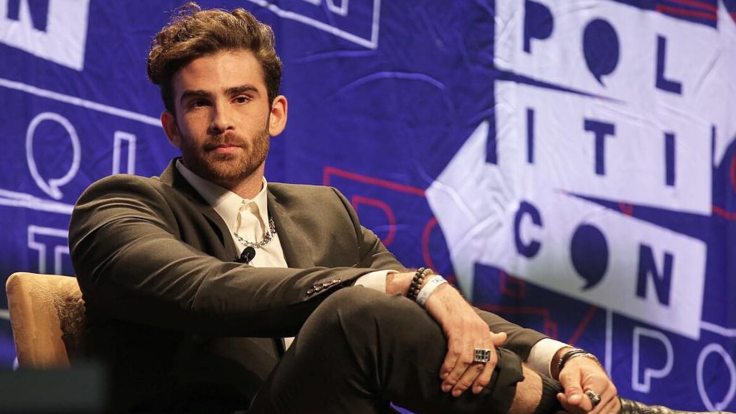
The British government has triggered a major free speech controversy after revoking the travel authorisations of American political commentator Hasan Piker.
The Home Office move has effectively barred him from attending upcoming speaking engagements in Britain, including at SXSW London. Officials justified the decision by stating their presence in the country 'may not be conducive to the public good', a standard legal clause used to exclude foreign nationals.
The decision has become an immediate political flashpoint, with civil liberties groups and politicians questioning whether the government is misusing its immigration powers to police controversial opinions. For supporters of the pair, the move is a cowardly attempt to silence uncomfortable political discourse. For the government and its supporters, it is a necessary step to protect the public from inflammatory rhetoric.
The same action was taken against fellow American political commentator Cenk Uygur, founder of The Young Turks, who was also scheduled to speak in the UK.
"The mighty United Kingdom is afraid of speech that shows you who’s responsible for … war crimes. But no amount of censorship will get us to stop telling the truth.” @cenkuygur https://t.co/T77MFP1QFj pic.twitter.com/gqhvyVNPkv
— LankaFiles (@lankafiles) June 1, 2026
'The Mighty United Kingdom Is Afraid of Speech'
The backlash intensified after Uygur publicly criticised the decision.
'The mighty United Kingdom is afraid of speech that shows you who's responsible for those war crimes. But no amount of censorship will get us to stop telling the truth,' he said.
His comments quickly became a rallying cry for those who believe the UK is drifting toward authoritarianism regarding public debate.
The controversy highlights a growing tension between the government's duty to ensure public safety and the democratic principle of allowing diverse, even offensive, viewpoints to be heard in a public forum.
For critics, the issue extends beyond Piker and Uygur. They argue the case raises broader questions about whether democratic governments should use immigration powers to restrict political speech.
‘What do you think? Is it rightly justified, or are you in favour of free speech without limits?’@Benleo reports that political influencer Hasan Piker has been banned from the UK, after the Home Office deemed his presence ‘not conducive to the public good’. pic.twitter.com/MYXY9DW1X5
— GB News (@GBNEWS) June 1, 2026
Why Hasan Piker Is Controversial
Piker, one of the internet's most prominent political streamers, has long attracted both supporters and critics. Among his most controversial remarks was a 2019 livestream comment that 'America deserved 9/11.' He later apologised and described the statement as inappropriate.
More recently, he faced criticism over comments about the Israel-Hamas conflict. Among the remarks cited by opponents were his description of Hamas as '1,000 times better' than Israel and his statement that he 'would vote for Hamas over Israel every single time.'
Piker has consistently denied accusations of anti-semitism, saying his criticism is directed at the Israeli government rather than Jewish people.
Hasan Piker says UK has barred him, trashes 'unbelievable…power' of pro-Israel groups https://t.co/c19ccttCVB pic.twitter.com/DQFx7cVleZ
— New York Post (@nypost) June 1, 2026
Free Speech Groups Push Back
The travel ban on Hasan Piker prompted criticism from some of Britain's leading free speech organisations.
Jemimah Steinfeld, chief executive of Index on Censorship, warned that the government's actions could set a troubling precedent.
'It's paternalistic and assumes we are just passive consumers of views rather than people who can think, judge and challenge,' she said, adding: 'Free speech is tested by hard cases and, in this instance, the UK is failing.'
Akiko Hart, Director of Liberty, also called for greater transparency around the government's decision-making process. 'Free speech can only exist when we defend it for those we disagree with, as uncomfortable as it may feel,' Hart said.
Their comments have become central to the growing UK censorship debate.
The Counter-Argument: Protection Or Persecution?
Not all are opposed to the Home Office's stance. The Community Security Trust had previously urged organisers to reconsider providing a platform for Piker, accusing him of spreading antisemitic themes and legitimising extremist groups.
Labour MP David Taylor had also publicly pushed for a travel ban, arguing that public figures who promote divisive or harmful ideologies should not be granted a stage in the UK.
Supporters of the move argue that the state has a responsibility to evaluate the potential impact of a speaker before allowing them access to major platforms, particularly when that speech is perceived to incite hostility or hatred.
For critics, it raises concerns about censorship and whether unpopular views are increasingly being excluded rather than challenged. They counter that democratic societies should challenge controversial ideas through debate rather than exclusion.
Oxford Union and Political Fallout
The controversy has attracted additional attention because Piker appeared at the Oxford Union last year without government intervention. During that appearance, he described antisemitism as 'a canary in the coalmine of fascism' and warned against conflating antisemitism with anti-Zionism.
Following reports of the ban, Oxford Union president Arwa Elrayess said the organisation was 'deeply concerned,' emphasising that ideas should be challenged through debate rather than silenced.
The political reaction has also widened.
Zack Polanski, leader of the Green Party in England and Wales, described the bans as 'grim' and suggested they reflected a worrying trend in public discourse.
Beyond Britain, Aaron Terr of the Foundation for Individual Rights and Expression warned against excluding speakers solely on the basis of their political views, arguing that such decisions should concern anyone who values free expression.
As the UK struggles to strike a balance between protecting the public and upholding the right to free expression, the Piker and Uygur case stands as a stark reminder of the fragility of democratic debate in a polarised age.
© Copyright IBTimes 2026. All rights reserved.