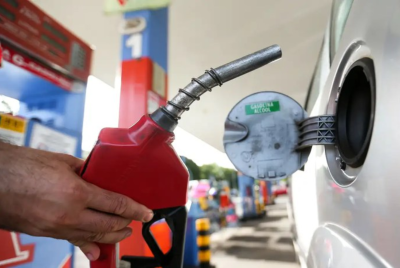
Inside the Terrifying 30-Day Window Where Crude Oil Prices Could Double to $135
Dan Dicker says low oil inventories could send crude sharply higher if supply does not recover.

Crude oil prices could leap from roughly $75 to $135 a barrel within a month if global stockpiles keep shrinking and supply fails to recover, oil market analyst Dan Dicker said in remarks to Bloomberg on Sunday, as traders digested the latest U.S. and Iran developments and a softer Monday open in crude.
The warning landed just as markets were trying to make sense of a fragile diplomatic picture. On Sunday, Iranian Foreign Minister Abbas Araghchi said Washington would lift its naval blockade of the Strait of Hormuz after the first round of talks in Switzerland, a move that would improve shipping flows through one of the world's most important oil transit routes. By Monday, crude was trading around $76 a barrel, down about 2.5 per cent, as investors weighed the chance of smoother supply against the reality of lean inventories.
The Inventory Squeeze
Dicker's argument is simple enough, even if the mechanics are anything but. The market has spent much of the recent stretch looking at the diplomatic headlines and the promise of better supply conditions. What it may be underpricing, he suggested, is the physical tightness already building beneath the surface.
'Unless this deal gets done to a much more firm degree, oil starts to flow seriously and rebuild some of those stockpiles that have been draining for the past three months,' he said in the Bloomberg interview.
That is the crux of it. Stockpiles have been drawing down, and Dicker's view is that the effect has not yet fully shown up in crude oil prices. In his telling, the market can stay calm right up until it cannot. Then the reaction is not a tidy move higher, not a neat little drift from $75 to $85, but something far uglier.
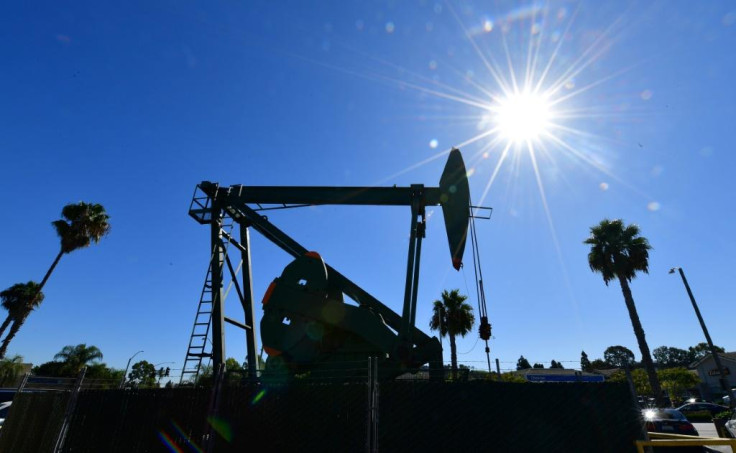
'You're going to see a spike like you never saw before,' he warned.
The phrase sounds dramatic because it is dramatic. It is also the kind of line traders tend to remember, even when they do not fully buy it. Markets have a habit of ignoring physical constraints for as long as they can. Then the barrel shortage turns real, and the screen catches up late, which is usually when the headache begins.
Dicker said that if inventories remain depleted, the physical market could force a sharp repricing in crude. His estimate was blunt. Rather than a modest rise, he argued oil could move from about $75 to $135 within a month if supply conditions do not improve. That is a wild call by any standard, but it is not being made in a vacuum. It rests on the idea that futures markets eventually have to acknowledge the actual state of supply, not just the optimistic version trading desks prefer.
The Supply Question
The supply side is where this gets messy. Dicker pointed to recent comments from executives at Chevron and Exxon Mobil, saying producers have warned they cannot quickly offset the effect of shrinking inventories if conditions deteriorate further. That matters because the market often assumes big producers can lean on output and soak up pressure almost at will. They cannot, at least not instantly, and not when the system is already stretched.
There is also the longer horizon to consider. Last week, the International Energy Agency said global oil production could increase by roughly 8 million barrels per day by 2027 as Gulf producers gradually restore output, a shift that could create a significant supply overhang. That projection sits in tension with Dicker's near-term warning, and both can be true at once. Longer term, supply may be heading higher. In the short term, though, thin inventories can still shove prices around with very little warning.
That is what makes the current setup so awkward for traders. On one side sits the possibility of better flows through the Strait of Hormuz and a broader easing of geopolitical pressure. On the other is the less glamorous but more immediate problem of barrels in storage, and whether there are enough of them to keep the market from lurching.
Dicker's view may prove too severe, or it may turn out to be one of those forecasts that looks excessive until the market starts moving. Either way, it captures the central tension neatly. Paper markets can stay composed for a while. Physical markets have a nasty habit of forcing everyone to remember what they are actually trading.
For now, crude remains below the level Dicker fears. But the gap between $76 and $135 is exactly the sort of gap that can turn into a story very quickly if the wrong headline lands at the wrong time.
© Copyright IBTimes 2026. All rights reserved.
- Recommended For You