'Vain' Meghan Markle Branded 'Tone-Deaf,' Accused of Exploiting Her Child
A single Instagram selfie has reopened the fiercest question surrounding Meghan Markle, namely where her activism ends and her image-making begins.
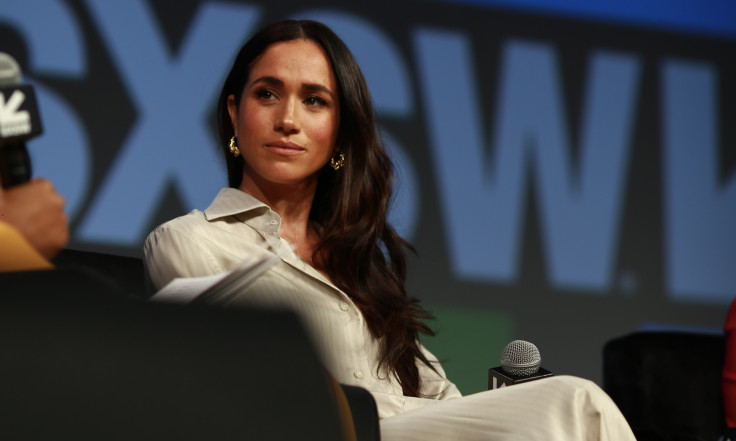
Meghan Markle was accused of hypocrisy after posting a selfie with her daughter Lilibet on Instagram earlier this month, just days before travelling to Switzerland to deliver a high‑profile speech on the dangers of social media for children. The Duchess of Sussex, 44, shared the photo from her official account ahead of her appearance in Geneva, prompting a wave of criticism from commentators who argued that the image undercut her message.
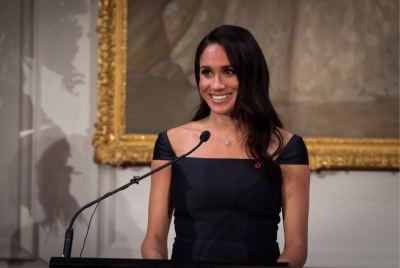
Markle has spent the past few years repositioning herself as a campaigner on digital safety and the impact of online platforms on young people. Her latest intervention came in Geneva at the unveiling of the Lost Screen Memorial, an art installation honouring children who died after experiencing cyberbullying and online harms. It was in the shadow of that sombre event that a seemingly casual mirror selfie with her four‑year‑old daughter ignited a familiar row over royal image‑making, privacy and personal branding.

Selfie Undermined Anti‑Social Media Message
The now‑controversial photograph showed Meghan in a purple coat, standing in what appeared to be a walk‑in wardrobe, snapping a mirror shot. At her feet, Lilibet played on the floor, surrounded by two pairs of black pumps and hanging clothes in the background. The duchess captioned it simply: 'Mama's little helper 💜.'
The image might have passed as a routine glimpse into domestic life were it not for the timing and the platform. TalkTV anchor Samara Gill told The Sun that the post jarred badly with Meghan's campaigning against social media risks for young users.
'It's tone‑deaf,' Gill said. 'It's not a good look when you're lecturing people on keeping children away from social media, using strong words against tech companies, and then doing the opposite.'
Royal editor Chris Ship struck a similar note, arguing that Markle needed to be clearer about the line she was drawing. Speaking to the same outlet, he suggested the duchess was sending mixed messages about her own children's presence online.
'Either don't put your kids on social media at all or do it. But if you're going to do it, that's your choice as a parent. It's not your child's choice,' he said.
The tension, as several commentators saw it, came down to consent. At four years old, Lilibet cannot reasonably understand or approve the decision to have her image shared with millions, yet her mother has made online harm to children one of her defining issues.
'Vain' and 'Boastful'
Journalist Tom Sykes, writing on his The Royalist Substack, went further, accusing Markle of doing precisely what she was about to condemn on the international stage.
He noted that 'a woman who is about to stand alongside the world's most senior public health official and talk about the measurable and preventable harms of exposing children to social media has just voluntarily, for no apparent reason other than self‑promotion exposed her own child to social media.'
Sykes called the image 'staggeringly tone‑deaf,' branding it 'boastful' and 'vain,' and argued that Lilibet 'cannot meaningfully consent to having [her] image broadcast to millions of strangers.' In his view, Meghan was 'exposing HER CHILD to that technology without adequate safeguards,' in direct contradiction of her advocacy.
The ‘perfect’ shirts Meghan Markle has worn for nearly a decade are over 40% off https://t.co/ASQ9SDdTG5 pic.twitter.com/En9tkOilN6
— New York Post (@nypost) May 26, 2026
Supporters of the duchess have not been prominently quoted in this particular debate, and there is no detailed public response from Meghan or her team addressing the specific criticism of the selfie. Without that, much of the argument rests on interpretation of motive whether the photo was a simple family moment or, as her critics insist, another piece of carefully curated self‑promotion. Nothing has been confirmed from Meghan's side, so assessments of intent should be taken with a grain of salt.
What is on the record is her language in Geneva. At the Lost Screen Memorial event, the duchess stood before 50 illuminated boxes, each showing the face of a child who had died after suffering cyberbullying or related online harms. Her remarks were unambiguous.
'Each name belonged to a child who was loved beyond measure. A child whose laughter once filled a kitchen. Whose shoes once waited by a front door. Whose future once felt limitless,' she said. 'Now their faces ask the world questions we can no longer avoid: How many more millions of children will be harmed by products that, while innovative, are still designed without sufficient safeguards?'

Those words sit uneasily alongside the Instagram image for critics who already see Meghan Markle as a tightly managed celebrity activist rather than a consistent campaigner. To them, the juxtaposition of a polished mirror shot and a memorial to dead children is not merely poor optics but evidence of a deeper disconnect between message and behaviour.
Others would argue that a single photograph of a child in a domestic setting is hardly comparable to the relentless, often anonymous abuse that fuels online tragedies. That more generous reading, however, has struggled to cut through the louder accusations of hypocrisy that now cling to the duchess's latest social media foray.
© Copyright IBTimes 2026. All rights reserved.
- Recommended For You