Trump 'Needs a Lot of Prayer' Because He Holds Power and Accountability—But Warnock Condemns Bigotry
Warnock ties prayer directly to political accountability and moral judgment

Senator Raphael Warnock used Easter Sunday to deliver a pointed message about power, faith and accountability, saying he prays for President Donald Trump while condemning what he calls the president's 'unabashed, unvarnished bigotry'.
The Georgia Democrat appeared on CNN's 'State of the Union' with Jake Tapper. Warnock confirmed he 'absolutely' prays for Trump, grounding the statement in both pastoral duty and political reality.
'He has influence and power over people I care about,' the Baptist minister said.
Yet the prayer he describes is not gentle or abstract. It is, in his telling, inseparable from accountability.
'I have to be honest about what he's doing. His kind of unabashed, unvarnished bigotry, the cruelty that he is unleashing on American streets through his version of [Immigration and Customs Enforcement], those things have to be condemned,' he said.
'I am not about to be the chaplain blessing that which is ungodly and unjust,' Warnock told Tapper, drawing a line between spiritual leadership and political complicity and scrutiny.
A Long-Running Religious Dispute
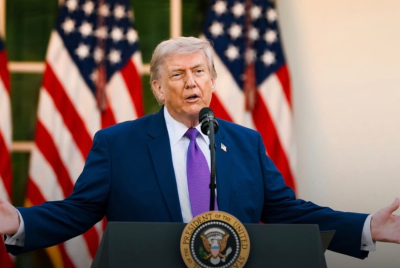
Trump has previously accused Warnock of using religion 'to try and divide the entire country', prompting the senator to respond that the president 'ought to read the Bible'.
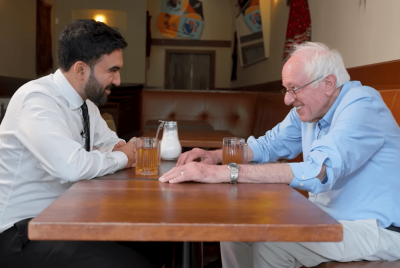
In an exclusive interview with The Root in February, he said that 'in Donald Trump's White House, Jesus is a victim of identity theft', a remark that captures his broader argument that Christianity is being repurposed for political ends.
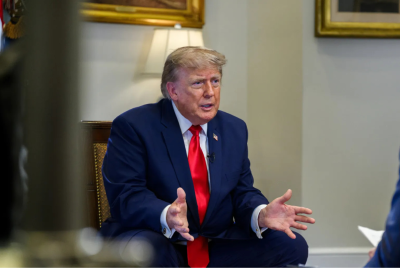
Trump, for his part, has leaned heavily into religious imagery, casting himself as a defender of faith while cultivating strong support among evangelical Christians. His past comments about religion, including uncertainty about seeking forgiveness, have not dimmed that backing.
Warnock pointed to Trump's 2020 appearance outside St John's Episcopal Church, where he held a Bible aloft after law enforcement cleared protesters nearby. For the senator, the image still stands as a misreading of the text it sought to invoke.
Immigration, Imagery And Moral Claims
Warnock's criticism extends beyond rhetoric into policy. He drew a direct line between Christian teaching and the treatment of migrants, invoking biblical calls to 'feed the hungry' and 'bring good news to the poor'. By that measure, he argued, current immigration enforcement falls short.
Faith communities have responded in tangible ways. In parts of the US, churches have begun forming what they describe as 'spiritual shields' around migrant populations, an attempt to offer both sanctuary and protest. It is a development that underscores how religious institutions are positioning themselves not just as commentators, but as actors.
Warnock referenced a recently circulated AI-generated video depicting Barack and Michelle Obama as apes, which drew widespread criticism before being taken down. He described the imagery as 'vile' and 'racist', arguing it runs counter to the biblical assertion that all people are created in God's image.
His response also turned inward, towards the Black church. He described it as an institution 'born fighting for freedom and fighting for inclusion', pushing back against any suggestion that it carries a narrow or exclusionary vision. The emphasis on history is deliberate. It places current debates within a longer struggle over who gets to define both faith and nation.
Elections And Institutional Trust
Warnock has also raised concerns about federal actions in Georgia, particularly an FBI raid on a Fulton County election facility in January. Investigators seized hundreds of boxes of election-related materials, though initial confusion reportedly surrounded the warrant used to access the site.
For Warnock, the episode feeds into a broader pattern. He argued that Trump has created 'the pretext to interfere' in elections, linking administrative actions to political narrative. The claim reflects a deeper anxiety among Democrats in the state, where disputes over the 2020 election continue to reverberate.
Trump has maintained his assertions of election impropriety in Georgia, drawing support from some Republican candidates while prompting sharp criticism from local officials. In Warnock's framing, they are expressions of the same underlying question about power and moral responsibility.
© Copyright IBTimes 2025. All rights reserved.
- Recommended For You