Donald Trump, Pope Leo XIV Feud: Pontiff's Unfiltered American English Is Stripping Away the Vatican's Diplomatic Shield
When the pope sounds like an American, the Vatican feels less distant.

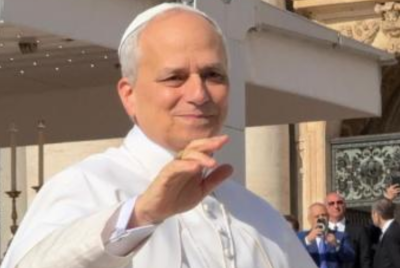
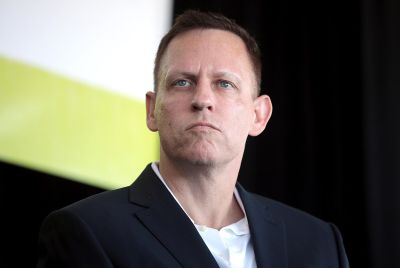
Donald Trump and Pope Leo XIV have become unlikely protagonists in a very modern political feud, with the US president and the American-born pontiff trading barbs over immigration, war and crime in a clash playing out largely in English-language media in the United States. At the heart of the dispute, say observers, is something deceptively simple but unprecedented in Vatican history: for the first time, a pope is engaging directly with Americans in native, idiomatic American English, without an interpreter standing in the way.
Relations between the Vatican and Washington have often been prickly, but usually polite. Previous popes certainly criticised US foreign policy, economic inequality or border crackdowns. Yet those interventions were typically mediated through translators, carefully crafted written homilies or diplomatic statements that could be massaged after the fact. What appears different with Trump and Pope Leo XIV is how quickly and cleanly Leo's words now enter the American political bloodstream.
Leo, born Robert Prevost in Chicago, is the first North American to occupy the papal throne. That biographical detail is doing heavy political work. Axios reports that his fluency in American English effectively strips away a long-standing buffer that once softened papal critiques of US leaders. Where John Paul II or Benedict XVI might have had their phrasing gently retooled by Vatican officials or bishops before it landed on US television, Leo's comments arrive fully formed, in the same register that American voters hear from presidents, pastors and talk-show hosts.
As the National Catholic Reporter has pointed out, Leo speaks in 'unmistakably American English,' favouring short, punchy sentences and concrete images over lofty abstraction. He urges young people to 'become beacons of hope.' He tells audiences, 'Even at the darkest moment, it's never too late to love and forgive.' It is the language of graduation speeches and community meetings rather than marble halls and Latin encyclicals.
The effect is that his moral arguments on immigration, refugees and global conflict land with a clarity that some in Washington may find uncomfortable. When Leo questions hardline border policies or calls for restraint in foreign wars, Americans are not parsing subtitles or waiting for experts to decode Vatican nuance. They hear an American accent, American cadence, and what sounds an awful lot like an American political intervention.
Trump has not let that pass. He has already labelled Pope Leo XIV very liberal, 'weak on crime' and 'terrible on foreign policy,' according to US coverage of the row. The familiar Trumpian pattern is visible here: a perceived slight, followed by rapid counter-attack and attempts to define an opponent in blunt, partisan terms. The difference this time is that the opponent wears white, leads 1.3 billion Catholics and can answer back on cable news in the same language.
US President Donald Trump has refused to apologise after criticising Pope Leo XIV over his stance on the war in Iran. The dispute comes as Pope Leo continues to call for peace, urging global leaders to prioritise dialogue over conflict.
— Al Jazeera English (@AJEnglish) April 13, 2026
Al Jazeera's @SoniaRGallego reports. pic.twitter.com/7I5HQsXvBY
How Donald Trump, Pope Leo XIV and a Shared Media Stage Collided
Popes have long spoken out against war and in favour of migrants and the poor. What is new is the media environment into which those statements drop, and the way Trump and Pope Leo XIV now occupy the same hypercharged information space.
Leo's speeches and interviews, delivered in fluent American English, slide effortlessly into US broadcast packages and social media clips. They are quotable in a way previous papal remarks often were not, at least for a general American audience. Axios notes that this allows Leo to engage 'more precisely' with US political discourse, meaning his comments can be pulled into partisan narratives almost in real time.
With roughly 20% of Americans identifying as Catholic, that matters. Both parties have long courted Catholic voters, often through domestic bishops or lay movements. Now, the pope himself can speak past those intermediaries, straight to US Catholics' television sets and phones. It gives his views a visibility that Vatican officials once might have preferred to calibrate more gently.
Trump, for his part, appears to be treating Leo less like a distant spiritual figure and more like any other domestic critic whose arguments might dent his standing. The accusation that the pope is 'weak on crime' mirrors Trump's frequent attacks on Democratic mayors or prosecutors. Calling him 'very liberal' attempts to slot Leo into the familiar American culture-war grid.

An Unfiltered Papacy and the Limits of Vatican Diplomacy
Inside the Vatican, there is some resistance to the framing of all this as a personal war of words. Pope Leo XIV has publicly dismissed the notion that he is engaged in a direct feud with the US president, stressing that his long-standing concerns about migrants, refugees and peace predate any specific administration. That is almost certainly true, as a matter of Church teaching.
Yet the reality is that a pope who sounds like a Midwestern priest rather than a European diplomat simply registers differently in American ears. The old diplomatic shield of translation the careful pause while a papal phrase is rendered into English, the possibility of later 'clarification' has slipped. What Leo means, Americans now tend to hear, instantly.

Whether that ultimately helps or harms the Vatican's long-term diplomatic interests in Washington is an open question. For now, the clash between Trump and Pope Leo XIV is exposing how much tone, accent and cultural fluency can shape global politics, even when the message itself has barely changed in decades. Nothing about the future of this relationship is confirmed, so all predictions about how far it may escalate should be taken with a grain of salt.
© Copyright IBTimes 2026. All rights reserved.
- Recommended For You