Trump Staff Cuts Blamed After Watermarked OpenAI Map Mislabels Africa at AIDS Conference
OpenAI watermark on the slide points to unchecked AI creeping into US state diplomacy
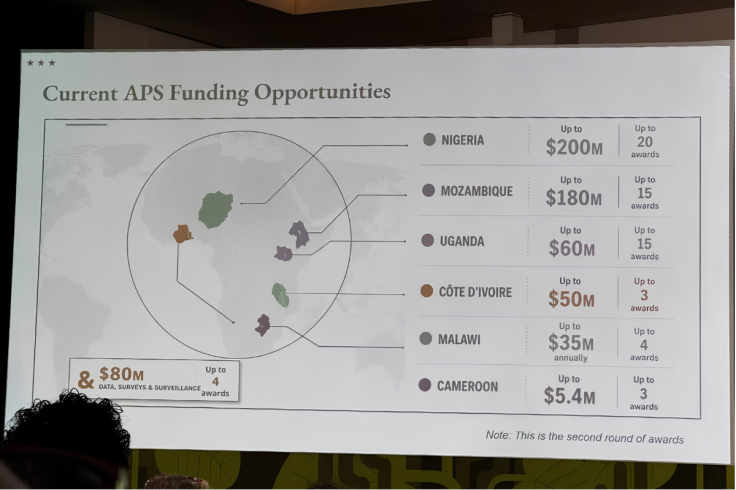
A US State Department map that misplaced every African country at a global AIDS summit carried a watermark signalling it was built with OpenAI tools, a Reuters analysis found, and a former official has tied the blunder to Trump's staffing cuts.
The slide appeared on 26 July during a US delegation presentation at the AIDS 2026 conference in Rio de Janeiro, Brazil. It was meant to show six African countries receiving American health funding. It named and placed all of them incorrectly.
A Continent Redrawn by Mistake
Nigeria, where the US keeps several hundred troops, was shown landlocked in the Sahara Desert. Mozambique, in south-east Africa, was moved to the Horn of Africa. Ivory Coast, on the west coast, ended up on the opposite side of the continent. One country carried no name at all, and Cameroon was listed yet never placed on the map.
The map surfaced about halfway through a talk on the department's new international health agreements, delivered by Jeff Graham, the top US health envoy who runs the President's Emergency Plan for AIDS Relief (PEPFAR). Graham has not commented.
The OpenAI Watermark
Reuters examined a video of the session and found the image contained an artificial intelligence (AI) watermark that identifies content made with OpenAI tools. OpenAI said it was looking into the matter.
The State Department called the episode 'an unfortunate error' and said a team member had hastily changed the slide deck before the event. 'We take full responsibility for the confusion and misrepresentation it caused for attendees, including our African partners,' the department said.
A Symptom of Staffing Cuts
For critics, the mistake points to something larger than a rushed slide. Cameron Hudson, a former State Department and National Security Council official on Africa, said it was 'a reflection of what happens when you fire one-third of the State Department, eliminate multiple layers of bureaucracy and have too junior staff performing work under-supervised.'
'There isn't just a cost savings when eviscerating staff and expertise. There's a real cost in reputation and effectiveness,' he wrote on X.
Since President Donald Trump returned to office, the department has cut deeply. In July it began laying off 1,353 US-based staff, including 246 foreign service officers, with total departures approaching 3,000 under Secretary of State Marco Rubio's reorganisation. The map was meant to outline programme opportunities left after the administration dismantled the US Agency for International Development.
A Credibility Hit on the World Stage
The errors drew attention because of where they landed. Screenshots first posted by writer and AIDS expert Emily Bass spread across LinkedIn, one reaching about 40,000 views. Bass wrote that the failure to catch the map, in a session that featured Nigeria's Director General as an invited guest, was 'not only disrespectful to African collaborators, it's also a significant tell.'
Matt Petit, who works on AI and geopolitics at the Atlantic Council, called the slide 'beyond embarrassing' and said whoever made it 'did not know where countries in Africa are and did not care to check their work.'
For a programme that funds HIV treatment across Africa, the stumble hands partners a fresh reason to question US reliability.
© Copyright IBTimes 2026. All rights reserved.
- Recommended For You