Elon Musk Downfall: Author Ryan Holiday Explores the Hidden Flaws Behind the Billionaire's Success
Author Ryan Holiday dissects Elon Musk's journey from obsessive learner to embattled billionaire, arguing that the tycoon's greatest strengths now feed his most dangerous flaws
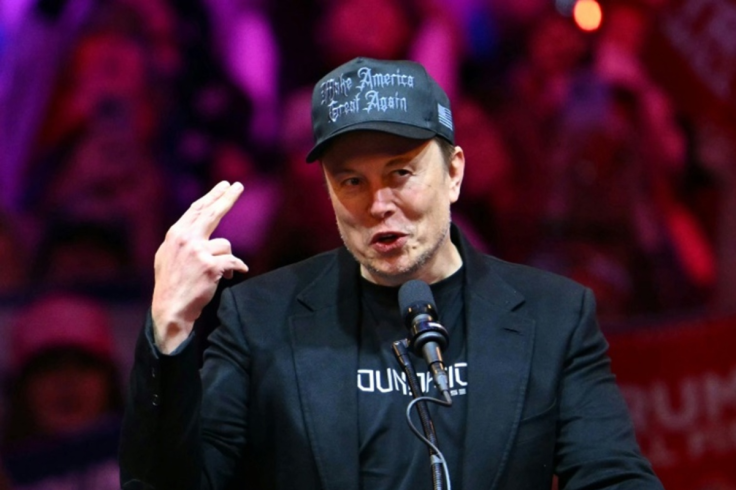
Elon Musk's rise and apparent 'downfall' are the focus of a new critique by author Ryan Holiday, who argues that the billionaire's brilliance, vast wealth and relentless drive now sit uneasily alongside increasingly visible personal flaws and chaotic decision-making.
Holiday has built a career examining how high performers soar and then stumble. Speaking about Musk, he describes a figure who once seemed almost mythic in his intensity as an entrepreneur who devoured Soviet rocket manuals to help shape SpaceX, overhauled the electric car market with Tesla, and pushed into satellites and AI at a pace that left governments scrambling to catch up.
That same intensity, Holiday suggests, has curdled into something more troubling as Musk surrounds himself with people who rarely push back and treats sleep as a dispensable luxury.
Elon Musk and the Thin Line Between Genius and Hubris
Holiday does not dispute the scale of Musk's achievements. In his telling, Musk is 'very smart, very successful, very wealthy' simple statements of fact rather than fan slogans.
SpaceX has rewritten the economics of getting cargo into orbit. Tesla forced the world's biggest carmakers to take electric vehicles seriously. Musk himself has become shorthand for a certain type of extreme ambition.
Yet Holiday frames Musk as a cautionary tale rather than a straightforward hero. The characteristic that once set Musk apart an almost obsessive capacity to outwork everyone in the room now doubles as a warning.
The author points to the reported culture of all-nighters and 'hardcore' expectations, with Musk bragging in the past about sleeping at factories or on site. What looks like iron discipline at first glance, Holiday implies, can easily slide into self-destruction, especially when it goes unchecked by colleagues or friends who feel able to say no.

After years in which Musk's public image has shifted from a visionary engineer to a combustible online presence. His takeover of X, formerly Twitter, became a running spectacle, marked by abrupt policy shifts, mass lay-offs and late-night posts that rattled advertisers and regulators alike.
For Holiday, this is not some random detour in Musk's story, but almost the inevitable outcome of a person no longer constrained by normal limits or meaningful challenge.
A Cautionary Tale in the Age of Elon Musk
Holiday is particularly interested in what happens when power and isolation reinforce one another. As he tells it, Musk has drifted into a world where dissent is rare and where the feedback loop is dominated by fans, financial markets and social media, rather than by colleagues with the authority to push back.
The phrase 'surrounds himself with yes-people' is not just a personality note; it is presented as a structural flaw in how Musk now operates.
In that light, Musk's disregard for sleep is not treated as a quirky billionaire habit, but as a concrete symbol of overreach. Holiday's argument is straightforward enough: if the person making the most consequential decisions at some of the world's most influential companies is running permanently on fumes, mistakes are not a possibility, they are a certainty.
The author stops short of diagnosing specific errors, but the implication is that the turmoil seen at X and the erratic public outbursts are very likely connected to a lifestyle that glorifies exhaustion.
Holiday's fascination lies in the contrast between the young Musk leafing through complex rocket manuals and the older Musk, now so powerful he can afford to ignore almost any external check on his impulses. The early story is one of curiosity, risk and extraordinary technical learning. The more recent chapter, he suggests, is about a man whose success has made him harder to reach, harder to advise and perhaps harder to save from himself.
There is, in Holiday's view, a lesson in both halves of the narrative. Ordinary readers and aspiring entrepreneurs can, he thinks, learn from the sheer depth of Musk's early work the willingness to master difficult material, to push against entrenched industries, to pour energy into ideas most people dismissed. At the same time, they would do well to notice what happens when that drive becomes unmoored from rest, humility and honest feedback.
Holiday's analysis sits in a crowded field of commentary around Musk, much of it breathless and polarised. Some devotees continue to see Musk as a misunderstood genius building the future, while critics paint him as reckless and dangerous.
Holiday's contribution cuts a different path, acknowledging the achievements almost grudgingly, but insisting that the flaws are now too obvious to ignore.
Nothing in Holiday's framing is independently confirmed in the sense of clinical diagnosis or internal company records, and his comments should be taken as informed interpretation rather than hard data. Still, his reading of Musk as both model and warning will resonate with anyone watching the world's richest men grow ever more powerful and ever less accountable and wondering where that story usually ends.
© Copyright IBTimes 2026. All rights reserved.
- Recommended For You