'Like Cancelling a Credit Card': How Elon Musk Allegedly Fake-Saved Billions in Shocking Audit Report
A US government audit has challenged Elon Musk's DOGE savings claims, finding billions in contracts, grants and leases could not be verified
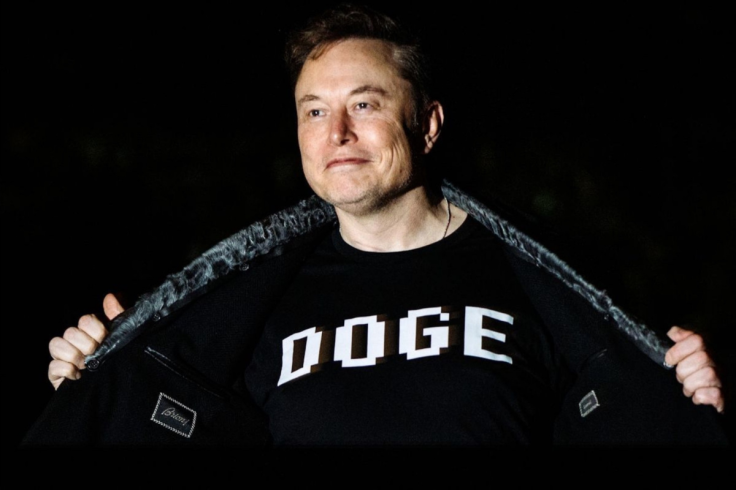
Elon Musk's Department of Government Efficiency (DOGE) overstated or could not substantiate billions of dollars in claimed savings, according to a US Government Accountability Office (GAO) audit released in August 2026.
The watchdog examined around $110 billion (£82 million) in savings listed on DOGE's online 'Wall of Receipts' and found that contracts, grants and leases were repeatedly counted as cuts despite incomplete or missing evidence.
The findings strike at the central promise of DOGE, which was created to reduce government waste and fraud. Musk initially pledged to save $2 trillion (£1.49 trillion), later lowering the target to $1 trillion (£744 billion). Behind the scenes, he reportedly promised President Donald Trump a far smaller figure. DOGE eventually claimed around $215 billion (£160 billion) in savings, but the audit suggests that total was based, at least partly, on figures that could not be reliably verified.
DOGE Savings Claims Undermined by Contract Errors
The most serious problems involved federal contracts. DOGE claimed it had terminated 13,476 contracts, but the GAO found that more than 2,000 had not actually been terminated. Those entries represented about $27.4 billion (£20.4 billion) in supposed savings.
In other cases, the contracts may have been modified, reduced or had funds deobligated, but the actions did not match DOGE's public description of their cancellation.
The distinction is not a technicality. A contract's maximum value is not the same as the money the government was certain to spend. Calling the difference a saving makes the figure look impressive, but it does not prove that taxpayers actually saved that amount.
The GAO also found that more than half of DOGE's claimed $61 billion (£45.4 billion) in contract savings could not be verified or came from contracts that had not been terminated. Another $7.2 billion (£5.4 billion) reportedly lacked enough identifying information for auditors to properly verify the claims.
One example was a $1.7 billion (£1.27 billion) information technology contract for the US Department of Defense's Defense Health Agency. DOGE listed it as a saving, yet the audit found that no action had been taken to terminate the contract or reduce its scope, value or funding. In plain English, the contract remained untouched. The claimed saving had therefore not materialised.
That is difficult to square with DOGE's branding as a transparent cost-cutting operation. The watchdog's report said there were 'issues limiting the transparency and reliability' of the reported savings. It also found that DOGE had claimed credit for some lease cancellations that were already under way before the organisation was established.
Of 264 leases listed as terminated, 108 were already in the process of being ended. That leaves an obvious question for Musk's former team. If a saving was already in motion before DOGE existed, how could it fairly be presented as one of the organisation's achievements?
DOGE Savings Method Compared With Credit Card Maths
The audit's findings echo concerns raised in an earlier review of DOGE's contract figures. In August 2025, a POLITICO analysis found that DOGE had claimed $52.8 billion (£39.3 billion) in savings from contract cancellations.
Of the $32.7 billion (£24.3 billion) that could be traced through public records, the actual savings were closer to $1.4 billion (£1.04 billion). POLITICO reported that DOGE used the maximum spending limit attached to contracts rather than the amount the government was expected to pay.
Jessica Tillipman, a government procurement expert, compared the method to taking out a credit card with a $20,000 (£14,880) limit, cancelling it and claiming to have saved $20,000 (£14,880). The analogy is blunt, but illustrates the problem clearly. A credit limit is not a debt, just as a contract ceiling is not necessarily future spending.
DOGE's grant figures appear even less secure. The GAO said it could not verify 96 per cent of the savings claimed from cancelled grants because the organisation did not provide sufficient information to explain how the figures were calculated.
That does not establish that every claimed saving was incorrect. Some contracts and grants may have produced genuine reductions in future spending. The problem is that DOGE presented potential savings, avoided costs and completed cuts as though they were interchangeable, while providing too little information for the public to tell them apart.
Its 'Wall of Receipts' remains online, preserving the larger claim even as the underlying numbers face official scrutiny. The page may still show a striking total, but the GAO audit raises significant questions about how much of it represents verifiable government savings.
The GAO did not accuse DOGE of deliberately fabricating its figures. It found something nevertheless damaging to a project built around efficiency: a ledger that could not reliably show what had been cancelled, what was already being cancelled and what had never changed at all.
For Musk, the numbers were supposed to be the proof. Instead, the audit has made those numbers the subject of scrutiny themselves.
© Copyright IBTimes 2026. All rights reserved.
- Recommended For You